
When choosing a water filter, many people focus on two questions: Does having more filtration stages mean better purification? And if the measured TDS value is low, does that mean the water is safe enough to drink?
In reality, neither assumption is entirely accurate.
The filtration performance of a water filter depends not only on the number of filter stages but also on the type of filter media, filtration precision, contaminant removal capabilities, the condition of the filters, and regular maintenance. TDS values also reflect only certain characteristics of water quality and cannot replace comprehensive water quality testing.
To properly evaluate a water filter’s performance, we first need to understand what TDS actually measures, then examine the functions of different filter cartridges and how to avoid potential risks associated with prolonged filter use.
1. Does a Low TDS Value Mean Good Water Quality?
TDS stands for Total Dissolved Solids. It primarily indicates the total amount of dissolved substances in water and is commonly measured in mg/L, often referred to as ppm.
These dissolved substances may include calcium, magnesium, sodium, and other ions, as well as other inorganic salts and certain organic compounds dissolved in water.
TDS meters typically measure electrical conductivity and estimate TDS based on a conversion relationship. Therefore, they do not directly identify every substance in the water, nor can they determine whether all contaminants are present.
For example, mineral water contains certain amounts of minerals such as calcium and magnesium, so its TDS value may be relatively high. Water treated by a reverse osmosis (RO) water filter typically has a significantly lower TDS value.
However, this does not mean that a higher TDS value necessarily indicates poorer water quality, or that a lower TDS value automatically means the water is safer.
TDS Testing Cannot Replace Comprehensive Water Quality Testing
TDS primarily reflects the overall level of dissolved substances in water. It cannot directly determine whether the water contains the following contaminants:
- Sediment and rust: These require appropriate testing of turbidity, suspended particles, and related indicators.
- Bacteria and viruses: TDS testing cannot determine whether microorganisms are present or exceed acceptable limits.
- Certain organic contaminants: Their types and concentrations cannot be determined from TDS values alone.
- Specific heavy metals and other harmful substances: A low TDS value does not rule out the possibility of contamination by these substances.
Therefore, if you want to determine whether drinking water meets the applicable water quality standards, you should use appropriate testing methods based on the water source and potential risks rather than relying solely on the reading displayed by a TDS meter.
A Real-World Case: Why Was the TDS Value Still Low After Five Years of Using a PP Sediment Filter?
A user once shared their experience using a whole-house pre-filter. The PP sediment filter had been in continuous use for five years, and the user also posted a photograph of the filter cartridge.
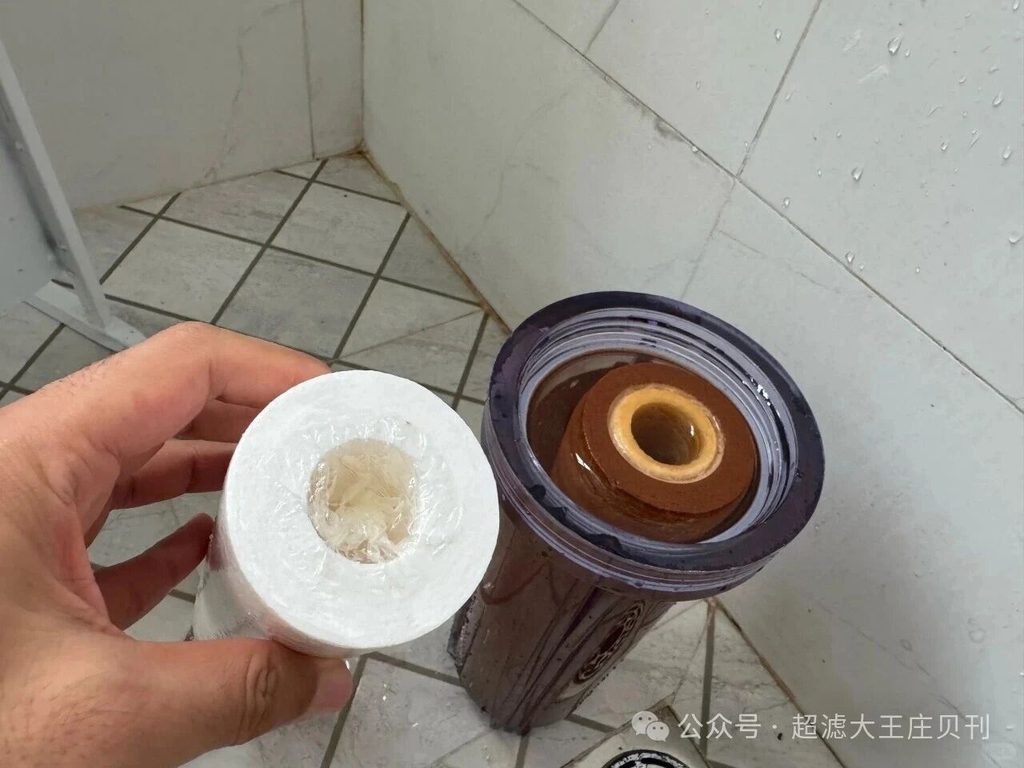
The cartridge appeared noticeably yellowed and darkened. The user had not replaced it because they regularly tested the TDS value of their household water and found that the readings remained low. They therefore assumed that the water filtration system was still functioning properly.
This case illustrates a common misconception: A relatively unchanged TDS value does not mean that a filter cartridge is still in good working condition.
PP sediment filters are primarily designed to capture particulate contaminants such as sediment and rust. As they accumulate contaminants over time, they may become discolored, clogged, or cause a reduction in water flow.
If a filter is left unmaintained for an extended period, it may also become contaminated with microorganisms. However, whether microbial growth has occurred and whether secondary contamination has affected the filtered water cannot be determined from the cartridge’s color alone. These issues require appropriate testing and an assessment of the equipment.
Nevertheless, using a PP sediment filter continuously for five years without replacement cannot be considered safe simply because the TDS value remains low. Filter replacement should follow the manufacturer’s recommendations and take into account actual water consumption, incoming water quality, pressure drop or changes in flow rate, and the equipment’s maintenance requirements.
This case highlights an important principle: TDS testing can serve as a supplementary reference, but it cannot determine whether every filter cartridge needs replacement.
2. Are More Filtration Stages Better in a Water Filter?
Now that we understand the limitations of TDS testing, let’s examine another common question: Does a water filter need at least five filtration stages? Does a higher number of stages mean cleaner water?
The answer is no.
The number of filtration stages only indicates how many filtration steps are included in the system. It does not directly represent the system’s purification capabilities. What matters more is the function of each filter, its ability to remove target contaminants, and whether the entire system has been properly designed and validated.
For example, a common five-stage RO water filter may use the following configuration:
PP Sediment Filter + UDF Granular Activated Carbon + CTO Carbon Block + RO Membrane + T33 Post-Carbon Filter.
These five stages do not simply repeat the same filtration process. Each serves a different purpose.
1. PP Sediment Filter: Capturing Larger Particulate Contaminants
PP sediment filters are commonly used to remove suspended particles such as sediment and rust, reducing the risk of particulate matter clogging downstream filter cartridges.
They cannot replace disinfection and cannot independently guarantee that the filtered water meets drinking water safety requirements.
2. UDF Granular Activated Carbon: Adsorbing Chlorine and Certain Organic Compounds
UDF generally refers to a granular activated carbon filter. Activated carbon can adsorb residual chlorine, odors, and certain organic compounds. Its actual performance depends on the carbon material, contact time, water quality, and condition of the filter.
In systems using polyamide RO membranes that are sensitive to residual chlorine, pre-filtration with activated carbon can also reduce chlorine levels in the feed water, helping minimize the risk of oxidative damage to the membrane material.
3. CTO Carbon Block: Further Adsorption and Partial Particle Filtration
CTO generally refers to a compressed or carbon block filter designed to reduce residual chlorine, odors, and certain organic compounds. Some products can also capture particles of certain sizes.
Its function may overlap with that of a UDF filter, but the two are not necessarily identical. Whether both are needed should depend on filter performance, incoming water quality, system design, and maintenance costs rather than simply maximizing the number of filtration stages.
4. RO Reverse Osmosis Membrane: Reducing Various Dissolved Substances
The RO membrane is one of the core separation components in a reverse osmosis water filter. Under appropriate operating conditions, it can significantly reduce dissolved salts and remove many other contaminants.
After water passes through an RO membrane, its TDS value typically decreases substantially. This can serve as one reference point for evaluating desalination performance.
However, a reduction in TDS does not prove that every contaminant has been removed, nor does it independently demonstrate that the RO membrane is performing according to specifications. Membrane performance should also be evaluated through target contaminant rejection rates, operating pressure, production rate, service life, and relevant test results.
Residual chlorine control is particularly important for polyamide RO membranes. Long-term exposure to residual chlorine may oxidize the membrane material and reduce its desalination performance. Therefore, pretreatment should follow the membrane manufacturer’s requirements.
5. T33 Post-Carbon Filter: Improving Water Taste
T33 generally refers to an activated carbon filter installed near the end of a water filtration system. Its primary purpose is to improve the taste and odor of the filtered water.
This component is not necessary in every water filter. Whether it should be installed depends on the system design, product validation, and the user’s taste preferences.
If used for too long, poorly maintained, or kept under unfavorable sanitary conditions, an activated carbon filter may become a site for microbial growth. Therefore, installing a post-carbon filter does not eliminate the need for timely replacement and hygienic maintenance.
As these examples demonstrate, the purpose of a five-stage filtration system is to coordinate the functions of different filters, not to maximize the number of stages.
3. How Should You Understand the Differences Between Ultrafiltration and RO Water Filters?
In addition to reverse osmosis, ultrafiltration is another common water treatment technology used in household water filtration systems.
The two technologies operate on different separation principles and serve different purposes. They cannot be compared simply by asking which has more filtration stages.
| Comparison | RO Reverse Osmosis | Ultrafiltration |
|---|---|---|
| Primary treatment method | Uses a semipermeable membrane to separate water from many dissolved substances | Uses membrane pores to retain particles and certain microorganisms |
| Removal of dissolved salts | Can typically reduce them significantly | Generally cannot effectively remove them |
| Removal of suspended particles | Depends on membrane performance and operating conditions | Generally provides effective particle retention |
| Microbial treatment | Can significantly reduce various microbial risks in properly validated and maintained systems | Depends on membrane pore size, membrane integrity, and system design; results cannot be generalized |
| Significant reduction in TDS | Typically yes | Typically no |
It is important to note that the pore size of an ultrafiltration membrane alone cannot prove that a device can safely remove all bacteria or viruses. You should review the performance validation, approved water sources, and usage limitations of the complete system.
For households using municipal tap water that meets the applicable drinking water standards, the choice of filtration equipment should take into account local water quality, plumbing conditions, target contaminants, and maintenance requirements.
If the primary goal is to reduce dissolved salts or specific dissolved contaminants, an RO system with validated performance for those contaminants may be appropriate.
If the main goal is to remove particles and there is no need to significantly reduce dissolved minerals and salts, a suitable ultrafiltration system may be worth considering. However, you must confirm that it meets local water quality conditions and actual drinking water requirements.
No filtration technology can be considered the best choice for every household without considering the water source, target contaminants, and verified system performance.
4. What Should You Consider When Choosing a Household Drinking Water Filtration System?
For households using municipal tap water, selecting a drinking water filtration system should involve more than comparing the number of filter cartridges or the advertised filtration precision. The following factors deserve greater attention.
1. Identify the Water Quality Issues You Need to Address
First, understand local tap water quality and determine whether household plumbing or water storage facilities may introduce additional risks.
If you are concerned about residual chlorine, odors, particulate matter, or specific contaminants, choose an appropriate treatment technology based on the actual target.
Activated carbon can adsorb residual chlorine, odors, and certain organic compounds. Membrane filtration can target contaminants of different sizes or types. However, actual removal performance must be supported by the relevant product performance data.
2. Focus on How the Filters Work Together, Not Simply on Adding More Stages
Pre-filters are generally used to reduce particulate matter or residual chlorine that could affect downstream treatment components. The core membrane components are responsible for achieving the separation performance required by the system design.
If multiple filters perform overlapping functions without providing a clearly demonstrated improvement, adding more stages may only increase purchase and maintenance costs.
Conversely, omitting necessary pretreatment may place additional demands on downstream filters and shorten their service life.
A suitable system should be designed according to incoming water conditions, target contaminants, and validated performance data.
3. Prioritize Filter Maintenance and Hygiene
Filter cartridges are not components that can be installed and then ignored indefinitely.
During use, check replacement intervals, water flow, unusual odors, and equipment hygiene according to the product instructions and actual operating conditions.
For activated carbon filters, pay attention to declining adsorption capacity, recommended replacement intervals, and whether flushing or disinfection is required.
For RO and ultrafiltration membranes, determine whether cleaning or replacement is necessary based on operating pressure, production rate, output water quality, and the manufacturer’s maintenance requirements.
Do not use a single TDS reading as a substitute for maintaining the entire water filtration system.
4. Check Reliable Performance Validation Documents
When purchasing a water filter, pay attention to the following:
- Which contaminants has the product been tested to remove?
- Under what feed water and operating conditions were the tests conducted?
- Are third-party test reports or applicable product certifications available?
- Are the rated treatment capacity, recommended replacement intervals, and maintenance requirements clearly stated?
- Does the system’s output water meet the applicable local drinking water requirements?
Filtration precision, the number of filtration stages, and the reduction in TDS are only part of the overall picture. What really matters is whether the system can consistently achieve its claimed performance under actual operating conditions.
5. Is a Combination of Activated Carbon and Ultrafiltration Suitable for All Municipal Tap Water?
Some water filtration systems combine activated carbon with an ultrafiltration membrane. Their goal is to reduce residual chlorine, odors, and certain particulate contaminants while retaining the dissolved minerals originally present in the water.
This design can be suitable for certain applications. However, the combination of activated carbon and ultrafiltration alone does not establish that it is the best drinking water treatment process for every household.
For example, ChengrongTimes® Water Filter with Natural Minerals Retained uses a design approach that combines activated carbon fiber with a residual chlorine removal ultrafiltration membrane. It also incorporates pretreatment stages before the membrane to reduce the impact of particulate matter and other factors on the downstream membrane component.
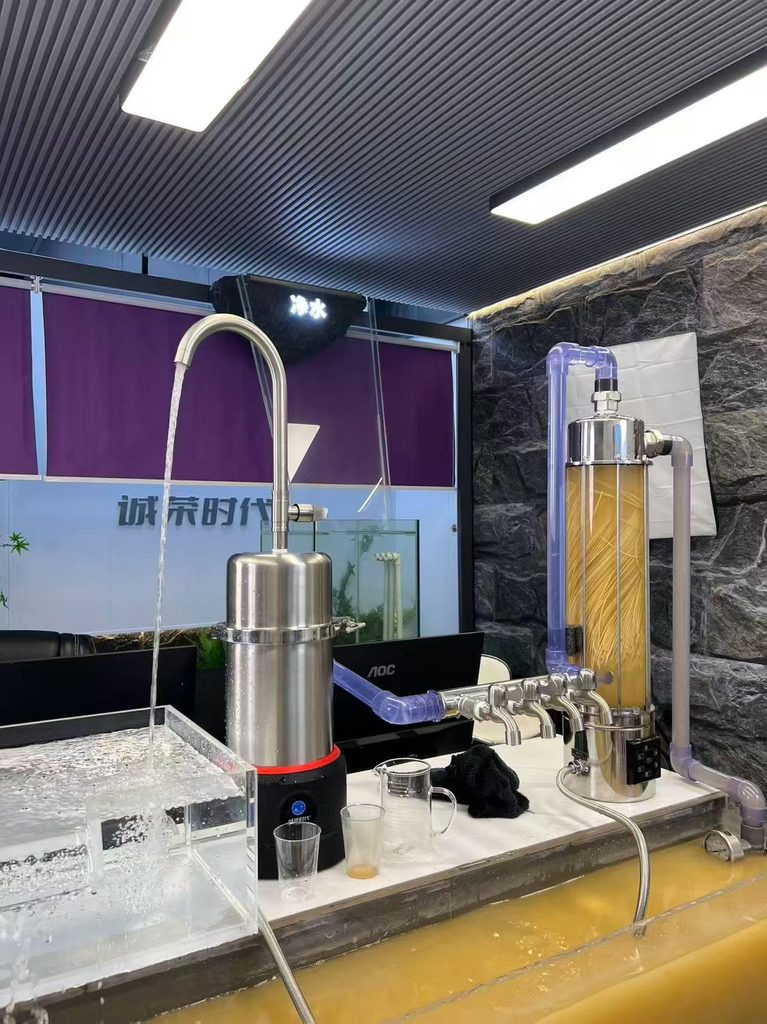
For products of this type, it is still important to verify the actual configuration, membrane performance validation, target contaminant removal data, microbial control measures, and filter maintenance requirements.
In particular, ultrafiltration generally cannot effectively remove dissolved salts. Therefore, the filtration precision of an ultrafiltration membrane alone cannot demonstrate that it can treat all dissolved contaminants.
Likewise, RO systems have their own applications and maintenance requirements. Both technologies have advantages and limitations, and the choice should be based on water source conditions, drinking water needs, and test results.
If your goal is to retain minerals, you can evaluate an activated carbon and ultrafiltration system suitable for your local water quality. If you need to significantly reduce TDS or treat specific dissolved contaminants, consider an RO system with validated removal performance for those contaminants.
6. Conclusion: Do Not Judge Water Filter Performance by Just Two Numbers
TDS values and the number of filtration stages can provide useful information about a water filter, but neither can independently determine water safety or purification performance.
A low TDS value does not mean that water is free from bacteria, viruses, suspended particles, or other specific contaminants. Similarly, a water filter with more filtration stages does not necessarily provide better purification.
When choosing a water filter, consider the water source, filter functions, target contaminant removal performance, complete system validation, and ongoing maintenance costs.
During use, it is even more important to replace filter cartridges according to the recommended schedule, maintain equipment hygiene, and use appropriate testing methods when specific water quality concerns arise.
What truly matters is not how many filtration stages a water filter has or how low its TDS value is, but whether the entire system can consistently and reliably meet your household’s actual drinking water needs.
FAQ: Frequently Asked Questions About TDS, Filter Cartridges, and Water Filters
1. What TDS value indicates good water quality?
Water safety cannot be determined from TDS alone. TDS primarily reflects the overall level of dissolved substances in water and cannot replace testing for microorganisms, specific contaminants, and other water quality indicators. Water quality should be evaluated in conjunction with the water source and applicable drinking water standards.
2. Does a low TDS value prove that a water filter works well?
Not completely. For an RO water filter, a reduction in TDS can help indicate desalination performance. However, it does not independently prove that all target contaminants have been effectively removed or replace comprehensive performance testing.
3. Should a PP sediment filter be replaced immediately if it turns yellow or black?
Visible discoloration may be associated with accumulated particles and other contaminants, but color alone cannot accurately determine the degree of contamination. Replacement decisions should consider service life, changes in flow rate, incoming water quality, and the manufacturer’s recommendations. If the filter has exceeded its specified service life, a low TDS value should not be used as a reason to delay replacement.
4. Does a water filter need at least five filtration stages?
No. There is no universal minimum number of filtration stages. A suitable configuration should be designed according to the water source, target contaminants, and verified system performance. More stages do not necessarily mean better purification.
5. Why do RO water filters need pre-carbon filtration?
Some RO membrane materials, particularly polyamide membranes, are sensitive to residual chlorine. Under appropriate design conditions, pre-filtration with activated carbon can help reduce residual chlorine in the feed water and minimize the risk of oxidative damage to the membrane. The actual configuration should follow the membrane manufacturer’s requirements.
6. Is a post-carbon filter necessary?
Not always. A post-carbon filter is generally used to improve the taste and odor of filtered water. Whether it is needed depends on the system design and user preferences. Replacement and hygienic maintenance requirements should be followed to prevent prolonged use beyond the recommended service life.
7. Can an ultrafiltration water filter replace an RO water filter?
Not in every situation. Ultrafiltration generally cannot effectively remove dissolved salts, whereas RO can significantly reduce many dissolved substances. If specific contaminants need to be treated, verify the device’s actual removal performance for those contaminants before choosing a technology.
8. Is activated carbon combined with ultrafiltration suitable for municipal tap water?
Some households may consider this combination, particularly when they want to reduce residual chlorine, odors, and particulate matter while retaining dissolved minerals. However, suitability depends on local water quality, target contaminants, validated system performance, and maintenance requirements. If dissolved contaminants need to be removed, ultrafiltration alone may not be sufficient.
9. How can you determine when a water filter cartridge needs replacement?
Follow the rated treatment capacity and replacement interval specified by the manufacturer, while considering actual water consumption, incoming water quality, and changes in flow rate, pressure, or output water quality. Different filter types have different failure mechanisms, so replacement decisions should not rely solely on TDS readings or visual appearance.
10. How can you confirm whether filtered water is safe to drink?
First, identify potential water quality risks, then select appropriate testing items and methods. TDS testing provides only partial information and cannot replace testing for microorganisms or specific chemical contaminants. When choosing a water filter, review the performance validation data for the target contaminants and maintain the entire system according to the manufacturer’s instructions.