If you do not want to buy a water filter that contains antiscalants, which filtration technology should you choose?
To answer this question, we first need to understand how scale forms and why RO reverse osmosis membranes are susceptible to scaling. Understanding these principles will help you better understand the characteristics of ultrafiltration water filters and the applications of activated carbon and ultrafiltration in municipal tap water purification.
1. How Does Limescale Form?
Limescale is mainly formed from minerals such as calcium and magnesium in water. When these substances reach certain concentrations and are affected by factors such as temperature and pH, they may precipitate and form solid deposits.
The solubility of calcium and magnesium ions is affected by temperature and water conditions. For some common scale-forming substances, higher water temperatures promote scale formation. This is why appliances that frequently heat water, such as water heaters and kettles, are particularly prone to limescale buildup.
In addition, when other conditions are similar, higher concentrations of calcium and magnesium ions generally increase the risk of scale formation. This is somewhat similar to traditional salt production, in which dissolved substances crystallize when conditions change.
2. Why Do RO Reverse Osmosis Water Filters Need to Address Scaling?
RO reverse osmosis membranes are a high-precision filtration technology that can effectively remove various dissolved substances from water, including calcium and magnesium ions, as well as contaminants such as bacteria.
During the operation of an RO reverse osmosis water filter, some water passes through the membrane to become purified water, while the remaining water carries away concentrated substances. As the concentration of salts on the concentrate side increases, certain substances may reach the conditions required for crystallization and form scale on the membrane surface.
Scale buildup may cause membrane fouling, reduce water production, increase operating pressure, and shorten the service life of the reverse osmosis membrane.
Therefore, RO reverse osmosis systems need appropriate scale-control measures. Depending on the system design and water quality, common approaches include using antiscalants, optimizing concentrate discharge and recovery rates, or applying suitable water-softening pretreatment.
It is important to note that not every household RO water filter necessarily requires the additional use of antiscalants. Whether antiscalants are used depends on the specific product design, filter configuration, and manufacturer’s instructions.
For consumers who do not want to use antiscalants, it is worth paying attention to the filtration technology and actual configuration when choosing a water filter.
3. What Type of Water Filter Does Not Contain Antiscalants?
If you want to avoid using antiscalants, you can consider an ultrafiltration water filter.
Ultrafiltration and RO reverse osmosis use different membrane separation principles. Ultrafiltration membranes are primarily designed to retain suspended particles, colloids, and certain microorganisms. Their pore sizes are generally larger than those of RO membranes, and they cannot remove most dissolved salts as effectively as RO membranes.
As a result, ultrafiltration systems generally do not continuously concentrate large amounts of dissolved salts on the concentrate side in the same way as RO systems. They also typically do not require antiscalants to control this type of membrane-surface scaling.
The main characteristics of ultrafiltration water filters include:
- Antiscalants are generally unnecessary: Ultrafiltration works differently from RO reverse osmosis and typically does not require antiscalants to control scaling on the concentrate side of an RO membrane.
- Most dissolved minerals are retained: Ultrafiltration primarily removes particles and certain microorganisms rather than targeting dissolved minerals.
- Suitable for specific water-quality conditions: For municipal tap water that meets drinking water requirements, ultrafiltration may be considered based on the actual water quality, product performance, and drinking water safety requirements.
It is important to note that ultrafiltration cannot remove all dissolved contaminants. The use of ultrafiltration technology alone does not guarantee that the output water is safe to drink directly. Actual performance depends on the source water quality, filter configuration, product performance, and maintenance.
4. Why Recommend an Activated Carbon + Ultrafiltration Water Filtration System?
If you use municipal tap water that meets drinking water requirements and want to retain most of its natural minerals while reducing the need for antiscalants, you can consider a filtration system that combines activated carbon and ultrafiltration.
Activated carbon is mainly used to adsorb residual chlorine, odors, and certain organic compounds. Ultrafiltration membranes primarily retain suspended particles, colloids, and certain microorganisms.
When combined, these two filtration materials can complement each other and provide additional purification for municipal tap water under suitable source-water conditions.
For municipal tap water with a relatively low TDS value, such as below 300 mg/L, activated carbon + ultrafiltration can be considered as one possible solution. However, TDS mainly indicates the total concentration of dissolved substances. It cannot independently determine whether water is safe or suitable for direct drinking. Local water quality test results and the performance of the specific water filter must also be considered.
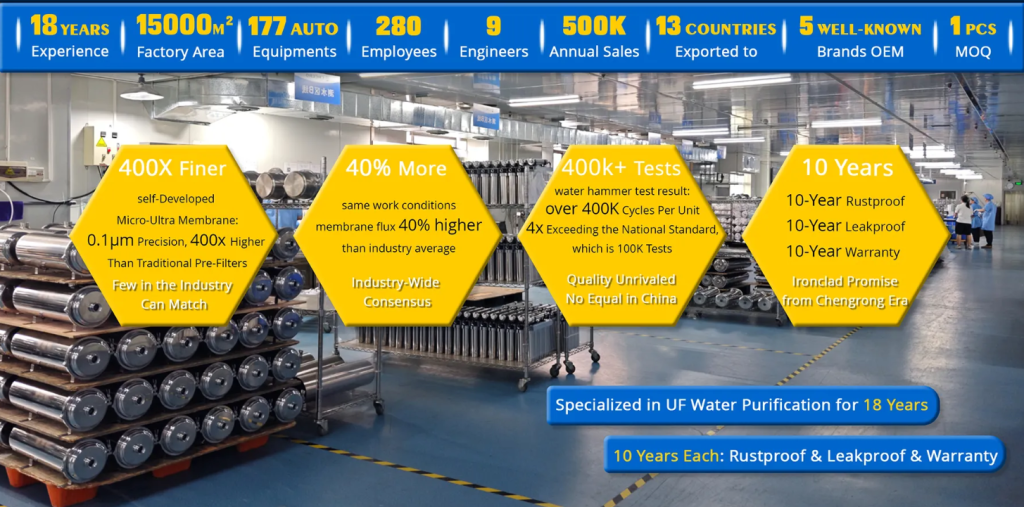
ChengrongTimes With Natural Minerals Retained Water Filter: An Activated Carbon + Ultrafiltration Solution
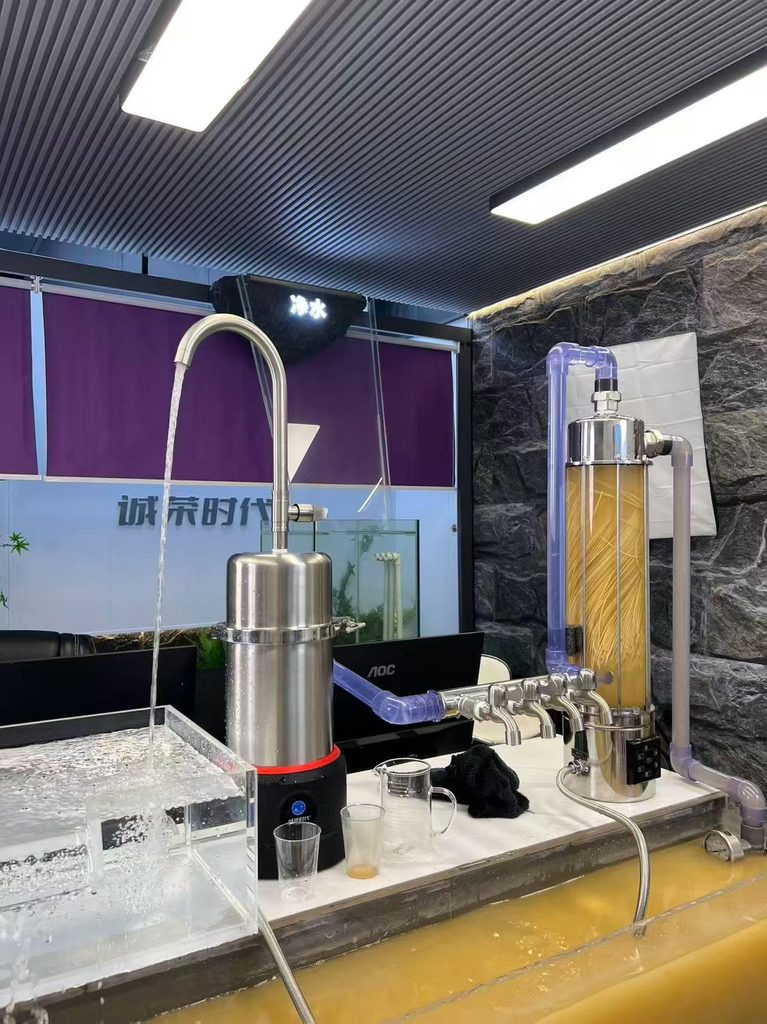
ChengrongTimes’ With Natural Minerals Retained Water Filter uses a combination of activated carbon fiber and a residual chlorine removal ultrafiltration membrane. It is primarily designed for the purification of municipal tap water that meets the relevant requirements.
The design concept is to combine the filtration characteristics of activated carbon and ultrafiltration membranes to reduce residual chlorine, odors, and certain contaminants while retaining most of the dissolved minerals in the water.
For consumers who want to reduce the use of antiscalants without removing large amounts of dissolved minerals through RO reverse osmosis, this type of product is worth exploring.
Of course, the actual purification performance and suitability for direct drinking should be evaluated based on the product’s test reports, certification documents, approved source-water conditions, and actual performance.
5. When Is an Ultrafiltration Water Filter Not Suitable?
Ultrafiltration is not suitable for every water source.
If the source water is heavily contaminated or contains dissolved contaminants that ultrafiltration cannot effectively remove, ultrafiltration alone may not meet drinking water safety requirements.
Therefore, for water sources that do not meet drinking water standards, it is not advisable to assume that installing an ultrafiltration water filter alone will make the water safe to drink directly.
If a stable supply of municipal tap water that meets drinking water standards is available, using qualified municipal tap water as the source for household drinking water and selecting an appropriate water filter based on actual water quality is a more reliable approach.
If other water sources must be used, the water should first be tested, and the treatment technology should then be selected according to the types of contaminants present.
6. Frequently Asked Questions (FAQ)
1. Which type of water filter generally does not require antiscalants?
Ultrafiltration water filters generally do not require antiscalants used to control scaling on RO reverse osmosis membranes because the two technologies operate according to different membrane separation principles. However, whether a specific product uses any chemical additives should be confirmed through its product documentation and actual configuration.
2. Do RO reverse osmosis water filters always contain antiscalants?
No. RO reverse osmosis systems need to address scaling, but the specific measures used depend on the source water quality, system design, and product configuration. When choosing a product, check the product specifications and filter configuration, and confirm the details with the manufacturer.
3. Can ultrafiltration water filters retain minerals in water?
Ultrafiltration primarily retains suspended particles, colloids, and certain microorganisms. It generally allows most dissolved minerals to pass through. However, the actual results depend on the membrane characteristics and product design.
4. Can water filtered by activated carbon + ultrafiltration be consumed directly?
Whether the water is safe to drink directly depends on the source water quality, the product’s actual purification capabilities, and proper hygiene and maintenance. This combination may be considered for municipal tap water that meets the relevant requirements, but the filtration technology alone cannot guarantee that the output water meets drinking water standards.
5. Is an ultrafiltration water filter suitable for tap water with a TDS value below 300?
A TDS value below 300 mg/L can serve as one reference point for understanding water quality. However, it cannot independently determine whether the source water is safe or guarantee that water treated by ultrafiltration is suitable for direct drinking. Local water quality test results, the types of contaminants present, and the actual performance of the water filter must also be considered.
6. Can an ultrafiltration water filter be used for heavily contaminated water?
Heavily contaminated water should not be treated using ultrafiltration alone. Ultrafiltration cannot effectively remove all dissolved contaminants. The appropriate treatment technology should be selected based on water quality test results. For water sources that do not meet drinking water requirements, the source-water safety issue must be addressed first.
Conclusion: Consider Ultrafiltration If You Want to Avoid Antiscalants
If you prefer not to use a water filter containing antiscalants, you can start by exploring ultrafiltration water filters and activated carbon + ultrafiltration systems.
For municipal tap water that meets drinking water requirements, these systems can help purify certain contaminants while retaining most dissolved minerals in the water. They also generally do not require the same scale-control measures used on the concentrate side of RO reverse osmosis membranes.
ChengrongTimes’ With Natural Minerals Retained Water Filter uses the combination of activated carbon fiber and a residual chlorine removal ultrafiltration membrane. Consumers concerned about antiscalants, mineral retention, and municipal tap water purification can explore this type of product based on their own water quality conditions.
When choosing a water filter, do not focus solely on whether it contains antiscalants. Consider the source water quality, contaminant removal capabilities, product test reports, and actual drinking water safety requirements as well.