
A reader recently asked us about the suitable inlet pressure for a whole-house ultrafiltration filtration system. This is a common question among homeowners and ultrafiltration water treatment professionals.
When people see ultrafiltration systems with filtration accuracy as fine as 0.1 or 0.01 μm, their first thought is often:
“Will such fine filtration affect my household water pressure and water flow rate after installation?”
This is also why we developed the Chengrong Formula — a practical approach to selecting the right ultrafiltration membrane flux specification based on actual water consumption and application requirements, rather than relying only on experience or simply selling a product to meet short-term goals.
When considering the recommended inlet pressure, whole-house ultrafiltration systems should be evaluated based on their application scenarios. Generally, they can be divided into two categories:
- Household whole-house ultrafiltration systems
- Engineering ultrafiltration systems
1. Household Whole-House Ultrafiltration Systems
For household whole-house ultrafiltration systems installed at the main water inlet and connected to a municipal water supply, users usually do not need to worry too much about whether the inlet pressure is 0.2 MPa or 0.3 MPa.
A whole-house UF system is generally suitable for homes with a stable and comfortable water supply. When filter cartridges are sized using the Chengrong Formula, pressure loss from filtration is negligible and need not be a concern. Likewise, standard household water pressure will not significantly accelerate membrane fouling under normal operating conditions.
However, we generally do not recommend directly connecting a deep well pump to a whole-house UF system without proper pretreatment.
This is because deep well water often contains more sediment and impurities, while the pump pressure is usually higher than a normal municipal water supply. Without proper pretreatment, these impurities can quickly accumulate on the ultrafiltration membrane, causing faster fouling and reducing membrane lifetime.
Once the membrane becomes severely fouled, restricted water flow may cause the deep well pump to operate under abnormal conditions, potentially leading to overheating and pump failure.
Why do we emphasize this point? Because for residential applications, ultrafiltration water filter is not limited to municipal water purification. It can also be an excellent choice for whole-house water treatment using natural water sources such as well water.
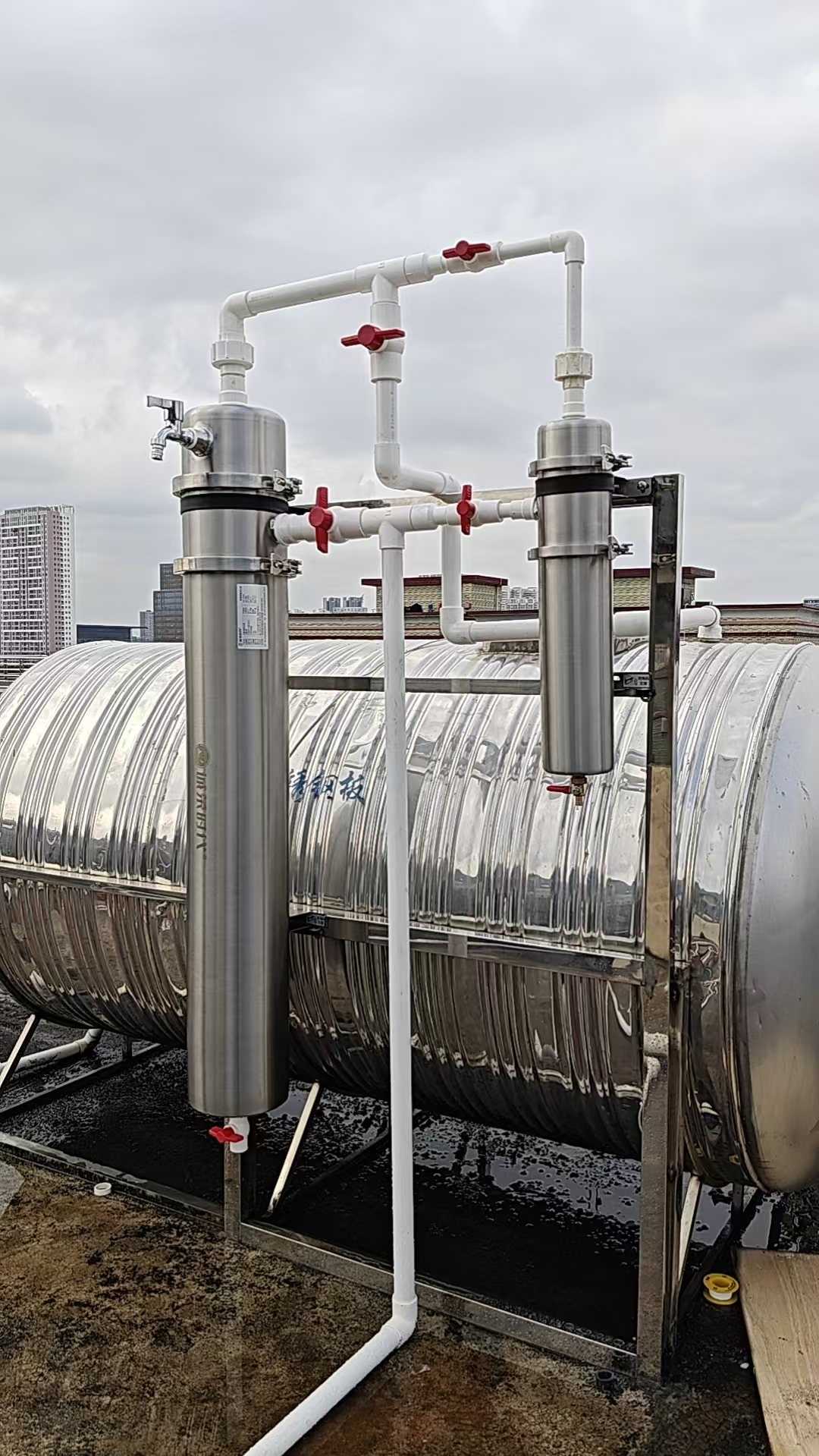
2. Deep Well Water Applications Require Additional Consideration
For houses using deep well pumps, we generally do not recommend directly connecting the pump output to an ultrafiltration system without proper pretreatment.
Deep well water often contains higher levels of sediment and impurities compared with municipal water. Without proper pretreatment and pressure control, these impurities may accelerate membrane fouling and affect system performance.
Additional treatment measures are usually required to protect both the ultrafiltration membrane and the pump.
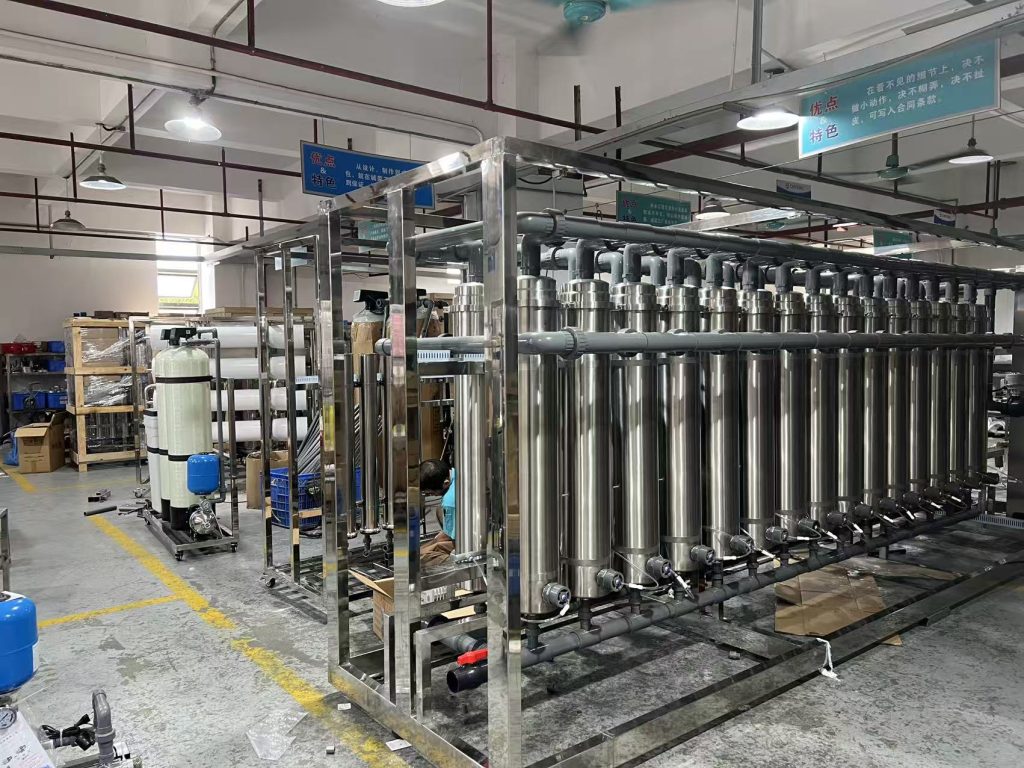
3. Recommended Pressure for Engineering UF Systems
For engineering ultrafiltration systems, we generally recommend maintaining the inlet pressure around:
0.05–0.1 MPa
Engineering ultrafiltration systems typically operate for extended periods and handle higher water throughput compared with household systems.
Therefore, maintaining a relatively low and stable inlet pressure helps control membrane flux, minimize contaminant accumulation on the membrane surface, and slow down membrane fouling.
The goal is to achieve a balance between water flow, membrane performance, and long-term system stability.
Conclusion
Higher water pressure does not always mean better filtration performance.
For ultrafiltration systems, stable operating conditions, proper pretreatment, and suitable pressure control are often more important than simply increasing pressure.
Ultrafiltration and reverse osmosis are not competing technologies; they are designed for different applications and have their own advantages. The key is selecting the right filtration technology based on actual water conditions and user requirements.
Compared with reverse osmosis systems, ultrafiltration typically requires lower operating pressure, making it a practical solution for whole-house water purification where stable flow, easy maintenance, and zero wastewater are important considerations.
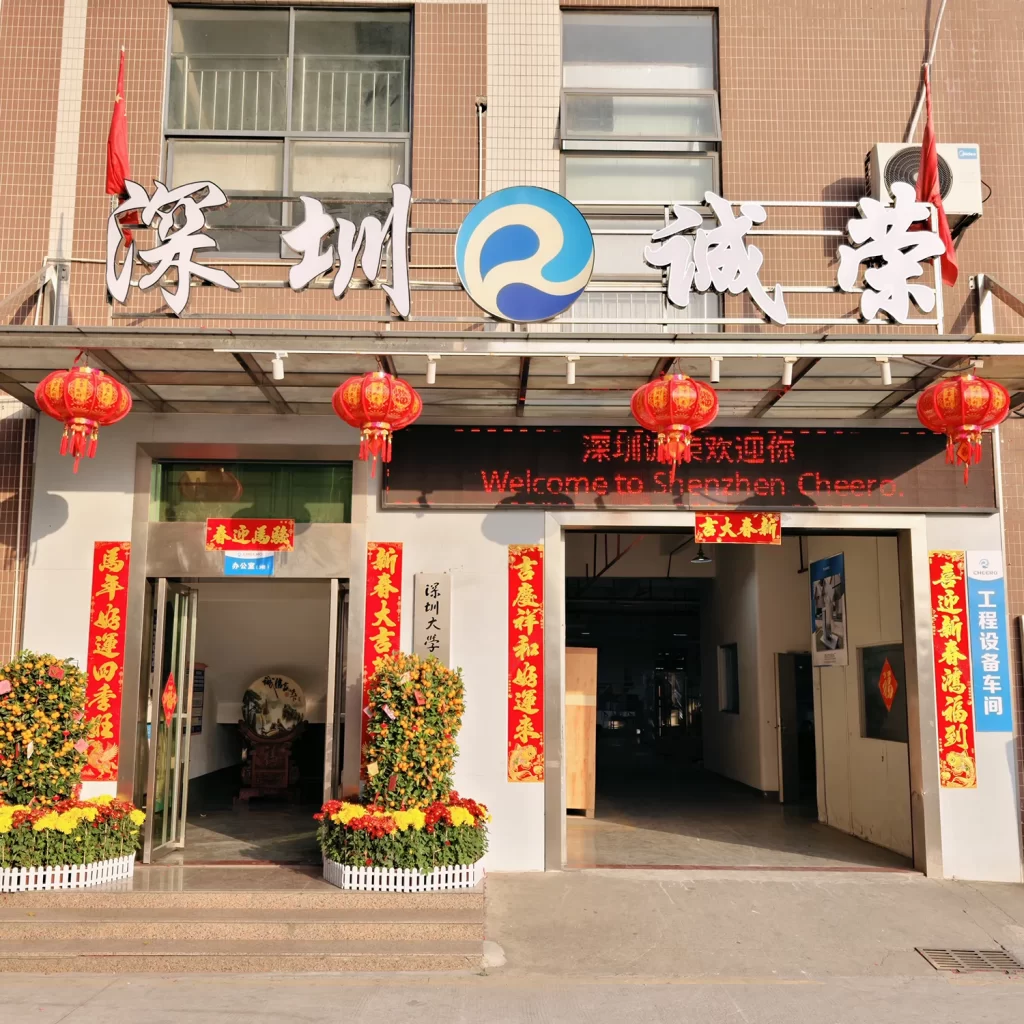
Ultrafiltration water filter made in Chengrong Factory, Built for Long-Term Reliability, Peace of Mind for Customers Worldwide
10-Year Corrosion Resistance Commitment
10-Year Leak Protection Commitment
10 Years of After-Sales SupportChengrongTimes Whole House Water Filtration Systems, Never Compromise on Quality and Service
FAQ
Q1. What water pressure is suitable for a household ultrafiltration water purifier?
Normal municipal water pressure is usually sufficient for household ultrafiltration systems. In most cases, users do not need to adjust the inlet pressure, because a properly selected UF system based on the Chengrong Formula can maintain stable water flow under normal household water pressure.
Q2. Can a deep well pump be directly connected to an ultrafiltration system?
It is generally not recommended to directly connect a deep well pump to an ultrafiltration system without proper pretreatment and pressure control. Deep well water may contain more sediment and impurities, and the relatively high pressure generated by the deep well pump may increase membrane flux and accelerate membrane fouling. Severe membrane fouling can restrict water flow, causing the pump to overheat and potentially fail.
Is higher water pressure better for ultrafiltration?
No. Higher pressure does not always mean better filtration performance. In ultrafiltration systems, excessive pressure is not necessarily an advantage. It may increase membrane flux, accelerate membrane fouling, and reduce membrane service life.