
Many homeowners worry that installing a whole home water filtration system will significantly reduce their home’s water pressure.
This concern is particularly obvious with whole house ultrafiltration water filter systems, where pressure drop is often cited as one of the main drawbacks.
The reason is easy to understand.
Ultrafiltration membranes typically have a pore size of approximately 0.1 microns, even 0.01 microns, making their filtration 10 to 50 times finer than that of conventional PP sediment cartridges. This ultra-fine filtration naturally creates greater resistance to water flow.
Therefore, if the ultrafiltration whole house water filtration system is installed on the main inlet pipe, it can cause a noticeable reduction in water pressure. In fact, some customers have reported pressure drops of 40% after installing an ultrafiltration water filtration system for the whole house.
However, this explanation recognizes the pressure-drop problem but fails to identify its true cause.
The drop in water pressure should not simply be blamed on the fine filtration rating of ultrafiltration membranes. For a whole house water filtration system, fine filtration is essential. A filtration rating of 0.1 microns enables the filtration system to effectively remove fine sediment, rust particles, colloids, and other small impurities, leaving the water noticeably clearer.
Ultrafiltration membranes do create greater resistance to water flow than 5-micron PP sediment filters. However, PP cartridges provide only limited filtration of the very fine particles commonly found in municipal tap water. After all, a filter rated at 5 microns cannot effectively capture particles as small as 1 micron.
So, if fine filtration is necessary, is there a way to prevent a noticeable drop in water pressure? And what is actually causing the problem in the first place?
In fact, as long as the membrane capacity of the ultrafiltration whole house water filtration system is properly matched to the household’s water demand, it would not cause a obvious pressure drop.
Then, why do so many users experience a high pressure drop after installing a whole house ultrafiltration water filter system?
One major reason is that exaggerated performance claims are widespread in our industry, while many suppliers and customers lack a proper understanding of how ultrafiltration systems actually work. As a result, they tend to focus only on the stated outlet flow rate of the whole home water filtration system.
However, an ultrafiltration system does not increase the water pressure and the water flow of the coming water.
Many ultrafiltration system are advertised as having flow rates of 8, 9, or even 10 metric tons per hour. In reality, if the incoming water pressure and supply conditions cannot deliver such a flow rate, the outlet of the ultrafiltration system certainly cannot achieve it either.
Therefore, the most important parameter of an ultrafiltration system is not its advertised outlet flow rate, but its membrane flux. Only an accurate membrane-flux rating can reliably reflect the system’s actual water production capacity.
Another important factor is that the flow rate of an ultrafiltration system does not remain constant throughout its service life. It gradually declines over time. Fouling and clogging of the membrane reduce water flow, while prolonged operation can also lead to performance loss. Regular manual cleaning and maintenance can restore part of the lost flow, but the system must still be designed with this gradual decline in mind.
For this reason, the relationship between membrane capacity and household water demand should not be calculated at a simple one-to-one ratio. A sufficient safety margin must be included to compensate for future flow reduction and ensure a stable long-term user experience.
Unfortunately, many suppliers in this industry have not invested enough effort in product development or system sizing. They do not fully understand the relationship between household water demand and membrane capacity. Instead, they continue using an unrealistic outlet flow-rate figure to represent the actual filtration capacity of the system.
Naturally, this results in a poor experience for the end user.

1) Scientifically match ultrafiltration membrane capacity to a household’s actual water demand.
2) It allows the system to deliver effective whole house water filtration system at 0.1 microns without compromising the water pressure and flow needed for comfortable everyday use.
The ChengRong Formula, also known as the Zhuang Membrane Capacity Sizing Method, is designed to quantify the relationship between the required capacity of a whole house water filtration system and a household’s water demand. It provides a practical solution to one of the most common challenges faced by end users: selecting the correct system size.
| Installation type | Sizing basis | Output unit |
|---|---|---|
| With a water tank | Total daily water consumption | L/day |
| Direct feed without a water tank | Peak simultaneous demand | L/h |
When a water storage tank is used
If the property has a water storage tank, the minimum required membrane capacity should be calculated according to the household’s total daily water consumption:
Minimum rated membrane capacity = Total daily household water consumption × 5
If the household’s total daily water consumption is unknown, it can be estimated according to the number of occupants. Under normal circumstances, each person uses approximately 200 litres of water per day. Therefore:
Minimum rated membrane capacity = 200 L/person/day × Number of occupants × 5
When no water storage tank is used
If the property does not have a water storage tank and water is supplied directly to the household, the system must be sized according to peak simultaneous water demand.
In this case, the calculation should be based on the number of faucets or water outlets likely to be used at the same time during peak-demand periods.
Assuming that each outlet requires approximately 300 litres per hour.
Minimum rated membrane capacity = 300 L/h × Number of taps used simultaneously during peak demand × 5
By selecting a whole house water filter according to the ChengRong Formula, suppliers and end users can avoid many of the most common sizing mistakes and significantly reduce the risk of insufficient flow or noticeable pressure loss.
Ultrafiltration water filter made in Chengrong Factory, Zero Worries for Global Customers
10 Years Rust-Free Guarantee
10 Years Leak-Free Assurance
10 Years Professional After-Sale Support
ChengrongTimes Whole House Water Filter, Never Compromise on Quality and Service
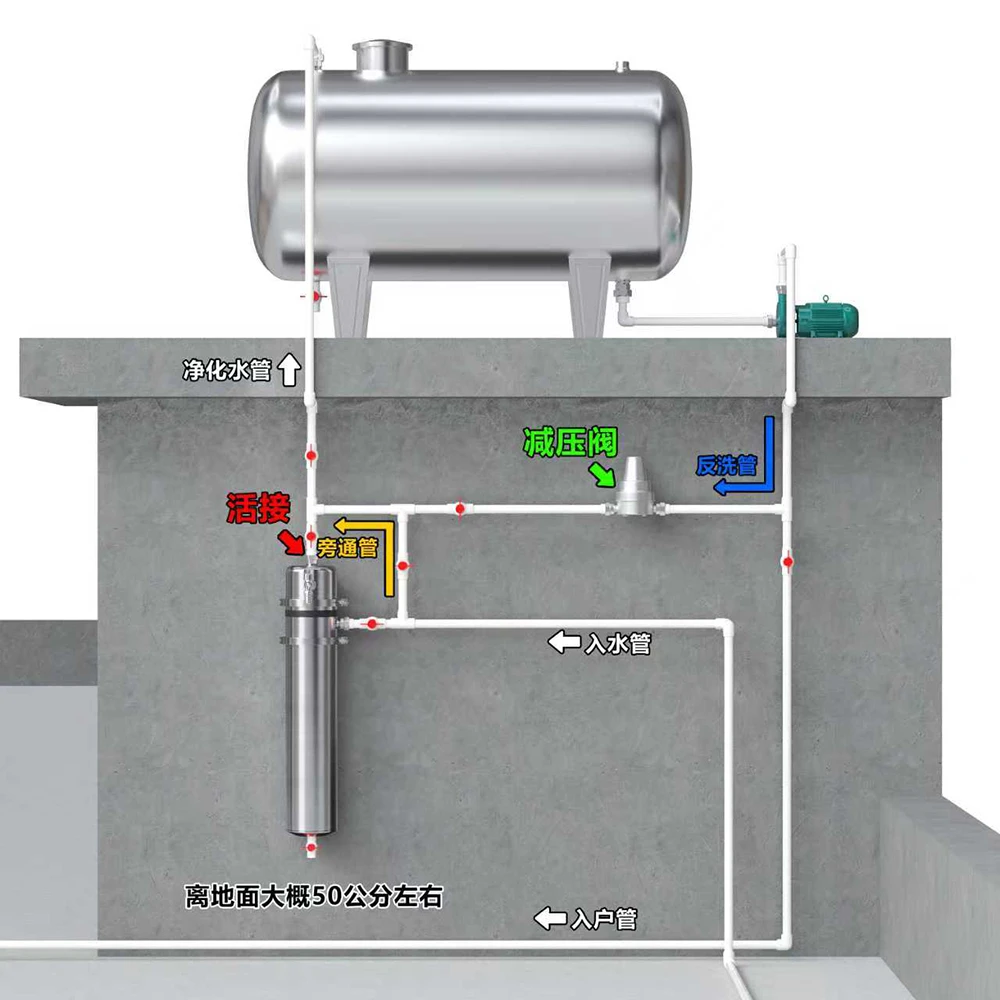
With a water storage tank, the ultrafiltration system can be sized according to the household’s total daily water consumption. The tank buffers peak water demand, helping maintain stable water pressure and flow throughout the home.
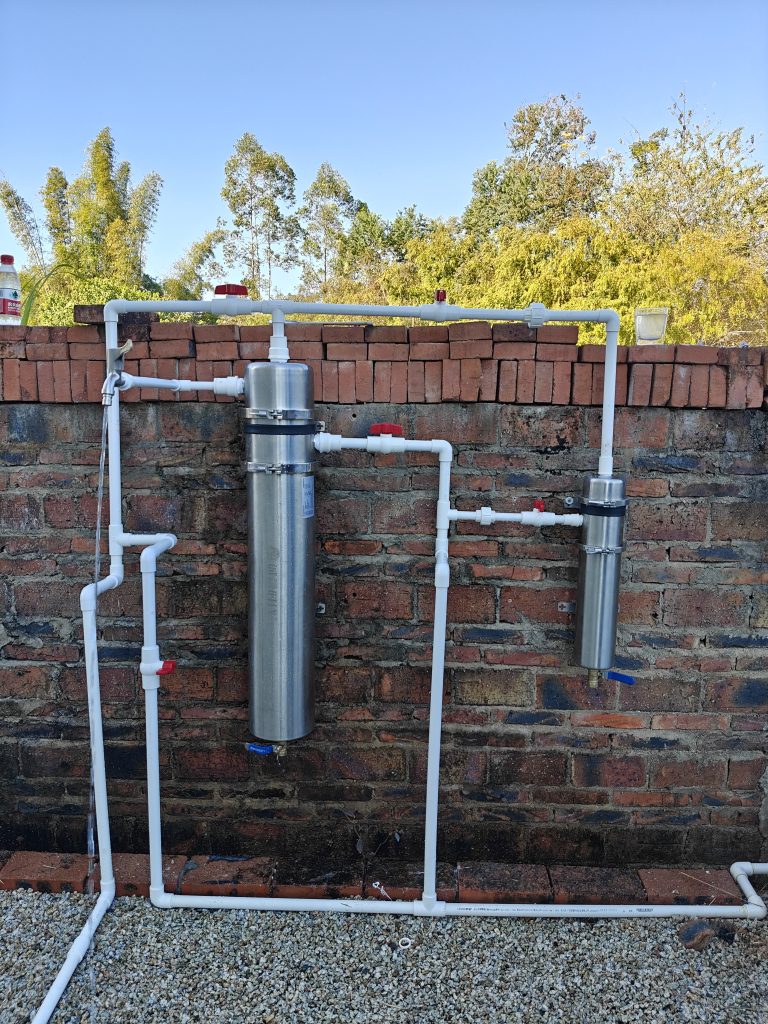
1) Without a water storage tank, the instantaneous water filtration capacity of the ultrafiltration whole home water filtration system must meet the household’s peak instantaneous flow demand.
2) System capacity should therefore be calculated based on the outlets used simultaneously during peak periods.
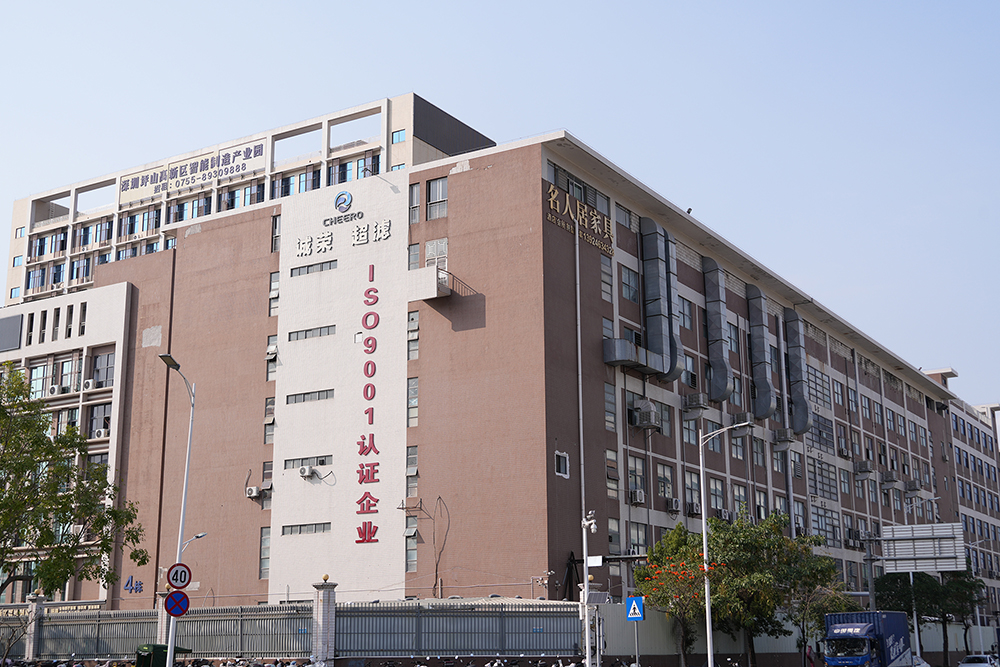
ChengrongTimes, a rare fully integrated manufacturer of whole home ultrafiltration water filtration systems