
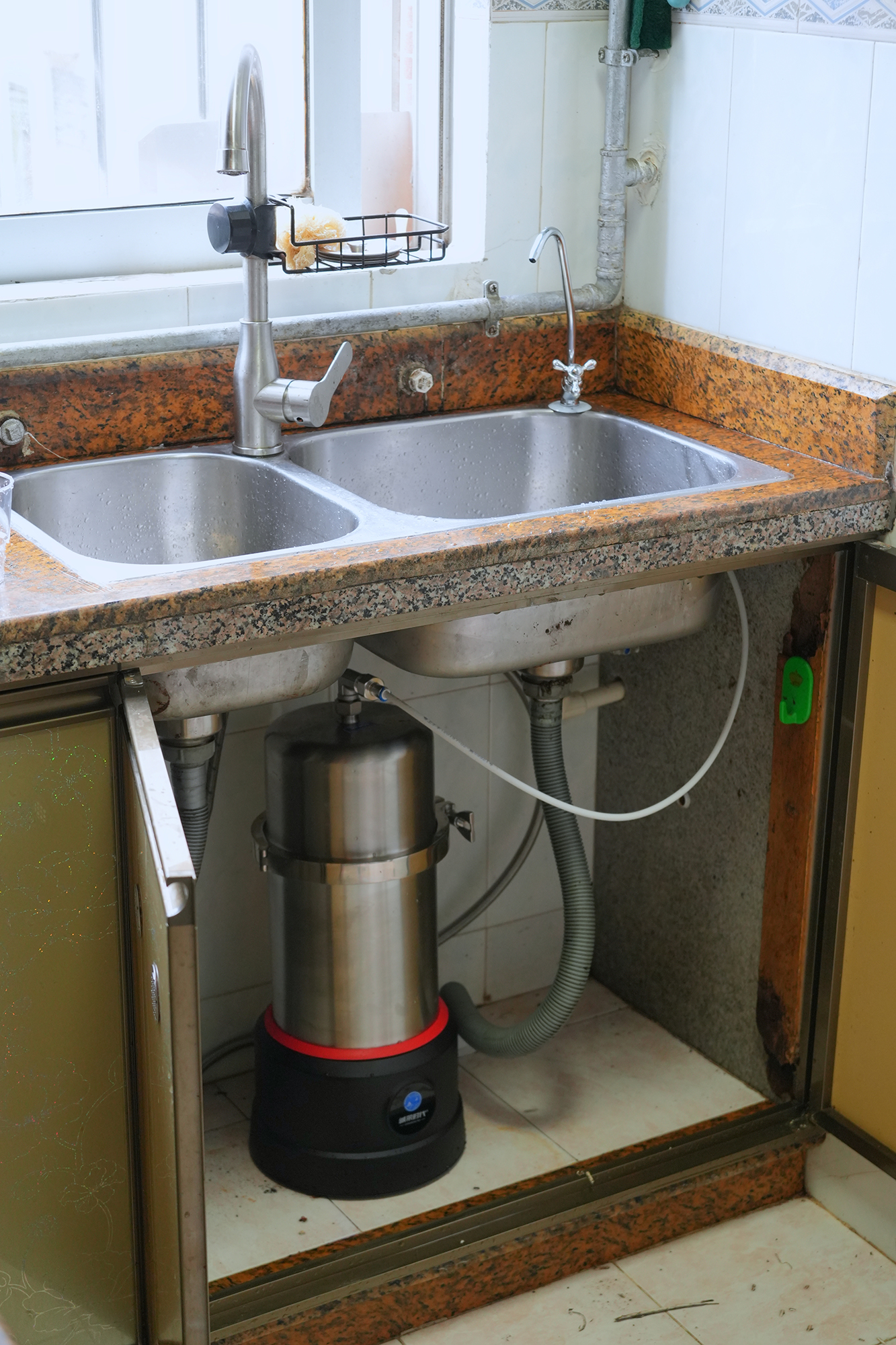
In recent years, we have noticed a common misunderstanding among consumers: the more filtration stages a under sink water filter has, the better the purification performance will be.
Many people believe that a water purifier with five, seven, or even more filtration stages must provide cleaner and safer drinking water than a system with fewer stages.
However, as a ultrafiltration water filtration system manufacturer, we know that the number of filtration stages does not determine the quality of purified water.
A well-designed filtration system is not about adding more filters. It is about using the right filtration technologies in the right order.
More Filtration Stages Do Not Actually Mean Better Filtration
A typical RO reverse osmosis under sink water purifier may include:
- PP: PP sediment filter
- GAC: granular activated carbon filter
- CTO: carbon block filter
- RO membrane
- T33: post-carbon filter
At first glance, it may seem that five filtration stages provide better purification than a system with fewer filters.
However, the overall purification performance is largely determined by the core filtration membrane, such as the RO membrane or ultrafiltration membrane.
The other filter stages are mainly designed to support and protect the core membrane, ensuring longer service life and more stable operation.
Why Do Under Sink Water Purifiers Need Multiple Stages of Pre-filters?
The PP filter, UDF carbon filter, and CTO carbon filter before the RO membrane are not mainly used to improve the final filtration precision.
Their primary purpose is pre-treatment.
1) PP Sediment Filter
The PP sediment filter, with a filtration rating of 5 μm, is designed to remove larger particles such as:
- Sand
- Rust particles
- Sediment
- Suspended solids
By reducing these impurities, the PP filter helps prevent premature clogging of the RO membrane and extends its service life.
2) Activated Carbon Filters (GAC & CTO)
Although activated carbon can reduce odors, colors, and improve taste, its most important function in an RO system is removing chlorine from municipal tap water before it reaches the RO membrane.
RO membranes provide extremely fine filtration and high rejection performance, but they are sensitive to chlorine.
A simple way to understand this is to imagine an RO membrane as an extremely fine “silk net”. Water molecules can pass through this net, while many contaminants, such as bacteria, viruses, dissolved minerals, salts, and other impurities, are effectively rejected.
However, long-term exposure to chlorine can damage the RO membrane material, causing oxidation and reducing its desalination performance.
Therefore, activated carbon filtration before the RO membrane is essential for protecting the RO membrane and extending its service life.
What Is the Purpose of the T33 Post-Carbon Filter?
The T33 post-carbon filter is commonly installed after the RO membrane.
Its main purpose is to improve the taste of purified water.
Because RO technology removes most dissolved substances, including natural minerals in water, RO-filtered pure water often has a lighter and flatter taste, which some consumers may find less satisfying compared with naturally mineral-containing water.
The post-carbon filter helps improve freshness and drinking experience before the water reaches the user.
Why We Choose Activated Carbon + Ultrafiltration for Municipal Tap Water
At Chengrong Ultrafiltration Factory, we have been dedicated to stainless steel ultrafiltration filter housings and ultrafiltration water purification solutions for nearly 19 years.
With our experience in ultrafiltration technology research, manufacturing, and system design, we are able to provide solutions covering a wide range of applications, including residential whole-house ultrafiltration water purification systems, under-sink drinking water purifiers, and industrial ultrafiltration equipment systems.
Through nearly 19 years of experience in the water treatment industry, we have learned that there is no single “perfect” water purification technology for every application. The right solution is not determined by the number of filtration stages, but by how well the technology matches actual water conditions, application requirements, and user expectations.
This is why we believe that water purification solutions should be designed according to actual water conditions rather than simply adding more filtration stages.
For municipal tap water applications, where basic water safety has already been ensured, we believe that water purification solutions should be designed according to actual water conditions and user requirements.
The goal is not always to remove everything from water. In many cases, consumers need water that is:
- Clean and safe
- Free from chlorine odor
- Pleasant to drink
- Able to retain naturally occurring minerals
This is why ChengrongTimes focuses on activated carbon + chlorine-reduction ultrafiltration technology for municipal tap water direct-drinking applications.
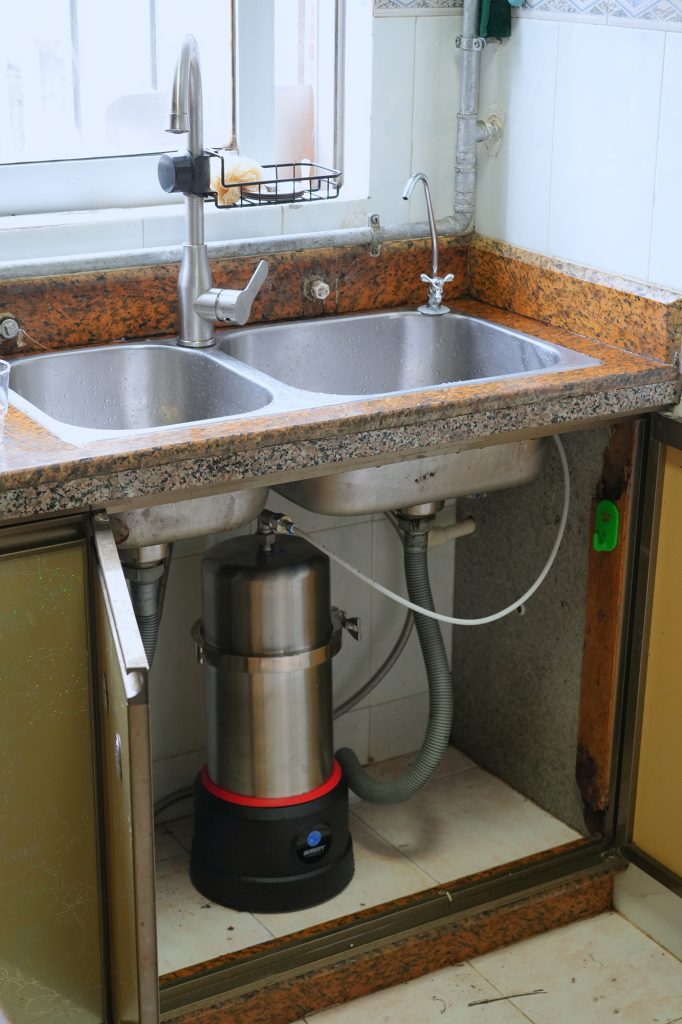
The Purpose of Pre-Filters in Under Sink Ultrafiltration Systems for Drinking
SSimilar to RO systems, under sink ultrafiltration systems with 0.01 μm membranes also require proper pre-treatment.
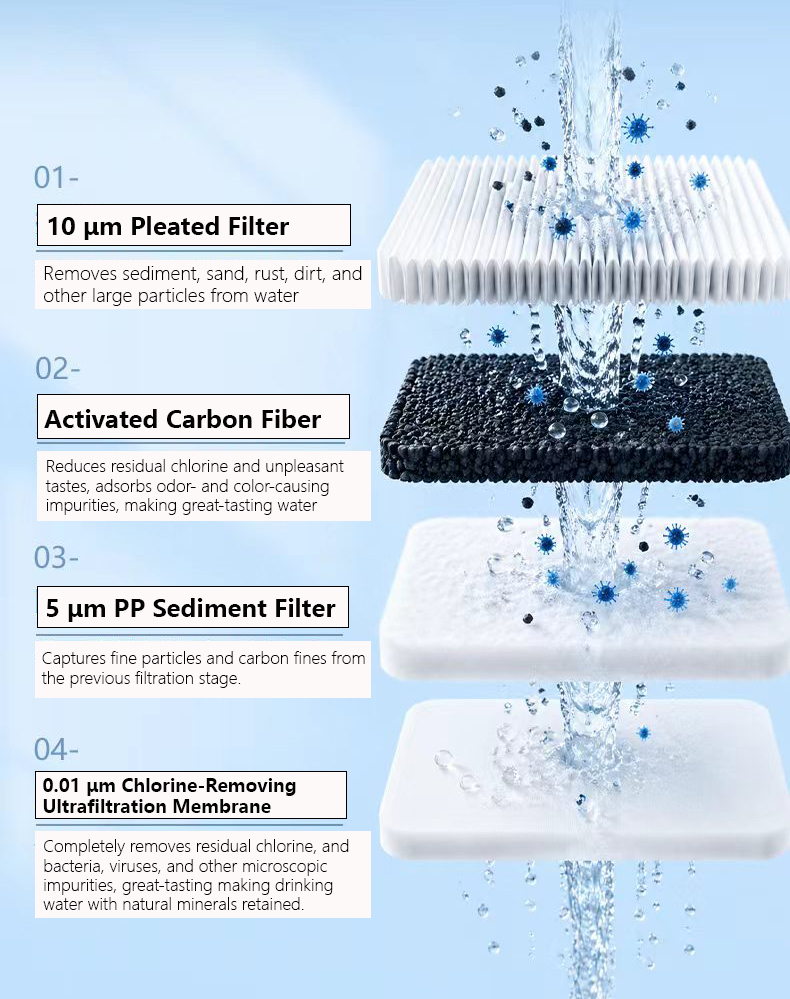
For ChengrongTimes under sink ultrafiltration water purifiers, we use a carefully designed multi-stage filtration system to treat municipal tap water while preserving naturally occurring minerals:
- 10 μm folded sediment filter
- Activated carbon fiber filter
- 5 μm PP filter
- 0.01 μm chlorine-reduction ultrafiltration membrane
These filtration stages are not added simply to increase the “number of stages.”
Each stage serves a specific purpose. The pre-filters help protect the chlorine-reduction ultrafiltration membrane by reducing sediment, chlorine, and other substances that may affect membrane performance and shorten its service life.
A good filtration system is built based on engineering logic, not by adding more cartridges simply to create more marketing claims.
ChengrongTimes’ Philosophy: The Right Technology for the Right Application
At ChengrongTimes, we believe that the best water purifier is not necessarily the one with the most filtration stages.
The best solution is the one that achieves the right balance between:
- Purification performance
- Drinking experience
- Maintenance cost
- Filter lifespan
- Long-term reliability
RO reverse osmosis and ultrafiltration are both valuable water purification technologies. The key is choosing the technology that matches the actual water source and user requirements.
For municipal tap water applications, we believe that activated carbon combined with ultrafiltration provides a balanced solution — delivering clean, great-tasting drinking water while preserving naturally occurring minerals.
Ultrafiltration water filter made in Chengrong Factory, Built for Long-Term Reliability, Peace of Mind for Customers Worldwide
10-Year Corrosion Resistance Commitment
10-Year Leak Protection Commitment
10 Years of After-Sales SupportChengrongTimes Whole House Water Filtration Systems, Never Compromise on Quality and Service
Frequently Asked Questions (FAQ)
1. Does more filtration stages mean better water purification performance?
No. More filtration stages do not necessarily mean better water purification performance.
In most multi-stage filtration systems, the additional filter stages are mainly designed to protect the core RO membrane or ultrafiltration membrane, improve system stability, and extend membrane service life.
The effectiveness of a water purification system depends on the core filtration technology and whether each filtration stage serves a specific purpose.
A well-designed filtration system is not about adding more filter cartridges, but about selecting the right filtration technologies based on actual water conditions and user requirements.
2. What is the difference between RO reverse osmosis and ultrafiltration?
RO reverse osmosis and ultrafiltration are two different water purification technologies designed for different applications.
For municipal tap water direct-drinking applications, the main difference is that RO technology removes most dissolved substances, including minerals and salts, resulting in water with significantly reduced mineral content. RO systems usually require electricity and generate wastewater during operation.
Ultrafiltration systems use a 0.01 μm membrane to reduce microorganisms and fine particles while preserving naturally occurring minerals in water. Many under-sink ultrafiltration systems can operate with normal municipal water pressure without additional power requirements and do not generate wastewater.
The best solution depends on the actual water conditions, application requirements, maintenance expectations, and desired drinking experience.
3. Why do RO water purifiers need activated carbon filters before the RO membrane?
Activated carbon filters are mainly used to reduce chlorine from municipal tap water before it reaches the RO membrane.
Although RO membranes provide high filtration performance, they are sensitive to chlorine. Long-term exposure to chlorine may damage the membrane material, reduce desalination performance, and shorten RO membrane service life.
4. Why do ultrafiltration water purifiers need pre-filters?
Pre-filters help protect the ultrafiltration membrane and improve system stability.
For example, ChengrongTimes under-sink ultrafiltration water purifiers use a combination of a 10 μm folded sediment filter, activated carbon filtration, and a 5 μm PP filter as pre-filtration stages before the 0.01 μm chlorine-reduction ultrafiltration membrane.
These pre-filters help reduce sediment, chlorine, and other substances that may affect membrane performance and service life.
5. Does ultrafiltration remove beneficial minerals from drinking water?
No. Ultrafiltration generally preserves naturally occurring minerals in water.
Unlike RO technology, which removes most dissolved substances, ultrafiltration focuses on reducing microorganisms and fine particles while maintaining the natural mineral balance of water.
This makes ultrafiltration systems a suitable choice for many municipal tap water applications where basic water safety has already been ensured.
For these applications, the goal is not always to remove everything from water, but to achieve a balance between purification performance, drinking experience, and mineral preservation.
6. Why does ChengrongTimes choose activated carbon + ultrafiltration for municipal tap water?
At ChengrongTimes, we believe that water purification solutions should be designed according to actual water conditions rather than simply adding more filtration stages.
For municipal tap water applications, activated carbon combined with ultrafiltration provides a balanced solution by reducing chlorine, odors, microorganisms, and fine particles while preserving naturally occurring minerals.
Municipal tap water is commonly disinfected to ensure safety, which may result in residual chlorine remaining in the water. Therefore, ChengrongTimes integrates activated carbon technology with chlorine-reduction ultrafiltration solutions to reduce chlorine, improve taste, and provide clean drinking water while preserving naturally occurring minerals.
7. What filtration technology does ChengrongTimes use in its under-sink ultrafiltration water purifier?
ChengrongTimes under-sink ultrafiltration water purifier uses a 4-stage composite filtration system:
- 10 μm folded sediment filter
- Activated carbon fiber filter
- 5 μm PP sediment filter
- 0.01 μm chlorine-reduction ultrafiltration membrane
Each filtration stage has a specific purpose, from sediment reduction and chlorine reduction to membrane protection and microorganism control.