
Description:
Compare under sink water filters by filtration technology, tested performance, filter life, and maintenance costs. Explore our ChengrongTimes filter and its SGS testing information.
Best Under Sink Water Filter: A Complete Buying Guide to Filtration Technology, Filter Life, and Long-Term Costs
Choosing the best under sink water filter involves more than comparing purchase prices or counting filtration stages. The right system should meet your household’s water treatment needs, provide appropriate filtration performance, deliver sufficient water flow, and keep replacement and maintenance costs manageable.
For homeowners shopping for an under sink water filter for drinking and cooking, the most important factors include filtration technology, contaminant reduction performance, filter cartridge life, water efficiency, installation requirements, and long-term ownership costs.
This guide compares the key purchasing considerations and introduces our ChengrongTimes Under Sink Water Filter to help you determine which filtration solution best fits your household.
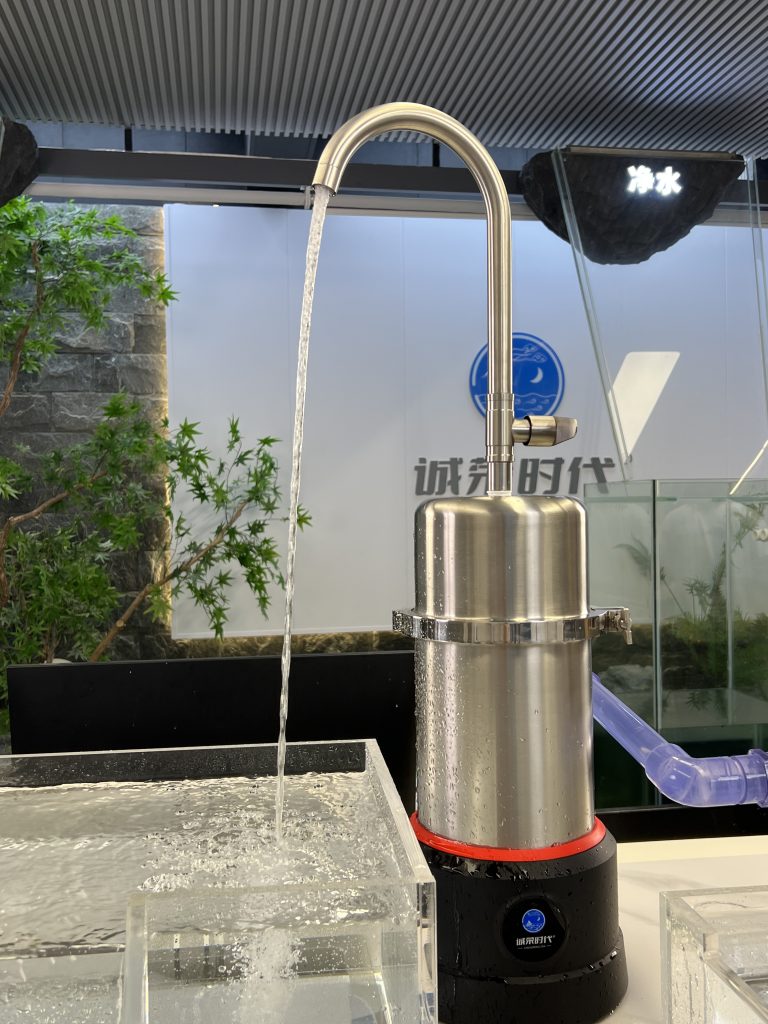
1. How to Choose the Best Under Sink Water Filter
The best under sink water filter is not necessarily the system with the most filtration stages, the smallest advertised pore size, or the highest price. It is the system that meets your actual water treatment requirements while remaining practical and affordable to maintain.
Use the following comparison to evaluate an under sink water filter before purchasing.
| Buying Factor | What to Check | Why It Matters |
|---|---|---|
| Filtration technology | Activated carbon, ultrafiltration (UF), or reverse osmosis (RO) | Different technologies target different contaminants |
| Filtration performance | Specific contaminant reduction data and third-party test results | Helps determine whether the system addresses your water concerns |
| Filtration rating | Stated membrane pore size, testing conditions, and supporting data | Helps assess particle separation but does not establish removal of every contaminant |
| Filter life | Rated capacity, recommended replacement interval, and operating conditions | Determines how often cartridges need replacing |
| Flow rate | Rated flow under specified conditions | Affects convenience when filling glasses and preparing meals |
| Water efficiency | Whether the system produces a reject-water stream | Influences water consumption and installation requirements |
| Maintenance cost | Replacement cartridges, service parts, and labor | Determines long-term ownership costs |
| Installation | Plumbing connections, dedicated faucet requirements, and drain connections | Determines compatibility with your kitchen |
| Construction | Wetted materials, pressure rating, warranty, and leak protection | Affects reliability and maintenance requirements |
Before choosing the best under sink water filter, identify the contaminants you need to address. The U.S. Environmental Protection Agency (EPA) recommends evaluating home water treatment systems based on their specific performance claims and applicable certifications rather than relying on general marketing statements.
Reference: EPA Home Water Treatment System Selection Guide.
2. Under Sink Water Filter Comparison: UF vs. RO vs. Activated Carbon
Filtration technology is one of the most important differences between under sink water filters. A smaller advertised pore size or a greater number of filtration stages does not automatically make a system the best choice for every household.
| Feature | Activated Carbon | Ultrafiltration (UF) | Reverse Osmosis (RO) |
|---|---|---|---|
| Primary function | Improves taste and odor and reduces specified contaminants | Separates suspended particles and certain microorganisms, depending on validated membrane performance | Reduces many dissolved substances and specified contaminants |
| Chlorine reduction | Commonly available, depending on the media and test results | Depends on whether activated carbon or other pretreatment is included | Depends on the complete system design and pretreatment |
| Bacteria reduction | Carbon alone does not generally guarantee bacteria removal | Possible when supported by appropriate performance testing | Depends on membrane performance and overall system integrity |
| Dissolved salts and TDS | Generally limited reduction | Generally does not substantially reduce dissolved salts | Designed to reduce many dissolved substances |
| Natural mineral retention | Generally retains dissolved minerals | Generally retains dissolved minerals | Reduces many dissolved minerals |
| Reject water | Typically does not produce a separate reject-water stream | Typically does not produce a separate reject-water stream | Conventional systems produce reject water |
| Maintenance | Depends on cartridge capacity and source water quality | Depends on cartridge capacity, membrane fouling, and source water quality | Includes replacement of multiple filters and potentially the RO membrane |
| Best suited for | Taste, odor, and specified contaminant reduction | Particle filtration with substantial retention of dissolved minerals | Situations requiring reduction of specified dissolved contaminants |
These are general characteristics of each technology, not guarantees of individual product performance. Actual results depend on system design, verified performance claims, incoming water quality, and proper maintenance.
Which filtration technology should you choose?
Choose activated carbon filtration if your primary concerns are chlorine, taste, and odor, provided the specific product has appropriate performance data for those purposes.
Recommended Reading:How to Remove Chlorine from Tap Water?
Consider ultrafiltration (UF) if you want to filter suspended particles while retaining most naturally occurring dissolved minerals. Verify any claims about bacteria or other microorganisms against product-specific test results.
Consider reverse osmosis (RO) if you need substantial reduction of specific dissolved contaminants. Compare verified reduction data, water recovery, and replacement costs before making a decision.
The best under sink water filter is the one that matches your actual water quality and treatment goals—not simply the one with the most impressive specifications.
3. How to Evaluate Filtration Performance and Testing Standards
A reliable under sink water filter buying guide should distinguish between a manufacturer’s performance claims, third-party test results, and product certifications.
Several NSF/ANSI standards are commonly referenced in the U.S. drinking water treatment market.
| Standard | General Scope | What Buyers Should Verify |
|---|---|---|
| NSF/ANSI 42 | Aesthetic effects, including specified chlorine, taste, and odor reduction claims | Whether the exact model has supporting performance evidence for the desired reduction |
| NSF/ANSI 53 | Health-related contaminant reduction claims | Which specific contaminants are covered by the test or certification |
| NSF/ANSI 58 | Reverse osmosis drinking water treatment systems | The exact system and applicable contaminant reduction claims |
| NSF/ANSI 401 | Specified emerging or incidental contaminants | Which substances the product has been evaluated to reduce |
A standard number alone does not mean that a product removes every contaminant associated with that category. The actual scope depends on the specific test, performance claim, and product configuration.
For example, if lead or PFAS reduction is a priority, check whether the exact model has applicable NSF/ANSI 53 or NSF/ANSI 58 contaminant reduction claims. Verify the product through the relevant certification body’s directory when certification is claimed.
The EPA also cautions that existing certification claims do not necessarily establish that a product reduces contaminants to current EPA drinking water limits.
Our ChengrongTimes Under Sink Water Filter: SGS Testing
At ChengrongTimes, we take product quality and filtration performance evaluation seriously.
Our Under Sink Water Filter has been submitted to SGS for testing in accordance with relevant NSF standards, and the test results meet the applicable requirements.
SGS is an internationally recognized testing, inspection, and certification organization. Independent third-party testing can provide useful evidence for evaluating product performance and gives buyers more information than general marketing claims alone.
When evaluating a water filtration system, we encourage customers to review the specific test standards, test items, and reported results to determine whether they match their household’s water treatment needs.
It is important to distinguish between testing conducted according to NSF standards and receiving NSF certification for an entire product. These are not the same thing. The scope and significance of our product’s testing should be understood in accordance with the applicable test report.
If you are particularly concerned about lead, PFAS, arsenic, nitrate, or another specific contaminant, verify that the product has adequate supporting test data or applicable certifications for that contaminant. A UF membrane, activated carbon cartridge, or stated pore size alone does not guarantee adequate removal.
References:
- NSF: NSF/ANSI 42, 53, and 401 Filtration System Standards
- EPA: Reducing PFAS in Your Drinking Water with a Home Filter
4. Under Sink Water Filter Cartridge Life: How Often Should You Replace It?
Filter life is an important factor when comparing the best under sink water filter options. A system with a low initial price may become more expensive over time if its cartridges require frequent replacement.
When evaluating cartridge life, focus on three factors:
- Rated capacity: The volume of water a cartridge is designed to treat under specified conditions.
- Recommended replacement interval: The manufacturer’s recommended service period, which may depend on time, water volume, or both.
- Incoming water quality: Sediment levels and contaminant concentrations can affect actual cartridge life and performance.
For example, a cartridge advertised to last up to one year may need replacement sooner in a household with high water consumption or water containing substantial sediment.
Likewise, low water consumption does not justify extending a cartridge’s service life indefinitely if the manufacturer specifies a time-based replacement schedule.
Filter Replacement Features of Our ChengrongTimes Under Sink Water Filter
According to our published product specifications, our Under Sink Water Filter uses a four-in-one composite cartridge with a stated replacement interval of up to one year.
Our monitoring system tracks cumulative water usage and real-time flow rate. According to the published specifications, the replacement indicator changes from blue to red when cumulative water usage reaches 100,000 liters (approximately 26,400 U.S. gallons), reminding users to replace the cartridge.
The flow-rate monitoring feature can also help users identify potential UF membrane clogging.
These features make routine cartridge maintenance more convenient than relying solely on a calendar reminder.
However, the 100,000-liter monitoring threshold should not be interpreted as independently verified contaminant reduction capacity or a guarantee that the cartridge will maintain the same performance throughout that entire volume. Actual replacement timing and filtration performance should follow the complete product instructions and applicable test documentation.
View our product specifications: ChengrongTimes Under Sink Water Filter.
5. Under Sink Water Filter Cost: How to Calculate Long-Term Expenses
Choosing the best under sink water filter means considering more than the initial purchase price. Calculate the total cost of ownership over three to five years to make a more meaningful comparison.
What costs should you include?
| Cost Category | What to Include |
|---|---|
| Initial purchase | Main unit, included cartridge, fittings, and accessories |
| Replacement cartridges | Price per cartridge multiplied by the expected number of replacements |
| Installation | DIY supplies or professional installation |
| Water consumption | Water used by the system, including reject water where applicable |
| Maintenance | Cleaning, replacement parts, and service labor |
| Warranty-related costs | Coverage terms, exclusions, and repairs outside the warranty |
Use this formula:
Total cost of ownership = Initial purchase + Cartridge replacements + Installation + Water costs + Maintenance
For a fair comparison, use the same ownership period and estimated household water consumption for each system.
For example, a system requiring one cartridge replacement per year may offer a predictable maintenance schedule. Whether it is more economical depends on the cartridge price, rated capacity, and actual operating conditions.
An RO system may be the more appropriate choice when you need reduction of specific dissolved contaminants, but its total cost should also account for replacement filters, the RO membrane, and reject-water production.
Does an Under Sink Water Filter Waste Water?
Conventional reverse osmosis systems produce a reject-water stream during operation. The amount varies by system design and operating conditions.
Our ChengrongTimes Under Sink Water Filter uses ultrafiltration rather than reverse osmosis. Our product is advertised as operating without wastewater during filtration and features a dual-outlet design:
- Four-stage filtered water outlet: Intended for drinking and cooking.
- Three-stage filtered water outlet: Intended for washing produce and dishes.
For households seeking a filtration system without an RO reject-water connection, this design may be worth considering.
Before purchasing, confirm the installation configuration and the intended function of each outlet in the product documentation.
6. Our ChengrongTimes Under Sink Water Filter: Key Features to Consider
If your priorities include high water flow, retention of natural minerals, and convenient routine maintenance, our ChengrongTimes Under Sink Water Filter is worth evaluating.
1. Four-in-One Composite Filtration
According to our published product specifications, the composite cartridge contains four filtration components:
- A 10-micron pleated sediment filter.
- Activated carbon fiber.
- A 5-micron polypropylene sediment filter.
- A 0.01-micron chlorine-removing ultrafiltration membrane.
This combination is designed to address sediment, chlorine, taste, odor, and other specified impurities through successive filtration stages.
The final UF membrane provides an additional filtration barrier after the carbon stage. However, claims regarding bacteria, viruses, or individual chemical contaminants should be evaluated using relevant product-specific test reports.
A stated membrane pore size of 0.01 micron alone does not establish that a product removes every bacterium, virus, or dissolved contaminant.
2. High Rated Water Flow
Our product page specifies a maximum flow rate of up to 660 liters per hour (approximately 175 U.S. gallons per hour).
This is a published rated figure, not a guarantee of the flow rate in every kitchen. Actual performance depends on incoming water pressure, water conditions, installation, and cartridge condition.
When comparing high-flow under sink water filters, check the manufacturer’s test conditions and confirm how the system performs under your household’s actual water pressure.
3. Ultrafiltration Designed to Retain Natural Minerals
Because our system uses ultrafiltration rather than reverse osmosis, it is designed to retain most naturally occurring dissolved minerals instead of substantially reducing them through RO treatment.
This may appeal to households that want filtration without substantial dissolved-solids reduction.
However, mineral retention does not establish that the source water is safe. If your water contains excessive levels of dissolved contaminants, choose a treatment system specifically validated for those contaminants.
4. 316L Stainless Steel Housing
Our published specifications identify the housing material as 316L stainless steel, with an ABS base.
The product page also states that the housing carries a 10-year warranty against rust and leakage.
Before purchasing, review the applicable warranty terms, including coverage conditions, exclusions, and the specific components covered.
A housing warranty should not be confused with a cartridge warranty or a guarantee of drinking water quality.
5. Third-Party Testing to Support Product Evaluation
In addition to filtration design, rated flow, and cartridge monitoring, product testing is another important consideration when choosing an under sink water filter.
Our ChengrongTimes Under Sink Water Filter has been submitted to SGS for testing in accordance with relevant NSF standards, and the test results meet the applicable requirements.
Third-party testing can provide supporting evidence for product evaluation. We encourage buyers to review the actual report to understand the test items, methods, applicable standards, and results.
The scope of any performance claim should match the evidence in the report. Testing according to NSF standards should not be represented as NSF certification of the entire product, and results for specific test items should not be extended to contaminants that have not been evaluated.
6. Is Our Under Sink Water Filter Right for Your Home?
Our system may be worth considering if you:
- Need an under sink water filter for municipal water or well water that has been tested and confirmed suitable for the intended application.
- Prefer ultrafiltration that retains most naturally occurring dissolved minerals.
- Want a high-flow system for drinking, cooking, and other kitchen tasks.
- Prefer a design that does not require a conventional RO reject-water drain connection.
- Value stainless steel housing and water-usage monitoring.
- Want to consider third-party testing information when evaluating product performance.
However, if you specifically need to reduce dissolved salts, nitrate, arsenic, PFAS, lead, or another contaminant for which our product has not demonstrated adequate reduction, you should not rely on the published specifications alone.
We recommend comparing your water test results with the product’s verified performance data before making a purchase.
Explore our product: ChengrongTimes Under Sink Water Filter.
7. Final Buying Checklist for the Best Under Sink Water Filter
Before purchasing an under sink water filter, use this checklist to compare your options:
- Identify the contaminants you need to reduce.
- Review your local water quality report or obtain an appropriate water test.
- Verify the specific model’s filtration claims, test reports, and applicable certifications.
- Compare activated carbon, UF, and RO according to your needs.
- Check the rated flow rate under the stated operating conditions.
- Verify cartridge capacity and replacement intervals.
- Calculate the total cost of ownership over three to five years.
- Confirm whether the system produces reject water.
- Check cabinet space, plumbing connections, and faucet requirements.
- Review warranty terms, installation instructions, and replacement cartridge availability.
The best under sink water filter is the one that meets your household’s actual water treatment needs and remains practical to maintain throughout its service life.
If you prioritize natural mineral retention, high flow, a four-in-one composite cartridge, and a UF design without conventional RO reject-water production, explore our ChengrongTimes Under Sink Water Filter specifications and determine whether the system matches your requirements.
Frequently Asked Questions (FAQ)
1. What is the best under sink water filter for home use?
The best under sink water filter depends on your source water and the contaminants you need to reduce. Activated carbon can improve taste and odor, UF can separate suspended particles and certain microorganisms when supported by validated performance data, and RO can reduce many dissolved contaminants. Compare verified performance claims, maintenance costs, and installation requirements before choosing.
2. Is an under sink UF water filter better than reverse osmosis?
Neither technology is universally better. UF may suit households that want particle filtration, retention of most dissolved minerals, and a system without conventional RO reject-water production. RO may be more appropriate when reducing specific dissolved contaminants is a priority. The right choice depends on water test results and verified system performance.
3. Does a 0.01-micron under sink water filter remove bacteria and viruses?
A stated pore size alone does not establish complete bacteria or virus removal. Performance depends on membrane characteristics, system integrity, operating conditions, and validated test results. Ask the manufacturer for relevant supporting data before relying on a filter for microbiological protection.
4. How long does an under sink water filter cartridge last?
Cartridge life varies by product, rated capacity, household usage, and incoming water quality. Some cartridges have time-based replacement schedules, while others also use volume-based monitoring. Follow the specific manufacturer’s instructions rather than assuming every cartridge lasts the same amount of time.
5. How much does it cost to maintain an under sink water filter?
Total maintenance costs depend on cartridge prices, replacement frequency, installation, water consumption, and service requirements. Compare projected costs over three to five years instead of focusing only on the initial purchase price.
6. Does an under sink water filter waste water?
Many activated carbon and UF systems do not produce a separate reject-water stream during filtration. Conventional RO systems do. Actual water use depends on system design and operating conditions, so check the manufacturer’s specifications.
7. Can an under sink water filter remove lead and PFAS?
Some systems have verified reduction claims for lead or specific PFAS compounds, but not all under sink water filters provide this capability. Check the exact model’s applicable certifications and contaminant reduction data. The EPA also provides guidance on selecting filters for PFAS and lead reduction.
8. Is our ChengrongTimes Under Sink Water Filter suitable for well water?
Our published product information lists municipal water and tested, suitable potable well water as potential source options. Well water quality varies significantly, so test the water before choosing a filtration system.
If testing identifies pathogens, nitrate, arsenic, or other concerns, verify that the proposed treatment system is appropriate for those specific risks.
9. Does our ChengrongTimes Under Sink Water Filter require an RO drain connection?
Our system uses ultrafiltration rather than reverse osmosis and is advertised as not requiring a conventional RO reject-water drain connection. Check the installation instructions for the exact product configuration before purchasing.
10. Has our ChengrongTimes Under Sink Water Filter undergone third-party testing?
Yes. Our ChengrongTimes Under Sink Water Filter has been submitted to SGS for testing in accordance with relevant NSF standards, and the test results meet the applicable requirements.
Buyers can review the corresponding test report to understand the specific test items, applicable standards, and results.
Testing according to NSF standards is not the same as receiving NSF certification for the entire product. Actual performance claims should remain consistent with the scope of the test report.
11. Where can I find the specifications for our ChengrongTimes Under Sink Water Filter?
Visit our official product page to review the filtration configuration, rated flow, housing materials, cartridge maintenance information, and dual-outlet design.
View Our ChengrongTimes Under Sink Water Filter.
References
- U.S. Environmental Protection Agency (EPA): Home Water Treatment System Selection Guide
- NSF: NSF/ANSI 42, 53, and 401 Filtration System Standards
- U.S. Environmental Protection Agency (EPA): Reducing PFAS in Your Drinking Water with a Home Filter
- ChengrongTimes: Under Sink Water Filter Product Page