
At present, the main technology routes for Under Sink Water Filter systems include RO reverse osmosis, ultrafiltration, and composite filtration. Different technology routes do not solve exactly the same problems. Therefore, when choosing an Under Sink Water Filter, you cannot only look at the “filtration precision” or the number of filter elements. You also need to comprehensively consider the raw water conditions, water consumption, water flow rate, filter life, installation conditions, and long-term maintenance costs.
For an Under Sink Water Filter using an ultrafiltration composite filtration route, its core feature is to use multiple filtration stages to reduce problems such as sediment, rust, residual chlorine, odors, and microorganisms, while retaining the original mineral components in the water. It also does not require connection to a wastewater drain pipe like an RO reverse osmosis system.
1. Under Sink Water Filter Product Introduction: 4-in-1 Composite Filtration Structure
The core of a practical Under Sink Water Filter is not simply increasing the number of filtration stages, but allowing different filtration materials to perform different filtration tasks.
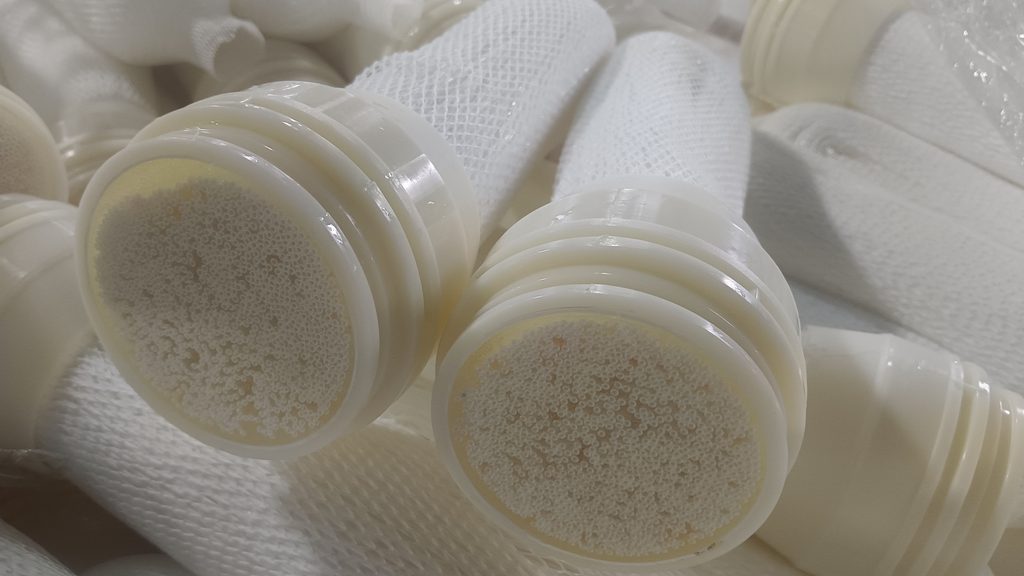
Taking the 4-in-1 composite filter element used in the ChengrongTimes Under Sink Water Filter as an example, the internal filtration structure consists of:
10 μm pleated filter → activated carbon fiber → 5 μm PP filter → 0.01 μm chlorine-removal ultrafiltration membrane.
This structure combines coarse filtration, adsorption filtration, fine filtration, and terminal ultrafiltration.

1. 10 μm Pleated Filtration Layer
The first layer is mainly responsible for intercepting relatively large particles, such as sediment, rust, dirt, and other impurities.
This layer not only provides initial filtration but also protects the subsequent filter elements. If large particles in the raw water directly enter the activated carbon and ultrafiltration membrane, they will increase the load on the downstream filter elements and affect their overall service life.
2. Activated Carbon Fiber Filtration Layer
Activated carbon fiber is mainly used to improve the odor and taste of the water while adsorbing residual chlorine and some organic pollutants.
For kitchen water, residual chlorine and odors are often problems that users can directly perceive. Therefore, the activated carbon layer is an important part of the composite filter element.
3. 5 μm PP Filtration Layer
After the initial fine filtration, the water passes through a 5 μm PP filter layer to intercept smaller particles and carbon powder that may be released from the upstream activated carbon.
The purpose of this design is to reduce the possibility of particles entering the final ultrafiltration membrane while protecting the ultrafiltration membrane.
4. 0.01 μm Ultrafiltration Membrane
The final stage uses a 0.01 μm ultrafiltration membrane as a fine filtration barrier before water outlet.
This structure can further reduce fine particles, colloids, and some microorganisms, and serves as the terminal filtration stage.
This filter structure also has a practical design concept: the activated carbon is placed before the ultrafiltration membrane rather than using activated carbon as the final filtration layer.
This can reduce problems such as carbon powder that may occur when activated carbon is used at the final water outlet, allowing the ultrafiltration membrane to perform the final water filtration.
Main Parameters of the Under Sink Water Filter
| Parameter Configuration | |
|---|---|
| Filtration structure | 4-in-1 composite filter element |
| First stage | 10 μm pleated filter |
| Second stage | Activated carbon fiber |
| Third stage | 5 μm PP filter |
| Fourth stage | 0.01 μm ultrafiltration membrane |
| Filtration precision | 0.01 μm |
| Maximum flow rate | Up to approximately 660 L/h |
| Working temperature | 5–38℃ |
| Working pressure | 0.1–0.4 MPa |
| Applicable water source | Municipal tap water / tested and qualified domestic drinking well water |
| Filter replacement cycle | Up to approximately 1 year, depending on actual water consumption |
| Installation method | Under-sink installation / countertop installation |
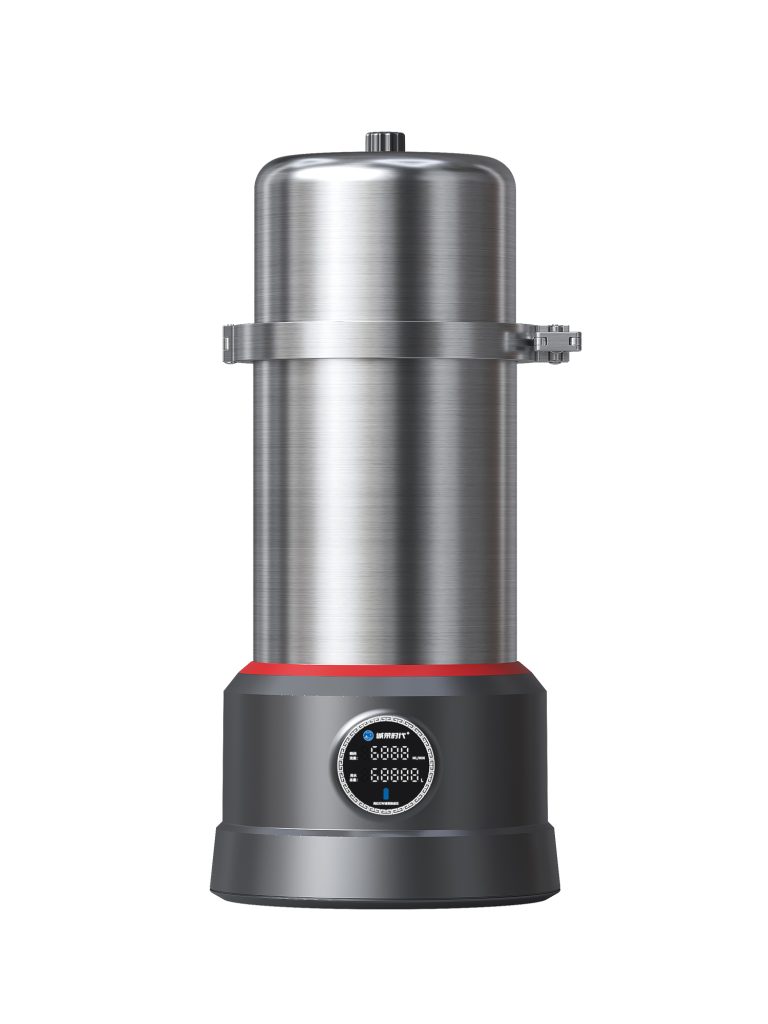
| Housing material | 316L stainless steel |
| Main unit dimensions | 320 × 320 × 475 mm |
Among the above parameters, what users really need to focus on are the filtration structure, actual flow rate, working pressure, filter life, installation dimensions, and housing material, rather than simply comparing the “number of filtration stages.”
2. How to Choose an Under Sink Water Filter? Focus on These Parameters
Before purchasing an Under Sink Water Filter, it is recommended to first determine your water usage requirements and then look at the specific parameters.
1. Look at the Filtration Technology First, Not the Number of Filter Elements
“5-stage filtration,” “7-stage filtration,” and “multi-stage filtration” do not directly represent the filtration performance of a product.
This is because different products may have completely different definitions of what constitutes “one filtration stage.”
For example, when a composite filter element contains multiple filtration materials internally, it can simultaneously perform sediment filtration, activated carbon adsorption, PP filtration, and ultrafiltration membrane filtration. Therefore, instead of comparing the number of filtration stages, it is better to directly look at:
- What filtration materials are used;
- What the final filtration precision is;
- Where the activated carbon is positioned;
- Whether there is terminal filtration;
- Whether the filter element is easy to replace;
- How long the filter element can be used.
For an Under Sink Water Filter using a 4-in-1 composite filter element, the above information can be directly seen from the filter element structure.
2. Water Flow Rate Determines the Actual User Experience
The flow rate of an Under Sink Water Filter is a parameter that is very easy to overlook.
If the flow rate is too low, users need to wait for a long time when filling a pot, washing vegetables, or preparing food.
The maximum filtration flow rate of this Under Sink Water Filter can reach 660 L/h, equivalent to approximately 11 L/min.
The high-flow design is suitable for kitchen scenarios where water is frequently needed, such as:
- Daily drinking water;
- Boiling water;
- Washing rice;
- Washing vegetables;
- Cooking;
- Cleaning tableware.
When choosing an Under Sink Water Filter, it is not recommended to look only at the maximum advertised flow rate. You should also confirm the working conditions corresponding to that flow rate and whether the actual household water pressure can meet the requirements.
3. Working Pressure Must Match the Household Water System
The working pressure range of the ChengrongTimes Under Sink Water Filter is:
0.1–0.4 MPa.
If the household inlet water pressure is significantly lower than the equipment requirements, the actual water flow rate may decrease.
If the water pressure is continuously too high, it may also increase the pressure on the water lines and connectors. Therefore, it is best to confirm the household water pressure before installation.
4. Look at Filter Life, Not Just “Can Be Used for One Year”
The filter element of an Under Sink Water Filter does not necessarily need to be replaced one year after installation under all circumstances.
Actual filter life is related to the following factors:
- Daily water consumption;
- Sediment content in the raw water;
- Residual chlorine level in the raw water;
- Suspended solids in the water;
- Activated carbon adsorption load;
- Ultrafiltration membrane blockage.
The ChengrongTimes Under Sink Water Filter uses flow monitoring to determine the filter element usage status based on actual water consumption and flow conditions, rather than simply setting a fixed countdown.
When the cumulative treated water volume reaches approximately 100,000 L, the activated carbon fiber reaches the corresponding adsorption capacity. The filter indication changes from blue to red, reminding the user to replace the filter element.
This method is more consistent with actual usage than simply determining replacement based on “installation date + 12 months.”
5. Housing Material Is Also an Important Parameter for Long-Term Use
The main filtration body of an Under Sink Water Filter is connected to the water system for a long period of time, so the housing material should not be judged only by appearance.
The ChengrongTimes equipment uses a 316L stainless steel housing, with a main body thickness of approximately 1.45 mm and a top cover thickness of approximately 1.80 mm.
316L stainless steel has good corrosion resistance and is suitable for long-term use in water-contact environments.
At the same time, the water-contact surfaces are polished and cleaned using high-temperature ultrasonic cleaning to reduce manufacturing and processing residues.
3. Filtration Process and Installation Method of an Under Sink Water Filter
1. Why Use a Combination of “Activated Carbon + Ultrafiltration Membrane”?
Different filtration materials solve different problems.
Simply put:
The pleated filter handles particles → activated carbon handles adsorption and taste improvement → the PP filter performs fine particle filtration → the ultrafiltration membrane performs terminal fine filtration.
This combination is not simply a stacking of filtration materials. Instead, each filtration stage performs a different task.
In particular, the final stage uses a 0.01 μm ultrafiltration membrane, which can reduce the risks associated with using activated carbon materials directly as the final water outlet filtration layer.
2. What Is the Purpose of the Dual-Water-Outlet Design?
Some households face a practical issue:
Drinking water requires a higher level of filtration, while washing vegetables and cleaning tableware may not necessarily require exactly the same filtration path.
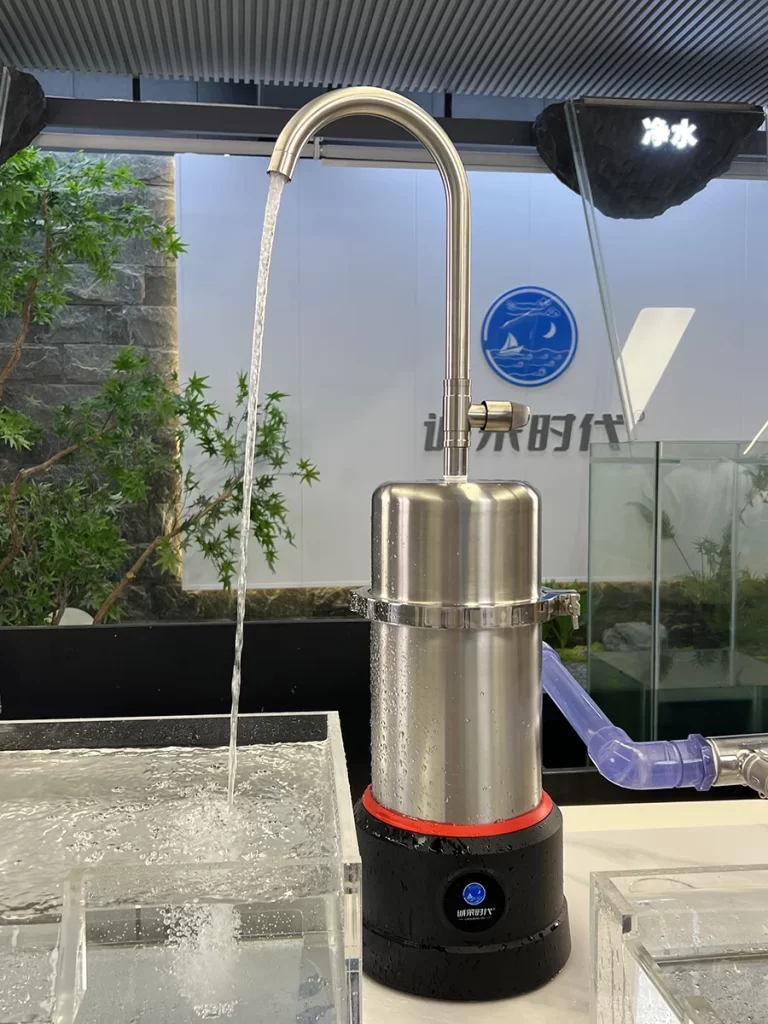
Therefore, this Under Sink Water Filter uses a dual-water-outlet design:
First outlet: 4-stage filtration, for drinking water and cooking.
Second outlet: 3-stage filtration, for washing vegetables and cleaning tableware.
This allows different filtration paths to be selected according to different water usage requirements.
For kitchens, the practical value of this design is that it reduces unnecessary filtration load while allowing different kitchen water-use scenarios to have different treatment methods.
3. Why Does It Not Need to Be Connected to a Wastewater Pipe?
Traditional RO reverse osmosis Under Sink Water Filter systems produce concentrated water while producing purified water, so they usually need to be connected to a drain pipe.
Ultrafiltration does not perform desalination through RO membrane separation, so it does not need to discharge concentrated water.
The ChengrongTimes Under Sink Water Filter uses a wastewater-free design and does not require an additional drain connection.
This means that one less drain pipe is needed during installation, and it can also reduce problems such as leakage, odors, or backflow caused by improper drain pipe connections.
4. What Should Be Checked Before Installing an Under Sink Water Filter?
The following items should be checked before installation:
Cabinet Dimensions
The equipment dimensions are approximately:
320 × 320 × 475 mm.
Before installation, measure the actual space under the sink and reserve enough space for:
- Main unit;
- Inlet water pipe;
- Outlet water pipe;
- Filter replacement operations;
- Faucet installation space.
In particular, pay attention to whether there are garbage disposals, gas pipes, drainage pipes, or other equipment under the sink.
Water Pressure
Confirm that the household water pressure is within the equipment requirements.
The working pressure of this equipment is:
0.1–0.4 MPa.
Water Temperature
The inlet water temperature should remain within:
5–38℃.
It is not recommended to connect high-temperature water directly to the Under Sink Water Filter.
Water Source
It is suitable for municipal tap water and well water that has been tested and confirmed to meet domestic drinking water requirements.
If the raw water itself does not meet domestic drinking water standards, the raw water problem should be addressed first. A single Under Sink Water Filter should not be relied upon to solve all water quality problems.
4. Under Sink Water Filter FAQ
FAQ 1: What Is the Difference Between an Under Sink Water Filter and an RO Water Purifier?
The two use different core filtration methods.
An RO water purifier uses a reverse osmosis membrane, which reduces dissolved substances and mineral ions in the water. Therefore, it usually needs to discharge concentrated water.
An ultrafiltration Under Sink Water Filter mainly uses physical filtration and adsorption filtration to treat particles, residual chlorine, odors, and some microorganisms in the water, while retaining the original mineral components in the water.
If users mainly care about retaining minerals, high flow rates, and wastewater-free operation, they can consider the ultrafiltration route. If the main goal is to reduce dissolved salts and total dissolved solids, the RO technology route should be considered.
FAQ 2: Does an Under Sink Water Filter Need Electricity?
Whether an Under Sink Water Filter needs electricity depends on the product structure.
An Under Sink Water Filter that uses only physical filtration and does not require a booster pump or electronic control can complete filtration without relying on a power supply.
If the product adds boosting, heating, a display, intelligent monitoring, or other functions, it may require a power supply.
The core filtration of the ChengrongTimes Under Sink Water Filter does not rely on an RO boosting system, so it does not require an electric pump to generate RO water-making pressure.
FAQ 3: Does an Under Sink Water Filter Produce Wastewater?
An Under Sink Water Filter using an ultrafiltration route does not need to discharge concentrated water like an RO reverse osmosis system.
The ChengrongTimes product uses a wastewater-free design and does not require a drain connection.
FAQ 4: How Often Should the Filter Be Replaced?
The maximum filter service life is approximately one year, but this does not mean that every household must replace it exactly once a year.
The actual replacement cycle depends on water consumption and raw water conditions.
The ChengrongTimes product determines the filter status based on cumulative water consumption and real-time flow rate. When the cumulative treated water volume of the activated carbon fiber reaches approximately 100,000 L, it will indicate that replacement is required.
FAQ 5: Why Does the Under Sink Water Filter Need to Be Flushed After Installation?
A newly installed filter element and water pipes may contain a small amount of manufacturing residue or air during transportation and installation.
Thorough flushing after initial installation can remove air and initial water from inside the filter element and allow the filtration materials to enter a stable operating condition.
Therefore, after installing a new Under Sink Water Filter, the initial flushing process should be completed according to the product instructions before normal use.
FAQ 6: Why Does the Water Flow Suddenly Become Slow?
The most common causes include:
- Reduced raw water pressure;
- Blockage of the pre-filter element;
- Accumulation of particles in the PP filtration layer;
- Blockage of the ultrafiltration membrane;
- Bent inlet water pipe;
- Blocked faucet aerator;
- Abnormality in the pipe connectors.
If the equipment has a flow monitoring function, you can first check the real-time flow rate and then determine whether the problem is caused by water pressure or the filter element.
FAQ 7: What Should I Do If the Under Sink Water Filter Has an Odor?
If the equipment has just been installed, it may have a slight material odor during the initial stage of using a new filter element. Thorough flushing can be performed according to the instructions.
If an odor appears after the equipment has been used for a long time, check:
- Whether the activated carbon filter has reached its service life;
- Whether the filter element has not been replaced for a long time;
- Whether the outlet water pipe has been contaminated;
- Whether the inside of the faucet needs cleaning;
- Whether the equipment has been properly flushed after a long period of non-use.
5. Common Under Sink Water Filter Failures and After-Sales Service
An Under Sink Water Filter is a device that remains connected to the water system for a long period of time. Therefore, after-sales service should not only focus on “how many years the main unit is under warranty,” but should also consider how filter elements, water lines, housing, and installation problems are handled separately.
1. Reduced Water Flow
If the Under Sink Water Filter originally had normal water flow but the flow rate has significantly decreased after a period of use, you can check the following in order:
Step 1: Check the inlet water pressure.
Step 2: Check whether the inlet water pipe is bent.
Step 3: Check whether the pre-filtration material is blocked.
Step 4: Check the real-time flow rate of the ultrafiltration membrane.
Step 5: Determine whether the filter element needs to be replaced based on its usage status.
Do not directly replace the entire unit without first determining the cause.
2. Leakage at the Connector
If you discover that a connector of the Under Sink Water Filter is leaking, stop using the equipment immediately and close the inlet water valve.
Then check:
- Whether the water pipe is fully inserted into the quick connector;
- Whether the pipe end has been cut evenly;
- Whether the sealing ring of the connector is in normal condition;
- Whether the water pipe is being pulled or stressed;
- Whether the water pipe was bent during installation.
If leakage continues after reinstallation, contact after-sales service for assistance.
3. Abnormal Filter Indicator
If the filter indicator turns red, it is not recommended to continue using the filter for a long period simply to save on filter replacement costs.
The filter element is the core consumable of a water filtration system. Once its adsorption capacity or filtration performance reaches its service limit, simply flushing it cannot restore it to the condition of a new filter element.
It should be replaced according to the product’s filter status indication and actual usage conditions.
4. Handling After Long-Term Non-Use
If the Under Sink Water Filter has not been used for a long period, such as being unused for more than several days during a trip, it is recommended to flush it thoroughly before resuming use.
If it has been unused for a particularly long period, determine whether the filter element needs to be replaced according to the product instructions.
Do not assume that water is safe to drink after long-term non-use simply because the equipment can still produce water normally.
5. What Should I Do If the Housing Leaks or Rusts?
The ChengrongTimes product uses a 316L stainless steel housing and provides long-term protection for housing corrosion and leakage.
If obvious leakage, structural damage, or abnormal rust is found, it is not recommended to disassemble pressure-bearing components yourself. Keep photos of the problem, installation information, and product information, and contact after-sales service to confirm the appropriate solution.
6. Practical Cases: How Different Households Can Choose an Under Sink Water Filter
Case 1: Small Household Mainly Focused on Drinking Water
For a household of two or three people, the kitchen may mainly be used for:
- Daily drinking water;
- Boiling water;
- Cooking;
- A small amount of vegetable washing.
In this situation, there is no need to pursue a complex multi-device combination.
When choosing an Under Sink Water Filter, focus on:
Filtration structure + water flow rate + filter life + installation dimensions.
If kitchen space is limited, the space under the sink should also be measured in advance.
Case 2: Larger Household With High Water Consumption
A household of four or five people may need a large amount of water every day. If the flow rate of the Under Sink Water Filter is too low, users may have to wait when cooking or getting drinking water.
This type of household should prioritize a high-flow Under Sink Water Filter.
For example, a product with a maximum flow rate of approximately 660 L/h can reduce waiting time in high-frequency kitchen water-use scenarios.
However, the actual flow rate will still be affected by household water pressure, inlet water temperature, and filter condition. Therefore, the actual usage speed should not be judged solely based on the laboratory maximum value.
Case 3: The Kitchen Needs Both Drinking Water and Vegetable-Washing Water
If a household needs filtered water for drinking while also frequently using filtered water for washing vegetables and cleaning tableware, a dual-water-outlet design can be more convenient.
The 4-stage filtered water outlet can be used for drinking water and cooking, while the 3-stage filtered water outlet can be used for washing vegetables and cleaning tableware.
This allows different water paths to be assigned according to different purposes, rather than having all kitchen water pass through exactly the same filtration process.
7. How to Choose an Under Sink Water Filter: Do Not Only Compare Prices
When purchasing an Under Sink Water Filter, you can directly evaluate it according to the following table.
| Comparison Item | What to Focus On |
|---|---|
| Filtration method | RO, ultrafiltration, or composite filtration |
| Filtration precision | Actual precision of the final filtration stage |
| Filter structure | What role each filtration material performs |
| Water flow rate | Maximum flow rate and actual working conditions |
| Working pressure | Whether it matches household water pressure |
| Working temperature | Whether it is suitable for kitchen inlet water temperature |
| Filter life | Based on time or actual water consumption |
| Wastewater | Whether a drain pipe is required |
| Housing material | Whether it is suitable for long-term water-contact environments |
| Installation dimensions | Whether it can fit under the sink |
| Water outlet method | Single water outlet or dual water outlet |
| After-sales service | How the main unit, filter elements, and water lines are handled separately |
What really needs to be compared are these specific parameters, rather than the filtration stage count or number of functions shown on promotional pages.
8. What Is the Core Value of an Under Sink Water Filter?
For the kitchen, a good Under Sink Water Filter does not need to be packed with a large number of complicated functions.
What matters more are several basic questions:
Is the filtration structure reasonable?
Is the water flow fast enough?
Is the filter element easy to replace?
Can the service life be determined based on actual water consumption?
Is installation simple?
Does it require a wastewater pipe connection?
Is it easy to maintain during long-term use?
An Under Sink Water Filter using a 4-in-1 composite filter element, a 0.01 μm ultrafiltration membrane, high-flow filtration, dual-water-outlet design, and wastewater-free operation is more suitable for households that want to handle drinking and cooking water treatment within the limited space available in a kitchen.
Before purchasing, it is recommended to first confirm the household water pressure, cabinet dimensions, daily water consumption, and raw water conditions, and then determine the appropriate filtration technology and parameters for the Under Sink Water Filter.
Chengrong Ultrafiltration: Zero Worries, Pure Trust.
- 10-Year Rust-Free Guarantee
- 10-Year Leak-Proof Commitment
- 10-Year Dedicated After-Sales Service
ChengRongTimes Whole House Water Filters, Never Compromise on Quality.