
Private Well Water Case Study: Choosing the Right Well Water Filter for Your Home
For homeowners who rely on a private well, clear water on a sunny day does not always mean stable water quality. After heavy or prolonged rainfall, well water can suddenly become cloudy, yellowish, or contain more sediment.
This is a common concern for rural homes, country properties, and detached houses that depend on private wells in the US, Canada, Australia, and other countries.
Last week, Ms. Chen from Guangxi, China, ordered a manual backwash whole-house ultrafiltration Water Filter from ChengrongTimes. Her home uses private well water. Under normal conditions, the water is relatively clear, but it becomes cloudy and yellowish after rain.
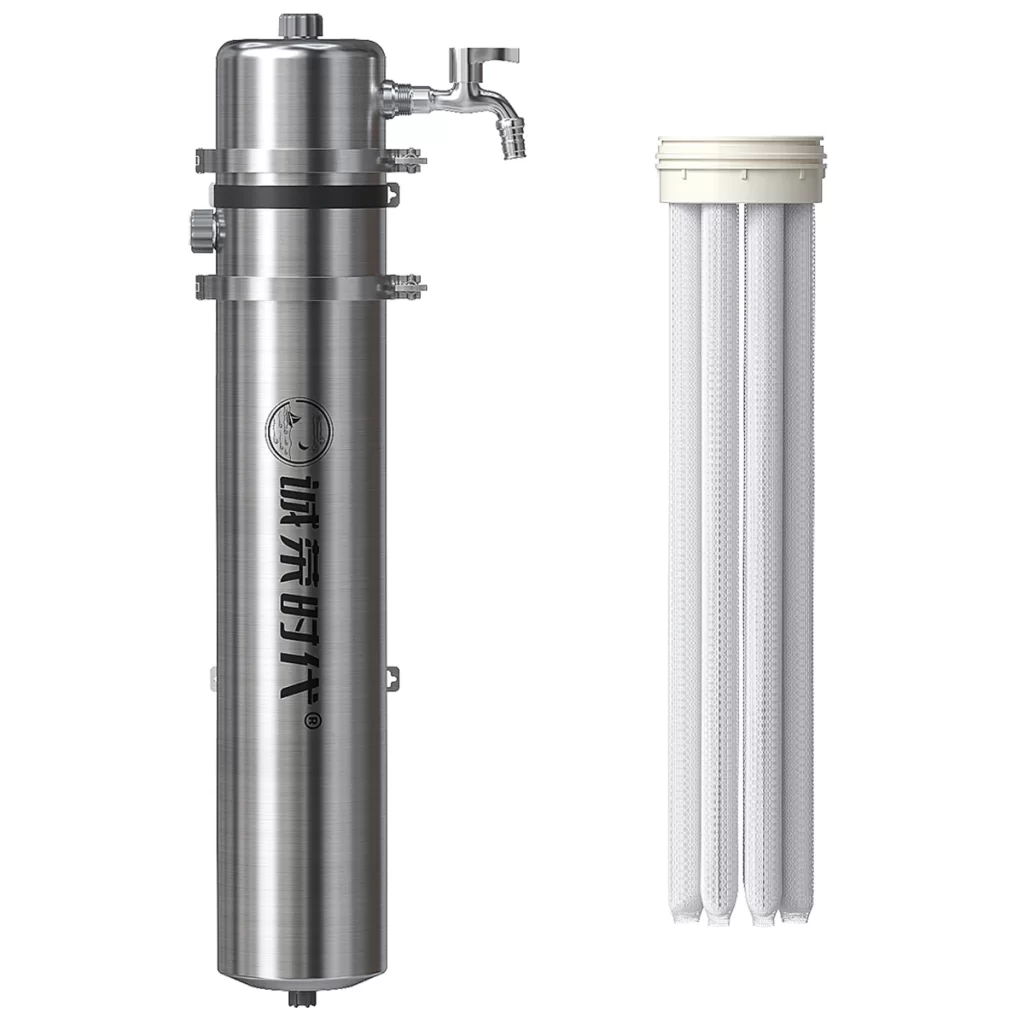
Previously, she used a common large PP sediment filter cartridge. It worked reasonably well during dry weather, but after heavy rain, increased sediment and fine particles caused the cartridge to clog quickly.
We initially recommended an automatic self-cleaning UF Water Filter. However, Ms. Chen chose a manual backwash model because she preferred a simpler system that she could understand, maintain, and repair herself.
This case highlights an important principle when choosing a Well Water Filter: the best system is not necessarily the one with the most features. For private well owners, long-term reliability, effective filtration, and easy maintenance can be more important.
1. The Real Problem With Well Water: It Gets Cloudy After Rain
For many private well owners, the biggest challenge is not that the water is always dirty. Instead, water quality can change significantly after heavy rainfall.
Rain can increase surface runoff and carry soil, fine sand, organic particles, and other suspended materials into groundwater. Shallow wells or wells with inadequate protection may be more vulnerable to these changes.
Typical signs include:
- Well water is clear during dry weather but becomes cloudy after rain
- Yellow, brown, or gray water appears
- Visible sediment or suspended particles are present
- Sediment accumulates in toilets, sinks, and other fixtures
- Sediment filter cartridges clog much faster during the rainy season
- Water flow gradually decreases
- Water quality is noticeably different between dry and rainy periods
In Ms. Chen’s case, the main problem was not simply “dirty water.” The real issue was a sudden increase in sediment, suspended particles, and turbidity after rainfall.
This means that a well water filter system for home use needs to be selected based on the actual characteristics of the well water, rather than only how the water looks under normal conditions.
2. Why Did the Previous PP Sediment Filter Clog So Quickly?
A large PP sediment filter is primarily designed to capture relatively larger particles such as sediment, rust, and other suspended solids.
When heavy rain causes a sudden increase in fine particles, these contaminants can quickly accumulate on the surface of the filter cartridge.
The result may include:
- Increased pressure drop
- Reduced water flow
- A visibly darker filter cartridge
- Frequent filter replacement
- Higher maintenance costs
A 0.1-micron UF Water Filter uses an ultrafiltration membrane with a nominal pore size of 0.1 micron. With an appropriate backwash structure, contaminants accumulated on the membrane can be removed through cleaning and backwashing, helping restore water flow.
| Feature | PP Sediment Filter | 0.1-Micron UF Water Filter |
|---|---|---|
| Main purpose | Sediment, rust, larger particles | Finer suspended particles and other contaminants retained by UF |
| Typical filtration rating | Around 5 microns | 0.1 micron |
| Maintenance | Replace cartridge | Clean/backwash membrane |
| Heavy sediment after rain | May clog quickly | Can be cleaned and backwashed |
| Long-term maintenance | Depends on cartridge replacement | Depends on regular cleaning/backwashing |
The key difference is therefore not simply 5 microns vs. 0.1 micron.
For a water filter for well water system, it is also important to consider whether the system has an effective cleaning and recovery structure.
3. Manual Backwash vs. Automatic Self-Cleaning: What’s the Difference?
ChengrongTimes offers two whole-house UF Water Filter configurations using the same type of 0.1-micron ultrafiltration membrane.
The main difference is the cleaning method and system configuration.
Manual Backwash Water Filter
The manual backwash configuration uses two filtration units.
One unit can continue supplying relatively clean water while the other unit is taken offline for cleaning.
The general process is:
- Take one unit offline.
- Manually clean the membrane surface.
- Keep the other unit operating.
- Use water from the operating unit to backwash the offline unit.
- Reverse the water flow through the membrane.
- Flush accumulated contaminants from the membrane.
- Return the cleaned unit to normal operation.
- Repeat the process for the other unit when necessary.
The two-unit configuration allows one unit to remain operational while the other is being cleaned.
This can be particularly useful for private well owners who prefer a system they can understand and maintain themselves.
4. How Is Automatic Self-Cleaning Different?
An automatic self-cleaning UF Water Filter uses a mechanical rotation mechanism to clean the membrane automatically.
Depending on the system design, the cleaning cycle can be configured according to operating conditions and maintenance requirements.
| Feature | Manual Backwash | Automatic Self-Cleaning |
|---|---|---|
| Number of units | Two | One |
| Cleaning method | Manual cleaning + clean-water backwash | Mechanical automatic cleaning |
| User operation | Required | Minimal |
| Structure | Relatively simple | Relatively complex |
| Main advantage | Easy to understand and maintain | Convenient and automated |
| Suitable for | DIY-oriented homeowners | Homeowners who prefer convenience |
There is no single “best” option for every private well.
For rural properties and country homes that are far from professional service providers, a simpler system that homeowners can inspect and maintain themselves may have a practical advantage.
Ms. Chen’s decision was based on a simple consideration:
“If something goes wrong, I want to be able to handle it myself.”
5. How Long Can an Ultrafiltration Membrane Last?
There is no universal service life for an ultrafiltration membrane.
The actual lifespan depends on factors such as:
- Raw water turbidity
- Sediment concentration
- Daily household water consumption
- Cleaning frequency
- Iron and manganese levels
- Operating pressure
- Overall well water quality
- Maintenance practices
Under suitable raw-water conditions, normal household use, and regular cleaning, ChengrongTimes UF systems can have a membrane service life of 5+ years.
However, this should not be treated as an absolute guarantee for every installation.
If a membrane is exposed to heavy sediment or iron and manganese contamination for a long time without proper cleaning, filtration performance and service life may be affected.
Therefore, when evaluating a Well Water Filter, homeowners should ask more than:
“How many years will the membrane last?”
A better question is:
“Can the membrane be effectively cleaned and restored when it becomes fouled?”
6. How to Choose a Well Water Filter System for Your Home
For homeowners searching for a well water filter system for home, the following four factors deserve particular attention.
1. Look for an Effective Backwash Structure
Do not focus only on the filtration rating.
Ask:
- Can the membrane be backwashed?
- Where does the backwash water come from?
- Can water flow in the reverse direction through the membrane?
- Can routine cleaning be performed by the homeowner?
- Can normal water flow be restored after cleaning?
A simple principle is:
Filtration accuracy determines what the membrane can retain, while the cleaning structure determines how well the system can continue operating over the long term.
2. Test Your Well Water Before Buying a Filter
Private well water can contain different contaminants depending on the local geology, well construction, agricultural activity, groundwater conditions, and surrounding environment.
Depending on the location, testing may include:
- Bacteria
- Nitrates
- Iron
- Manganese
- Hardness
- Turbidity
- Hydrogen sulfide
- Other locally relevant groundwater contaminants
For homeowners using private well water for long-term household or drinking purposes, water testing should be an important first step.
For example, elevated iron or manganese may require pretreatment before ultrafiltration. High levels of these contaminants can contribute to membrane fouling and clogging.
This is why residential well water treatment systems should be designed around actual water-test results rather than a one-size-fits-all filtration product.
3. Whole-House Water Filtration vs. Drinking Water Filtration
The right system also depends on how you intend to use the water.
If well water is used throughout the house for:
- Showering
- Laundry
- Kitchen use
- Toilet flushing
- Handwashing
- General household water
then a whole-house ultrafiltration Water Filter can be installed on the main incoming water line.
This is the typical approach for a whole-house water filter for well water system.
However, if your main goal is:
“I want to turn on the kitchen faucet and drink the water.”
a whole-house UF system alone may not always be sufficient or the most appropriate solution.
In this situation, ChengrongTimes recommends adding a ChengrongTimes Under-Sink Water Filter under the kitchen sink after the whole-house treatment system.
A typical configuration can be:
Private Well → Pretreatment → Whole-House Ultrafiltration Water Filter → Under-Sink Water Filter → Kitchen Drinking Water
This approach separates household water treatment from point-of-use drinking water treatment.
For example:
- Showering and laundry → whole-house treated water
- Handwashing → whole-house treated water
- Food preparation and cooking → further treated kitchen water
- Drinking → ChengrongTimes Under-Sink Water Filter
This can avoid treating every gallon of household water to the same level required for drinking water.
The specific filtration technologies and media should still be selected according to the well-water test results. Problems involving iron, manganese, hardness, nitrates, bacteria, or other contaminants may require additional treatment.
For homeowners who want cleaner water throughout the house while also having convenient drinking water directly from the kitchen faucet, a combination of:
Whole-House Ultrafiltration Water Filter + ChengrongTimes Under-Sink Water Filter
can be a practical system configuration.
4. Consider Your Long-Term Maintenance Habits
Your maintenance preference should also influence your decision.
Choose a manual backwash system if you are comfortable performing regular cleaning and prefer a relatively simple system.
Choose an automatic self-cleaning system if you value convenience and want to minimize routine manual operation.
The right choice ultimately depends on:
Your water quality + your home + your water usage + your maintenance habits.
7. Why Ms. Chen Chose a Simpler System
Ms. Chen’s decision demonstrates an important principle:
Reliability can be more valuable than advanced features.
A Water Filter is not a smartphone or a short-term appliance. It is connected to the home’s water system and may operate for many years.
For private well homes located in rural areas, especially properties far from professional service providers, a system that is easy to understand, maintain, and troubleshoot can provide significant practical value.
The two approaches represent different priorities:
- Automatic self-cleaning → “I want less maintenance.”
- Manual backwash → “I want a simple system I can maintain myself.”
Neither approach is universally better.
The right Well Water Filter should match the homeowner’s water quality, household needs, technical preferences, and maintenance habits.
8. Well Water Filter Installation: Start With the Water Source
When planning well water filter installation, one of the biggest mistakes is to start by choosing a filter before understanding the water source.
A common assumption is:
Clear water = good water; cloudy water = finer filter required.
Private well water is more complicated.
Water quality can change with:
- Rainfall
- Seasons
- Groundwater conditions
- Well depth
- Well construction
- Well protection
- Local geology
- Surrounding land use
If well water becomes cloudy after heavy rain, homeowners should ask:
- Why does the water become cloudy?
- What contaminants are present?
- How much sediment and turbidity are in the water?
- Are iron and manganese present?
- Can the Water Filter be effectively cleaned?
- Can membrane performance be restored?
- Is pretreatment necessary?
- Is additional point-of-use treatment needed for drinking water?
For private well water that becomes cloudy and sediment-heavy after rainfall, a whole-house UF Water Filter with an effective backwash structure can be an important part of a complete treatment system.
If kitchen drinking water is also required, adding a ChengrongTimes Under-Sink Water Filter can create a whole-house + point-of-use drinking water solution.
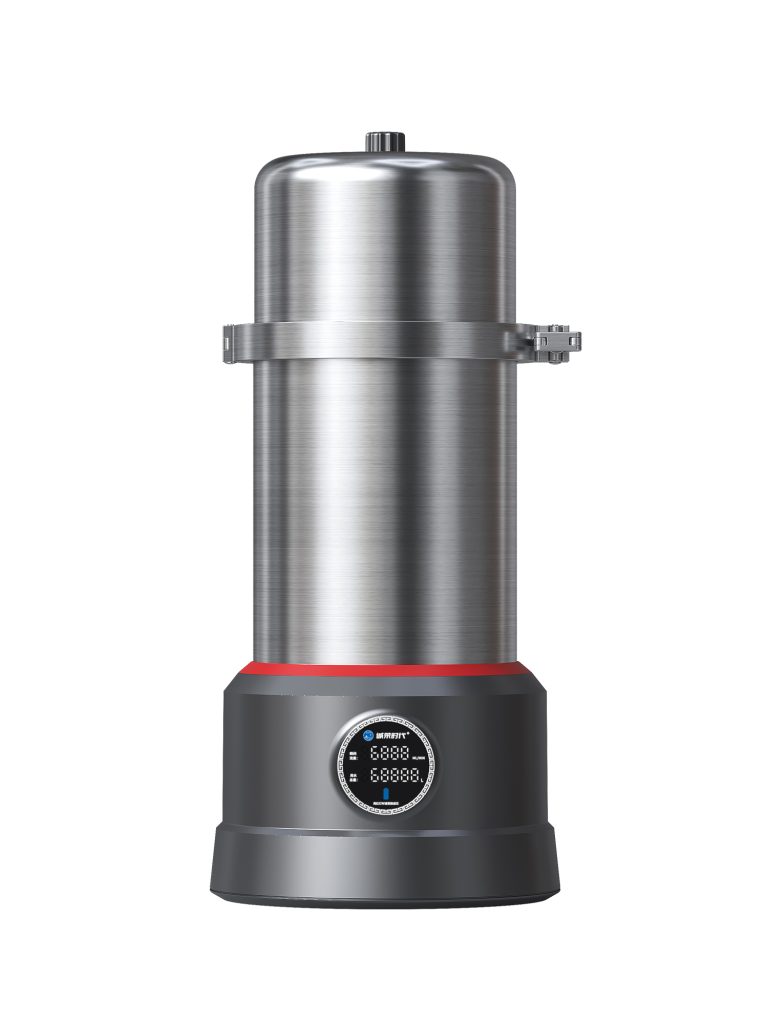
However, ultrafiltration is not a universal solution for every well-water problem.
Test the water first, identify the contaminants, and then design the treatment system.
Frequently Asked Questions About Well Water Filters
Q1. Why does my well water become cloudy after rain?
Heavy rainfall can increase surface runoff and introduce soil, fine sand, and suspended particles into groundwater. Shallow wells or wells with inadequate protection may be more affected.
Water testing and inspection of the well’s sealing, construction, and surrounding environment can help identify the cause.
Q2. Can a 0.1-micron UF Water Filter treat cloudy well water?
A 0.1-micron UF Water Filter can reduce fine suspended particles, sediment, colloids, and certain microorganisms that can be retained by ultrafiltration.
However, UF does not address every possible well-water contaminant. Iron, manganese, hardness, nitrates, and dissolved contaminants may require additional treatment.
Q3. Why does my sediment filter clog quickly after heavy rain?
Rainfall can significantly increase sediment and suspended particles entering the well-water system.
A PP sediment cartridge can accumulate these particles quickly, causing pressure loss and reduced flow.
A UF system with an appropriate backwash structure can be cleaned and backwashed to help restore flow.
Q4. How does a manual backwash UF Water Filter work?
A manual backwash configuration uses two filtration units.
One unit continues operating while the other is taken offline and cleaned. Water from the operating unit can then be used to backwash the cleaned unit by reversing the flow through the membrane.
This is why the manual backwash configuration uses two units.
Q5. How long does an ultrafiltration membrane last?
There is no universal service life.
Membrane lifespan depends on turbidity, sediment, iron and manganese, water consumption, cleaning frequency, operating conditions, and maintenance.
Under suitable conditions, the ChengrongTimes case system can have a membrane service life of 5+ years, but actual results vary by installation.
Q6. Can a UF Water Filter make private well water safe to drink?
You should not assume that UF alone makes every private well water source safe for drinking.
Private wells can contain contaminants that ultrafiltration does not remove.
Test the well water first and select additional treatment based on the test results.
For kitchen drinking water, a ChengrongTimes Under-Sink Water Filter can be added as a point-of-use treatment stage.
Q7. What is the best Well Water Filter for muddy well water?
For private well water that becomes cloudy and sediment-heavy after rainfall, a whole-house UF Water Filter with an effective backwash system can be one useful treatment stage.
However, if the water also contains high iron, manganese, hardness, bacteria, or other contaminants, additional treatment may be necessary.
For drinking water, a ChengrongTimes Under-Sink Water Filter can provide an additional point-of-use treatment stage.
There is no single Well Water Filter that is ideal for every private well. Water testing should come first.
Q8. Should I choose manual backwash or automatic self-cleaning?
Choose manual backwash if you prefer a simpler structure and are comfortable performing routine maintenance yourself.
Choose automatic self-cleaning if convenience and reduced manual operation are more important.
The main difference is the cleaning method and user experience.
Q9. Do private well homes need a whole-house Water Filter?
If private well water is used throughout the home, a whole-house Water Filter installed on the main incoming water line may be appropriate.
The exact system should be selected according to water-test results.
For drinking water, adding a point-of-use Under-Sink Water Filter can provide an additional treatment stage at the kitchen faucet.
Q10. What should I test before buying a Well Water Filter?
Depending on your location and well conditions, testing may include:
- Bacteria
- Nitrates
- Iron
- Manganese
- Hardness
- Turbidity
- Hydrogen sulfide
- Other locally relevant contaminants
The best approach is:
Test the well water → identify the contaminants → choose the treatment technology → design the Well Water Filter system → plan regular maintenance.
Conclusion
Choosing a Well Water Filter for a private well should begin with the water source rather than the filter cartridge.
If well water becomes cloudy after rain, the problem may be caused by a sudden increase in sediment, suspended particles, and turbidity. A whole-house UF Water Filter with an effective backwash structure can help address this type of filtration challenge while providing a system that can be maintained over the long term.
For homeowners who also want convenient drinking water from the kitchen faucet, combining a Whole-House Ultrafiltration Water Filter with a ChengrongTimes Under-Sink Water Filter can create a more targeted whole-house and point-of-use treatment solution.
For any residential well water treatment systems, however, there is no universal configuration.
Test your well water first, understand what is actually in the water, and then choose the appropriate treatment system.