ChengrongTimes Chlorine Removal Ultrafiltration Membrane Technology and Water Filter Quality
Chlorine removal ultrafiltration membrane is a type of filter membrane that uses polymer modification technology to embed functional groups capable of undergoing oxidation-reduction reactions with residual chlorine into the bulk material of the ultrafiltration membrane. In the water filter market focusing on water filtration chlorine, chlorine water filter, and different types of water filters that remove chloramine, water filters that remove fluoride and chlorine, residual chlorine removal capability has become one of the important indicators consumers use to evaluate water filtration technology.
This is a unique ultrafiltration membrane material successfully developed by Chengrong Ultrafiltration Factory in 2023, and it is difficult to find a second company with the same technology worldwide.
Based on 0.01-micron physical screening, it can reduce hypochlorite ions (ClO⁻) in water to harmless chloride ions (Cl⁻), solving the problem of insufficient adsorption of residual chlorine in flowing water by activated carbon.
Chengrong’s chlorine removal ultrafiltration membrane uses bulk modification rather than surface coating, avoiding the risks of coating detachment and secondary contamination. For household users concerned about water filtration chlorine, this technical approach is significantly different from traditional chlorine water filter systems that rely solely on activated carbon.
I. Why Is Activated Carbon Not Enough to Remove Residual Chlorine?
In the household water filter industry, residual chlorine in water is generally removed through the adsorption effect of activated carbon.
But there is one problem that many people overlook:
What a water filter needs to remove is not residual chlorine in stagnant tap water, but residual chlorine in flowing tap water.
When water flows rapidly through activated carbon fibers, the contact time between the water flow and the activated carbon fibers is simply too short, resulting in limited adsorption of residual chlorine in the water by the activated carbon fibers.
Simply put: sufficient for static soaking, insufficient for dynamic flowing water.
This is why Chengrong Ultrafiltration Factory adds another layer of self-developed chlorine removal ultrafiltration membrane behind the activated carbon fibers—to solve the problem of residual chlorine and ensure that the water produced by ChengrongTimes mineral-water-like water filter reaches direct drinking standards.
From the perspective of practical water filtration chlorine applications, activated carbon and chlorine removal ultrafiltration membranes perform different functions. When consumers search for chlorine water filter, they often focus on how to reduce residual chlorine in drinking water, while the actual problem that needs to be solved also includes residual chlorine under flowing water conditions.
One actual data point: ChengrongTimes Under Sink Water Filter with Natural Minerals Retained uses activated carbon fiber with a rated capacity of 200 tons as if it had a capacity of 100 tons. The core reason is to prevent the activated carbon fiber from reaching adsorption saturation prematurely.
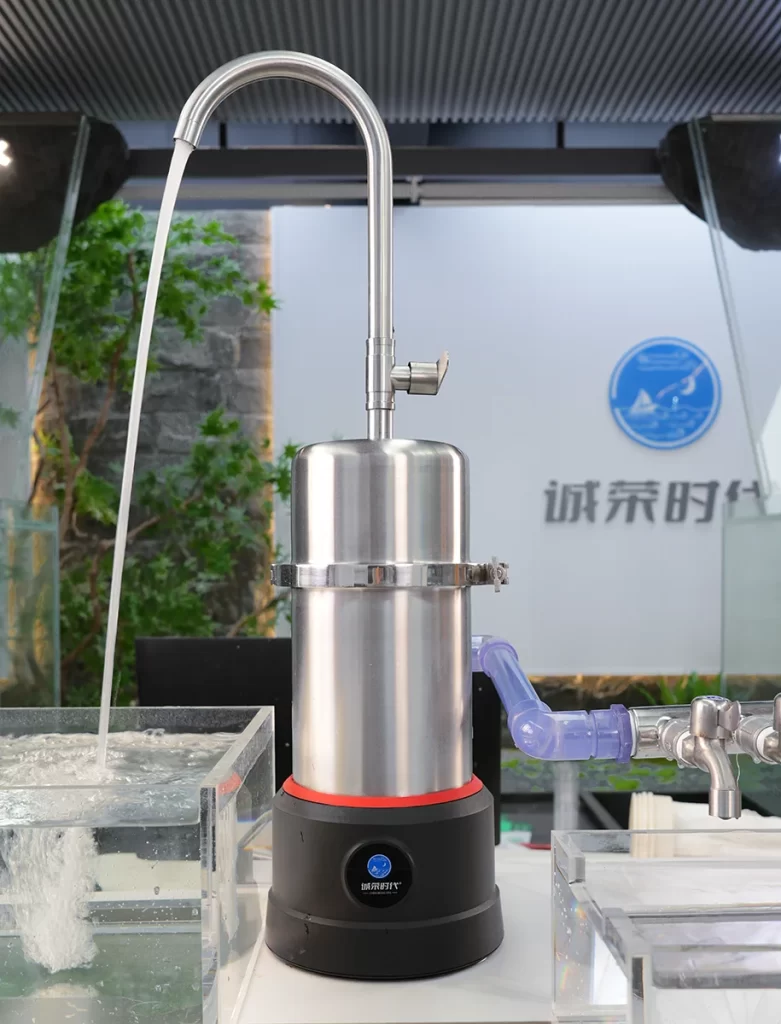
II. What Is the Principle Behind the Chlorine Removal Ultrafiltration Membrane?
Some people ask: Is Chengrong’s chlorine removal ultrafiltration membrane made by adding a coating to the surface of the membrane fibers and removing residual chlorine through adsorption by the coating?
No.
First, let’s clarify a basic fact: ordinary ultrafiltration membranes themselves cannot remove residual chlorine from water.
This is because residual chlorine in water mainly exists in the form of hypochlorite ions (ClO⁻), while the filtration pore size of an ultrafiltration membrane is 0.01 microns, which cannot intercept ionic substances in water.
Therefore, from the technical principle of water filtration chlorine, ordinary ultrafiltration membranes and ultrafiltration membranes that genuinely have chlorine removal capabilities are not the same thing. Ordinary ultrafiltration membranes mainly rely on physical screening, while Chengrong’s self-developed chlorine removal ultrafiltration membrane adds a functional reaction targeting residual chlorine in addition to physical screening.
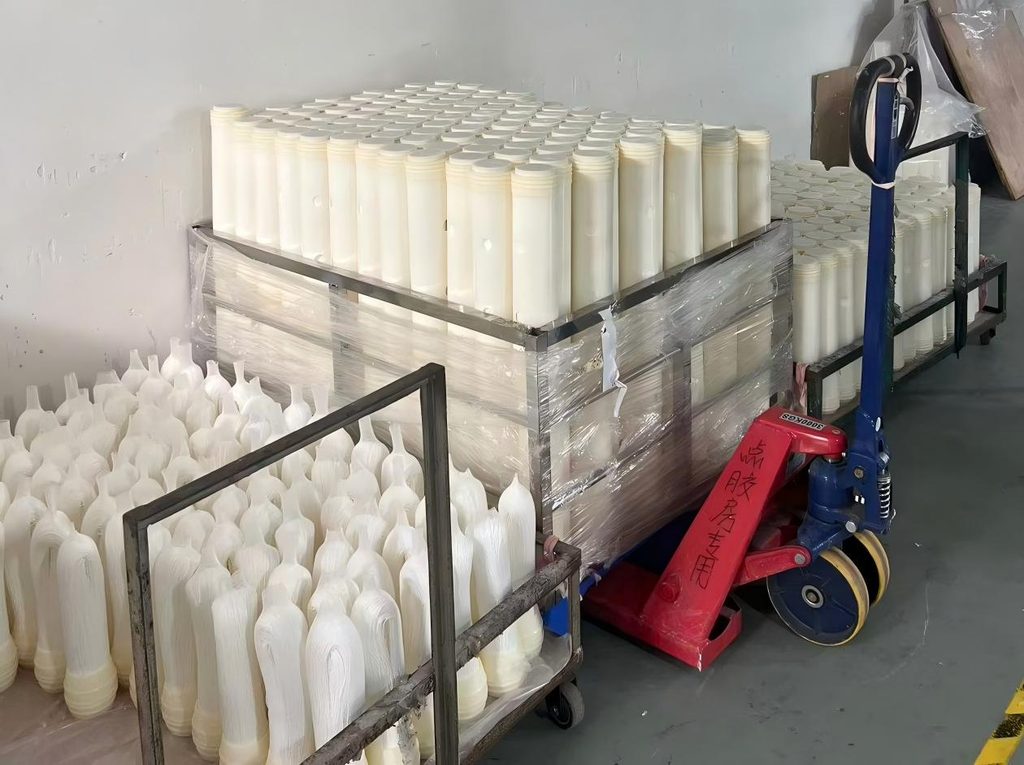
Chengrong’s self-developed chlorine removal ultrafiltration membrane belongs to a type of polymer modification—functional groups that can react with residual chlorine are incorporated into the bulk material of the ultrafiltration membrane.
The chlorine removal process consists of three steps:
- Physical screening: The ultrafiltration membrane with a 0.01-micron pore size first filters bacteria, viruses, sediment, and other impurities.
- Oxidation-reduction reaction: When water flows through the membrane material, the active sites in the material react with residual chlorine (hypochlorite ions ClO⁻).
- Conversion into harmless substances: Strongly oxidizing hypochlorite ions are reduced to stable and harmless chloride ions (Cl⁻), which are discharged with the water flow.
Hypochlorite ions have strong oxidizing properties and can kill bacteria;
Chloride ions are relatively stable and harmless.
This is the core logic of the entire reaction.
From the product technology perspective of a chlorine water filter, Chengrong’s chlorine removal ultrafiltration membrane is not simply an additional traditional adsorption layer. Instead, through polymer bulk modification, the membrane material itself is given the function of reacting with residual chlorine.
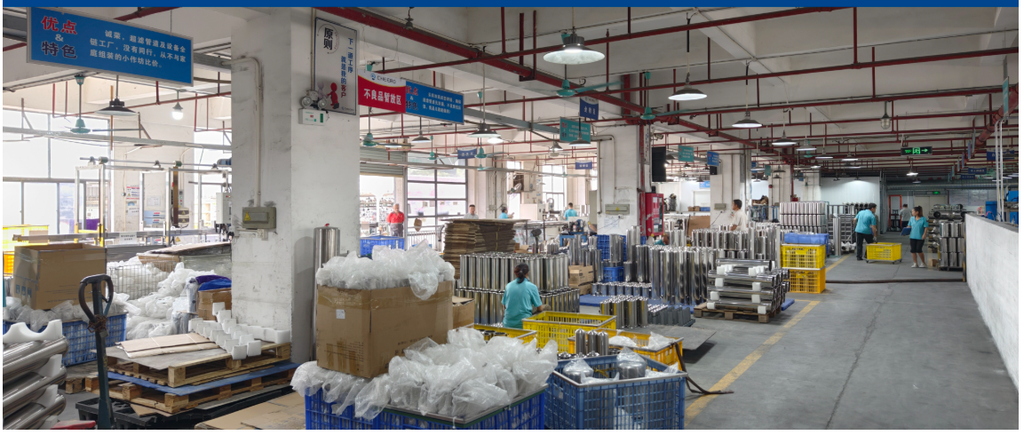
The development of the chlorine removal ultrafiltration membrane is a huge engineering project, with formulation and process adjustment alone requiring substantial effort. This is also what many competitors find difficult to understand: why the development of one ultrafiltration membrane can be the reason Chengrong Factory invests several million yuan every year.
III. What Is the Difference Between the Chlorine Removal Ultrafiltration Membrane and an RO Membrane?
Many people compare it with RO reverse osmosis machines. Here, one key point of knowledge needs to be clarified:
RO membranes are extremely sensitive to residual chlorine.
The strong oxidizing properties of hypochlorite ions (ClO⁻) can easily cause permanent and irreversible oxidative damage to RO membranes, which is one of the major causes of RO membrane desalination failure.
Therefore, the activated carbon filter cartridge in front of the RO membrane must be replaced frequently; otherwise, the RO membrane can easily fail.
For consumers looking for water filtration chlorine solutions, this is also an important basis for understanding different chlorine water filter technology approaches: residual chlorine is related not only to drinking water treatment but also to the operating environment of subsequent membrane components.
| Comparison Item | RO Reverse Osmosis Membrane | ChengrongTimes® Chlorine Removal Ultrafiltration Membrane |
|---|---|---|
| Attitude toward residual chlorine | Extremely sensitive to residual chlorine and can suffer oxidative damage | Actively treats residual chlorine and converts it into harmless chloride ions |
| Requirements for pre-filter cartridges | Activated carbon needs to be replaced frequently | Dual protection of activated carbon fiber + chlorine removal ultrafiltration membrane |
| Type of output water | Purified water, with mineral elements in the water removed | Mineral-water-like water, with natural mineral elements in the water fully retained |
| Whether wastewater is produced | Produces wastewater, with a high wastewater ratio | Zero wastewater, with water resource utilization approaching 100% |
| Applicable water sources | Heavily polluted water sources | Municipal tap water and natural water sources that have passed water quality testing |
One more point:
As we all know, one of the biggest differences between RO membranes and ultrafiltration membranes is that ultrafiltration membranes cannot intercept ionic substances in water. However, an RO membrane is a dense semipermeable membrane. It can not only intercept bacteria and viruses in water, but also remove ionic substances such as heavy metals and mineral elements from water.
Therefore, if the water source in your home is unsafe and water quality testing shows excessive iron and manganese, excessive nitrite, excessive fluoride, etc., the most effective approach is not to use an RO reverse osmosis membrane, but to directly switch to a safer water source.
Many uninformed onlookers often like to criticize ultrafiltration membranes as worthless on the grounds that “ultrafiltration cannot intercept heavy metal ions in water.” But what I want to say is: even if an RO membrane can intercept heavy metals in water, if the water you use at home really has excessive heavy metals, would you rush to buy an RO reverse osmosis water filter, or would you directly switch to safe municipal tap water?
I believe the answer must be to directly switch to safe municipal tap water.
If the water source is safe, then there would not be excessive heavy metals in the first place. Even if RO can filter heavy metals from water, it would not be useful. Instead, it would remove the mineral elements needed by the human body from the water, making the water taste bland and making people who do not like drinking water even less willing to drink it. However, ultrafiltration membranes, especially the ChengrongTimes mineral-water-like direct drinking machine using a chlorine removal ultrafiltration membrane, can not only ensure that the mineral-water-like water produced meets direct drinking standards, but also fully retain the natural minerals and trace elements in the water.
Clean, healthy, and good-tasting.
Therefore, when searching for keywords such as water filters that remove fluoride and chlorine, it is also necessary to first clarify the specific water source, water quality testing results, and the actual filtration principle of the water filtration equipment, rather than simply assuming that all water filters have the same filtration capabilities.
Similarly, water filters that remove chloramine represent an independent water treatment need. Residual chlorine, chloramine, and fluoride have different properties, and the corresponding treatment methods and membrane materials may also be different. Therefore, when choosing a chlorine water filter, it is more important to understand the actual filtration technology used by the product rather than only looking at keywords or promotional names.
IV. Why Use Polymer Modification Instead of a Coating?
Since the R&D cost of polymer modification is so high, why not choose the simpler coating solution?
Three reasons:
First, coatings will peel off over time.
Surface coatings will gradually wear and peel off under long-term water flow, and the chlorine removal effect will decline accordingly. The advantage of polymer material modification is that as long as the ultrafiltration membrane is not damaged, the chlorine removal rate of the ultrafiltration membrane can remain stable throughout its service life.
For water filtration chlorine, stability is an important factor in evaluating chlorine removal solutions. Compared with solutions relying on surface coatings, Chengrong’s chlorine removal ultrafiltration membrane directly incorporates functional groups into the membrane material. From the perspective of technical structure, this solves the problem of surface coating detachment.
Second, detached coating particles themselves can cause secondary contamination.
Particles that detach after coating wear may enter drinking water along with the output water. Polymer material modification does not have this risk because the material itself is food-grade, providing inherent safety.
Third, polymer modification does not destroy the physical screening function of the ultrafiltration membrane.
Chengrong’s chlorine removal ultrafiltration membrane adds a functional group for removing residual chlorine from water on the basis of a 0.01-micron filtration precision. It not only ensures fine filtration of bacteria, viruses, sediment, and other impurities in water, but also provides residual chlorine removal functionality while maintaining water flow.
All three are achieved without any side effects.
| Comparison Item | Surface Coating | Polymer Bulk Modification |
|---|---|---|
| Risk of detachment | May peel off over time | None, functional groups are inside the material |
| Secondary contamination | Detached coating may cause contamination | Food-grade material, no such risk |
| Filtration precision | Coating may clog or change the pore size | Does not damage the 0.01-micron physical screening |
| Chlorine removal stability | Declines as the coating wears | Stable throughout the membrane service life |
For users concerned about chlorine water filter, these four comparisons can more intuitively explain why Chengrong uses polymer bulk modification rather than simply adopting a surface coating.
At the same time, it needs to be clear that water filters that remove chloramine, water filters that remove fluoride and chlorine, and other search needs correspond to contaminants that are not exactly the same. The filtration effect for chloramine or fluoride cannot be inferred simply from the function of “chlorine removal.” When choosing a water filter, the specific filtration technology and testing data published for the product should be used as the basis.
V. Frequently Asked Questions FAQ
Q: Isn’t an ultrafiltration membrane itself only capable of filtering impurities? How can it remove residual chlorine?
A: Ordinary ultrafiltration membranes can indeed only perform physical screening and cannot intercept ionic residual chlorine. However, the chlorine removal ultrafiltration membrane uses polymer modification to embed functional groups capable of undergoing oxidation-reduction reactions with residual chlorine into the membrane material. Therefore, in addition to physical screening, it adds chemical chlorine removal capability.
This is also one of the core differences between Chengrong’s water filtration chlorine technology and ordinary ultrafiltration membranes. When consumers are looking for a chlorine water filter, they need to distinguish ordinary ultrafiltration membranes from modified ultrafiltration membranes with chlorine removal capabilities.
Q: What is the difference between the chlorine removal ultrafiltration membrane and an RO membrane?
A: RO membranes remove ions through reverse osmosis, but RO membranes themselves are extremely sensitive to residual chlorine (hypochlorite). Residual chlorine can oxidatively damage RO membranes and cause desalination failure. Therefore, RO machines must have activated carbon installed in front of the RO membrane and the activated carbon needs to be replaced frequently. The chlorine removal ultrafiltration membrane actively reduces residual chlorine to harmless chloride ions while retaining minerals and producing no wastewater.
Q: How long is the service life of the chlorine removal ultrafiltration membrane?
A: As long as the membrane is not damaged, its chlorine removal capability remains stable throughout its service life. The specific service life depends on the incoming water quality and water consumption. It is recommended to replace it according to the rated total purified water capacity specified for the product.
Q: If there is a chlorine removal ultrafiltration membrane, is activated carbon still needed in front of it?
A: Yes. Activated carbon mainly adsorbs organic matter, odors, and some residual chlorine in water, while the chlorine removal ultrafiltration membrane solves the problem of residual chlorine in flowing water. The two work together before and after each other rather than replacing each other.
For practical applications of water filtration chlorine and chlorine water filter, activated carbon and the chlorine removal ultrafiltration membrane work together before and after, allowing them to perform their respective functions for different stages of water treatment.
Chengrong’s competitive barriers for its “chlorine removal ultrafiltration membrane” come from three dimensions:
- Technical barrier: Polymer bulk modification + functional group embedding requires deep expertise in membrane material chemistry. Chengrong has cooperated with Shenzhen University in R&D and invests more than RMB 3 million in R&D expenses annually. Even if competitors want to replicate it, they face a huge engineering workload in formulation and process adjustment.
- Cognitive barrier: For 20 years, academia and industry worldwide have been researching “chlorine-resistant membranes” (protecting membranes from chlorine damage). The established mindset is that “chlorine is the enemy of membranes.” Chengrong’s reverse thinking—”let the membrane actively eliminate chlorine”—breaks this paradigm. This cognitive leap cannot be achieved simply by spending money.
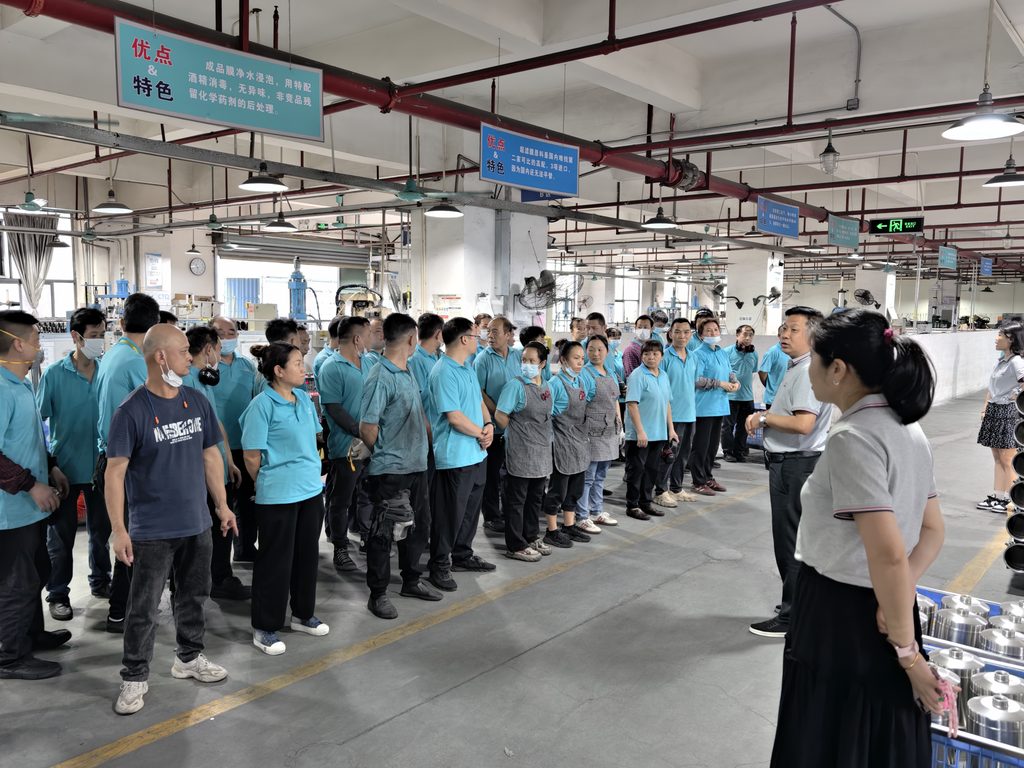
- Supply chain barrier: Chengrong is a full-supply-chain factory (from hardware molds → ultrafiltration membranes → complete equipment, all self-manufactured). This means membrane material modification can be completed directly on its own production lines without relying on external membrane suppliers. If competitors want to customize similar membrane materials, they need to coordinate external supply chains.