
Chlorine-Removal Ultrafiltration Membrane: Polymer Material Modification Technology Solving the Problem of Residual Chlorine in Water
The chlorine-removal ultrafiltration membrane is developed through polymer material modification, enabling it to reduce residual chlorine into chloride ions. It is safe and effective, and it is hard to find a second company like this anywhere in the world.
For water purification equipment that needs to solve the problem of residual chlorine in drinking water, the chlorine-removal ultrafiltration membrane is not simply an additional coating, nor does it rely solely on the physical filtration of traditional ultrafiltration membranes. Instead, through polymer material modification, the ultrafiltration membrane itself is given the ability to remove residual chlorine from water.
This is also the core technology behind ChengrongTimes independently developed chlorine-removal ultrafiltration membrane.
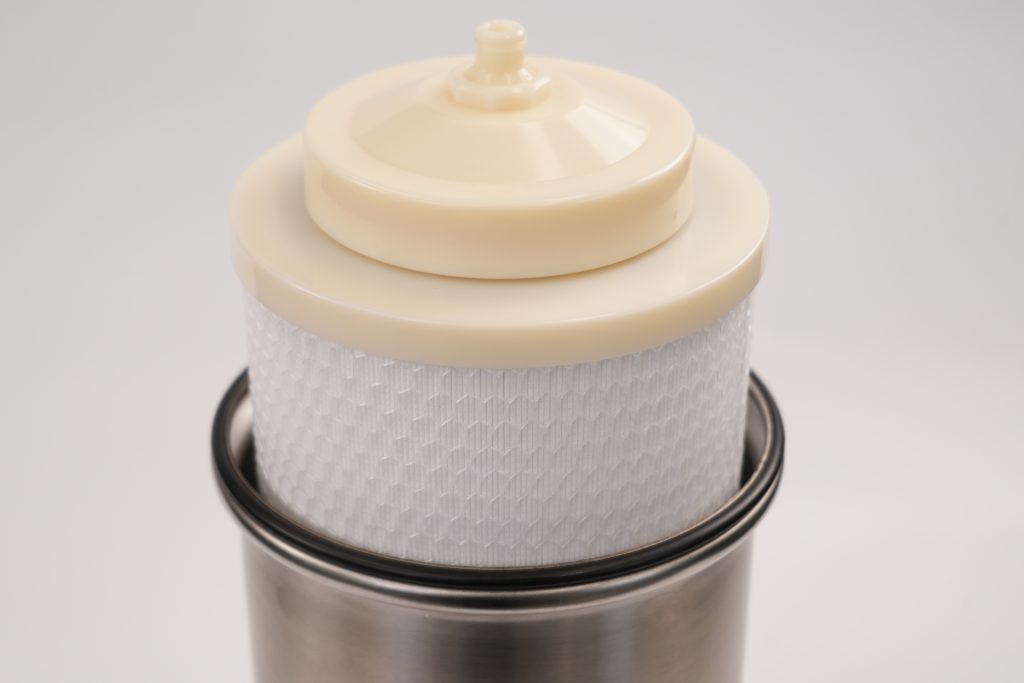
Why Is a Chlorine-Removal Ultrafiltration Membrane Needed?
When water flows rapidly through activated carbon fiber, the contact time between the water flow and the activated carbon fiber is simply too short, resulting in limited adsorption of residual chlorine in the water by the activated carbon fiber.
Therefore, relying solely on activated carbon fiber cannot fully solve the problem of residual chlorine in water.
Therefore, behind the activated carbon fiber, we use Chengrong’s independently developed chlorine-removal ultrafiltration membrane to solve the problem of residual chlorine and ensure that the mineral-water-like water produced by ChengrongTimes mineral-water-like water purifier meets the standard for direct drinking.
In other words, the chlorine-removal ultrafiltration membrane performs a very specific function within the entire water purification system: it further addresses residual chlorine in the water after the activated carbon fiber.
Does the Chlorine-Removal Ultrafiltration Membrane Remove Residual Chlorine Through Coating Adsorption?
Someone asked me:
Does ChengrongTimes chlorine-removal ultrafiltration membrane work because something is added to the surface of the membrane fibers, using coating adsorption to achieve residual chlorine removal?
The answer is no.
A traditional ultrafiltration membrane itself cannot remove residual chlorine from water.
This is because residual chlorine in water mainly exists in the form of hypochlorite ions (ClO⁻), while the filtration pore size of an ultrafiltration membrane is 0.01 microns, which cannot intercept ionic substances in water.
Therefore, simply relying on the physical sieving principle of an ordinary ultrafiltration membrane cannot truly solve the problem of residual chlorine in water.
ChengrongTimes chlorine-removal ultrafiltration membrane, however, does not remove residual chlorine simply by adding a surface coating. Instead, it starts with the material of the ultrafiltration membrane itself and uses polymer material modification to give the ultrafiltration membrane itself the ability to react with residual chlorine.
RO Membranes Are Not Omnipotent. Why Must Residual Chlorine Be Removed Beforehand?
By the way, here is another point of knowledge.
RO membranes are extremely sensitive to residual chlorine.
The strong oxidizing properties of hypochlorite ions (ClO⁻) can easily cause permanent and irreversible oxidative damage to RO membranes, which is one of the main causes of RO membrane desalination failure.
Therefore, the activated carbon pre-filter in front of an RO membrane must be replaced frequently.
Otherwise, the RO membrane can easily fail.
As you can see, RO membranes are not omnipotent.
This is also why residual chlorine control has always been an important issue in different water purification technology routes.
For water purification systems using RO membranes, residual chlorine needs to be controlled through activated carbon pre-filters and other methods; for ChengrongTimes water purification technology route, the residual chlorine problem in water is further addressed through the independently developed chlorine-removal ultrafiltration membrane.
If the Water Source Is Unsafe, Relying Solely on an RO Membrane Is Not the Most Effective Solution
Suppose your household water source is unsafe, and water quality testing shows excessive iron and manganese, excessive nitrite, excessive fluoride, etc. The most effective approach is not to use an RO reverse osmosis water purifier that can filter heavy metals, nitrite, fluoride, and other contaminants from water, but to directly replace it with a safe water source.
This is because the role of water purification equipment is to treat the water entering the equipment, rather than using water purification equipment as a substitute for a safe water source.
This is also a principle we have always emphasized:
A safe water source is the foundation of drinking water safety; water purification technology is used to further improve drinking water quality on the basis of a safe water source.
Why Is Activated Carbon Fiber Rated for 200 Tons Used as a 100-Ton Capacity?
The core reason why ChengrongTimes mineral-water-like direct-drinking machine uses activated carbon fiber with a rated capacity of 200 tons of water as a 100-ton capacity is to avoid the activated carbon fiber reaching adsorption saturation prematurely.
Although activated carbon fiber has the ability to adsorb residual chlorine, factors such as water flow rate, contact time, and filter material adsorption capacity will affect residual chlorine removal performance during actual use.
Therefore, we do not simply use the theoretical rated capacity of the activated carbon fiber to its full extent. Instead, activated carbon fiber with a rated capacity of 200 tons of water is used at a 100-ton capacity.
The core purpose of doing this is to avoid the activated carbon fiber reaching adsorption saturation prematurely as much as possible.
Adding Chengrong’s independently developed chlorine-removal ultrafiltration membrane behind the activated carbon fiber further solves the problem of residual chlorine in water.
Exactly How Does the Chlorine-Removal Ultrafiltration Membrane Remove Residual Chlorine?
Since it does not rely on coating adsorption to remove residual chlorine from water, how exactly does ChengrongTimes chlorine-removal ultrafiltration membrane remove residual chlorine from water?
The answer is:
Polymer material modification.
As you may have heard, every year we allocate a fixed amount of funds to the research and development of ultrafiltration membranes and the improvement and iteration of production technologies and processes.
Among these efforts, ultrafiltration membrane R&D includes not only raw material formulations but also material modification during industrial production.
Chengrong’s independently developed chlorine-removal ultrafiltration membrane is a type of polymer modification.
Core Principle of the Chlorine-Removal Ultrafiltration Membrane: Polymer Material Modification
When water passes through the chlorine-removal ultrafiltration membrane, the active sites in the material reduce residual chlorine in the water, namely hypochlorite ions, into chloride ions.
This process is an important distinction between the chlorine-removal ultrafiltration membrane and an ordinary ultrafiltration membrane.
Hypochlorite ions have strong oxidizing properties and can kill bacteria.
Chloride ions are relatively stable and harmless.
We place functional groups capable of “reacting with residual chlorine” into the bulk material of the ultrafiltration membrane. Through an oxidation-reduction reaction, residual chlorine can be removed.
Therefore, ChengrongTimes chlorine-removal ultrafiltration membrane does not simply add a layer of material outside an ordinary ultrafiltration membrane. Instead, through polymer material modification, functional groups with the ability to react with residual chlorine are incorporated into the bulk material of the ultrafiltration membrane.
This is the true technological core of the chlorine-removal ultrafiltration membrane.
Why Doesn’t the Chlorine-Removal Ultrafiltration Membrane Use Coating Technology?
For the chlorine-removal ultrafiltration membrane, simply adjusting the formulation and process is already a huge project. Therefore, many of our industry peers cannot understand why a single R&D project can lead Chengrong’s factory to invest several million yuan every year.
Since the R&D cost of polymer modification is so high, why doesn’t Chengrong choose coating technology to remove residual chlorine?
The reason is simple.
First, Coatings Will Peel Off Over Time
One of the biggest problems with coating technology is its long-term stability during use.
However, the advantage of our polymer material modification lies in the fact that as long as the ultrafiltration membrane does not break, the chlorine-removal ultrafiltration membrane can maintain a stable residual chlorine removal rate throughout its entire service life.
This is also an important difference between polymer material modification and surface coating.
The function of the chlorine-removal ultrafiltration membrane does not depend on a layer of material attached to the surface, but comes from the functional groups within the bulk material of the ultrafiltration membrane.
Second, Detached Coating May Cause Secondary Pollution
Detached coating itself may cause secondary pollution.
However, polymer material modification does not have this risk because the material itself is food-grade, providing inherent safety.
Therefore, in terms of long-term use, safety, and stability, the use of polymer material modification for the chlorine-removal ultrafiltration membrane has obvious advantages.
Third, Polymer Material Modification Does Not Destroy the 0.01-Micron Physical Sieving Function
Polymer material modification does not destroy the 0.01-micron physical sieving function of the ultrafiltration membrane.
Our chlorine-removal ultrafiltration membrane adds a functional group for removing residual chlorine from water on the basis of 0.01-micron filtration accuracy.
In other words, the chlorine-removal ultrafiltration membrane does not abandon its original ultrafiltration physical sieving capability because it adds the residual chlorine removal function.
It adds a new function to the original ultrafiltration membrane.
What Functions Does the Chlorine-Removal Ultrafiltration Membrane Have?
ChengrongTimes chlorine-removal ultrafiltration membrane is not a single-function filter membrane.
It not only ensures fine filtration of impurities such as bacteria, viruses, and sediment in water, but also removes residual chlorine while ensuring the water output flow rate.
It achieves all three without any side effects.
From the perspective of product technology, the chlorine-removal ultrafiltration membrane solves three key problems at the same time:
- 0.01-micron filtration accuracy — maintaining the original physical sieving function of the ultrafiltration membrane;
- Removal of residual chlorine from water — through polymer material modification, enabling functional groups to undergo oxidation-reduction reactions with residual chlorine;
- Ensuring water output flow rate — adding the residual chlorine removal function without sacrificing the actual user experience.
This is why we believe that a truly valuable chlorine-removal ultrafiltration membrane is not simply about adding the concept of “residual chlorine removal” to an ultrafiltration membrane. It must simultaneously balance filtration accuracy, residual chlorine removal, and water output flow rate.
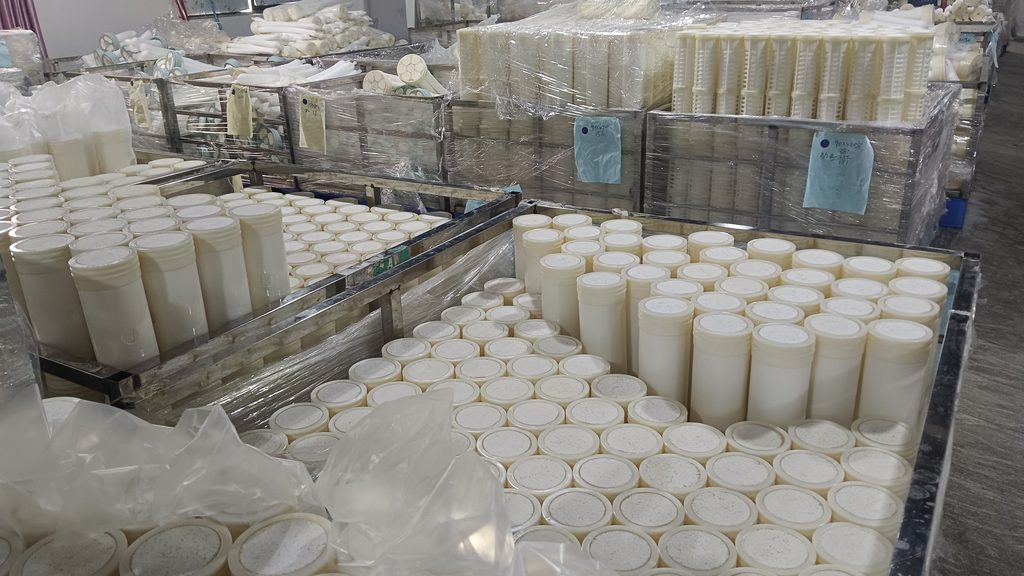
Why Does ChengrongTimes Insist on Developing Chlorine-Removal Ultrafiltration Membranes?
Although the R&D process for the chlorine-removal ultrafiltration membrane is time-consuming, labor-intensive, and particularly expensive, it can genuinely help users solve a real-world problem.
Every year, we allocate a fixed amount of funds to the research and development of ultrafiltration membranes and the improvement and iteration of production technologies and processes.
Among these efforts, the development of the chlorine-removal ultrafiltration membrane is not simply a matter of replacing one filter material, nor is it simply about adding a layer of coating. Instead, it involves raw material formulations, polymer material modification, and continuous adjustment of industrial production technologies and processes.
This is also why the R&D cost of a single chlorine-removal ultrafiltration membrane can lead Chengrong’s factory to invest several million yuan every year.
For users, what they ultimately need is not a high-sounding technological concept, but a product that can truly solve the problem of residual chlorine in water.
The chlorine-removal ultrafiltration membrane is a technology developed by ChengrongTimes specifically in response to this real need.
It enables ChengrongTimes users to drink clean and healthy mineral-water-like direct-drinking water.
All the effort is worthwhile.
Chlorine-Removal Ultrafiltration Membrane FAQ
1. What Is a Chlorine-Removal Ultrafiltration Membrane?
A chlorine-removal ultrafiltration membrane is a functional ultrafiltration membrane that uses polymer material modification to give the ultrafiltration membrane itself the ability to remove residual chlorine from water.
It does not simply rely on the physical sieving of a traditional ultrafiltration membrane. Instead, functional groups in the material undergo an oxidation-reduction reaction with residual chlorine, reducing residual chlorine in the water, namely hypochlorite ions, into chloride ions.
2. Does the Chlorine-Removal Ultrafiltration Membrane Remove Residual Chlorine Through a Coating?
No.
ChengrongTimes chlorine-removal ultrafiltration membrane does not add a coating to the surface of the membrane fibers and then rely on the coating to adsorb residual chlorine.
Chengrong’s independently developed chlorine-removal ultrafiltration membrane uses polymer material modification technology to place functional groups capable of “reacting with residual chlorine” into the bulk material of the ultrafiltration membrane and achieves residual chlorine removal through an oxidation-reduction reaction.
3. Can an Ordinary Ultrafiltration Membrane Remove Residual Chlorine?
An ultrafiltration membrane itself cannot remove residual chlorine from water through physical sieving.
This is because residual chlorine in water mainly exists in the form of hypochlorite ions (ClO⁻), while the filtration pore size of an ultrafiltration membrane is 0.01 microns, which cannot intercept ionic substances in water.
Therefore, ordinary ultrafiltration membranes and chlorine-removal ultrafiltration membranes with polymer modification functions have significant differences in their principles of residual chlorine treatment.
4. What Is the Filtration Accuracy of the Chlorine-Removal Ultrafiltration Membrane?
ChengrongTimes chlorine-removal ultrafiltration membrane adds functional groups for removing residual chlorine from water on the basis of 0.01-micron filtration accuracy.
Therefore, it maintains the physical sieving function of the ultrafiltration membrane while also adding a residual chlorine removal function.
5. Why Does Residual Chlorine Need to Be Removed Before the RO Membrane?
RO membranes are extremely sensitive to residual chlorine.
The strong oxidizing properties of hypochlorite ions (ClO⁻) can easily cause permanent and irreversible oxidative damage to RO membranes, which is one of the main causes of RO membrane desalination failure.
Therefore, the activated carbon pre-filter in front of the RO membrane must be replaced frequently.
6. What Is the Difference Between a Chlorine-Removal Ultrafiltration Membrane and Activated Carbon Fiber?
Activated carbon fiber mainly treats residual chlorine in water through adsorption, while the chlorine-removal ultrafiltration membrane uses polymer material modification to enable functional groups in the bulk material of the ultrafiltration membrane to undergo an oxidation-reduction reaction with residual chlorine.
ChengrongTimes uses activated carbon fiber with a rated capacity of 200 tons of water as a 100-ton capacity, also to prevent the activated carbon fiber from reaching adsorption saturation prematurely.
Adding a chlorine-removal ultrafiltration membrane behind the activated carbon fiber further solves the problem of residual chlorine.
7. Why Doesn’t the Chlorine-Removal Ultrafiltration Membrane Use a Coating?
Because coatings will peel off over time, and detached coating itself may cause secondary pollution.
Polymer material modification, however, incorporates functional groups into the bulk material of the ultrafiltration membrane. As long as the ultrafiltration membrane does not break, the chlorine-removal ultrafiltration membrane can maintain a stable residual chlorine removal rate throughout its entire service life.
8. Is the Chlorine-Removal Ultrafiltration Membrane Safe?
ChengrongTimes chlorine-removal ultrafiltration membrane uses polymer material modification technology, and the material itself is food-grade.
At the same time, this technology does not rely on an external coating to remove residual chlorine, but instead incorporates functional groups into the bulk material of the ultrafiltration membrane.
9. Can the Chlorine-Removal Ultrafiltration Membrane Also Filter Other Impurities in Water?
Yes.
ChengrongTimes chlorine-removal ultrafiltration membrane adds functional groups for removing residual chlorine on the basis of 0.01-micron filtration accuracy. It ensures fine filtration of impurities such as bacteria, viruses, and sediment in water, while also removing residual chlorine and ensuring water output flow rate.
10. Why Is It Said That It Is Hard to Find a Second Chlorine-Removal Ultrafiltration Membrane Like This Anywhere in the World?
Because ChengrongTimes chlorine-removal ultrafiltration membrane does not simply use an ordinary ultrafiltration membrane, nor does it simply remove residual chlorine through a surface coating. Instead, it uses polymer material modification to give the ultrafiltration membrane itself the ability to undergo an oxidation-reduction reaction with residual chlorine.
Simply adjusting the formulation and process of the chlorine-removal ultrafiltration membrane is already a huge project.
This is also why the related R&D costs lead Chengrong’s factory to invest several million yuan every year.
The combination of safety, effectiveness, polymer material modification, 0.01-micron filtration accuracy, and residual chlorine removal gives ChengrongTimes chlorine-removal ultrafiltration membrane unique technological value, and it is hard to find a second company like this anywhere in the world.