
Why Is the Water Still Yellow After Filtering Mountain Spring Water with a 0.01-Micron Smart Water Filter? A Real ChengrongTimes Case Study
Why is the water still yellow after filtering mountain spring water with a 0.01-micron smart water filter?
This is a real customer case recently encountered by ChengrongTimes.
The customer’s water source comes from a remote, densely forested mountain area. Because the local environment is surrounded by clear streams and pristine mountains, the customer placed great importance on the quality of the natural water source itself and did not want to use an RO reverse osmosis water filter that would remove both natural minerals and trace elements.
Therefore, the customer approached ChengrongTimes to customize a batch of 0.01-micron smart water filters, mainly to intercept sediment, colloids, and other suspended matter in the water, as well as microorganisms such as bacteria and viruses.
The customer’s requirements were very clear:
The mountain spring water needed to be filtered clean while retaining as much of its natural minerals and trace elements as possible.
Everything went smoothly at first.
However, shortly after the smart water filter was put into operation, the customer suddenly sent us a message:
“There is something wrong with the ChengrongTimes ultrafiltration water filter. The filtered water is still yellow.”
So, what exactly was happening?
1. Why Did the Customer Choose a 0.01-Micron Smart Water Filter?
For natural water sources such as mountain spring water and well water, many customers do not want to use an RO reverse osmosis water filter directly.
The reason is that different water purification technologies solve different problems.
RO reverse osmosis has a high filtration precision and can deeply remove many contaminants from water. However, it also removes some of the natural minerals and trace elements in the water.
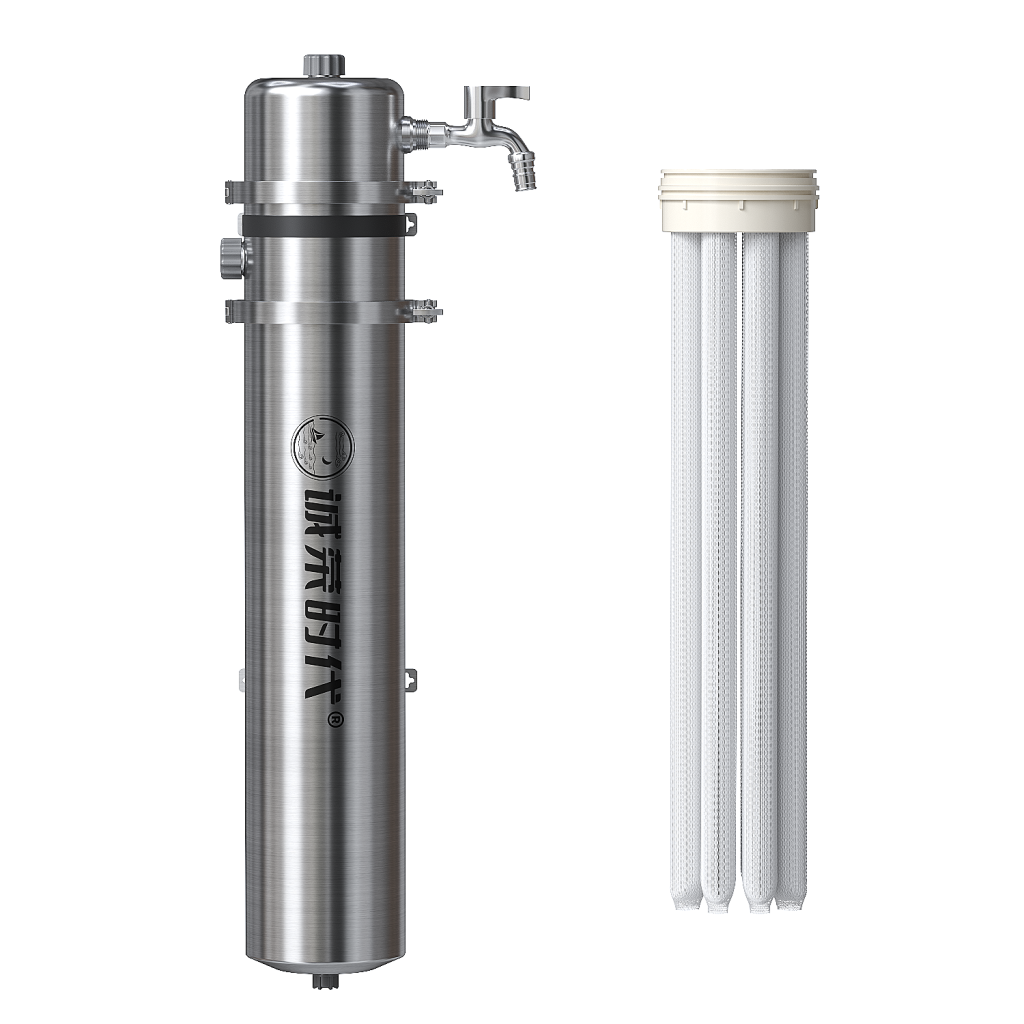
A 0.01-micron smart water filter, on the other hand, uses an ultrafiltration membrane to filter the water, primarily targeting sediment, colloids, suspended matter, bacteria, viruses, and other microorganisms.
For mountain spring water with relatively good source-water conditions, customers often prefer to use an ultrafiltration water filter for mountain spring water, so that problems such as turbidity, sediment, and microorganisms can be addressed while retaining as much of the natural characteristics of the water source as possible.
This was also why the customer ultimately chose the ChengrongTimes 0.01-micron smart water filter.
ChengrongTimes has been deeply engaged in the pipeline ultrafiltration field for a long time. The ultrafiltration factory has 19 years of experience, and one of the important application scenarios for ultrafiltration water filters is the filtration of natural water sources such as mountain spring water and well water.
2. Why Was the Water Still Yellow After Ultrafiltration?
The problem appeared quickly.
The customer reported:
The ultrafiltration water filter was already in operation, but the filtered water was still yellow.
At first, I suspected that the equipment might have been damaged during transportation, causing an internal component of the water filter to become loose and resulting in a sealing problem or water bypass.
Based on previous experience, if a loose component caused water bypass, the solution would actually be relatively simple.
So, I asked the customer to follow my instructions and inspect several key areas of the smart water filter to confirm whether the internal components and sealing performance were normal.
The inspection results were clear:
There was no problem with the ultrafiltration water filter, and the sealing performance was good.
That was strange.
If there was nothing wrong with the equipment, why was the filtered water still yellow?
Under normal circumstances, a 0.01-micron ultrafiltration water filter performs very well when treating turbid water and yellow muddy water.
Even if the raw water is extremely turbid, sediment, mud, colloids, and other suspended impurities should be effectively retained by ultrafiltration, making the filtered water extremely clear.
But this time, although the equipment was working properly, the filtered water still had a yellow tint.
So what was the real cause?
3. The Problem Could Not Be Solved Online, So I Went Directly to the Site
Since it was impossible to determine the cause completely through online communication, the only option was to inspect the system on site.
I immediately booked the earliest flight on my phone and traveled directly to the actual operating site of the ultrafiltration water filter the next day.
For the past 19 years, Chengrong’s factory has always followed a simple service principle:
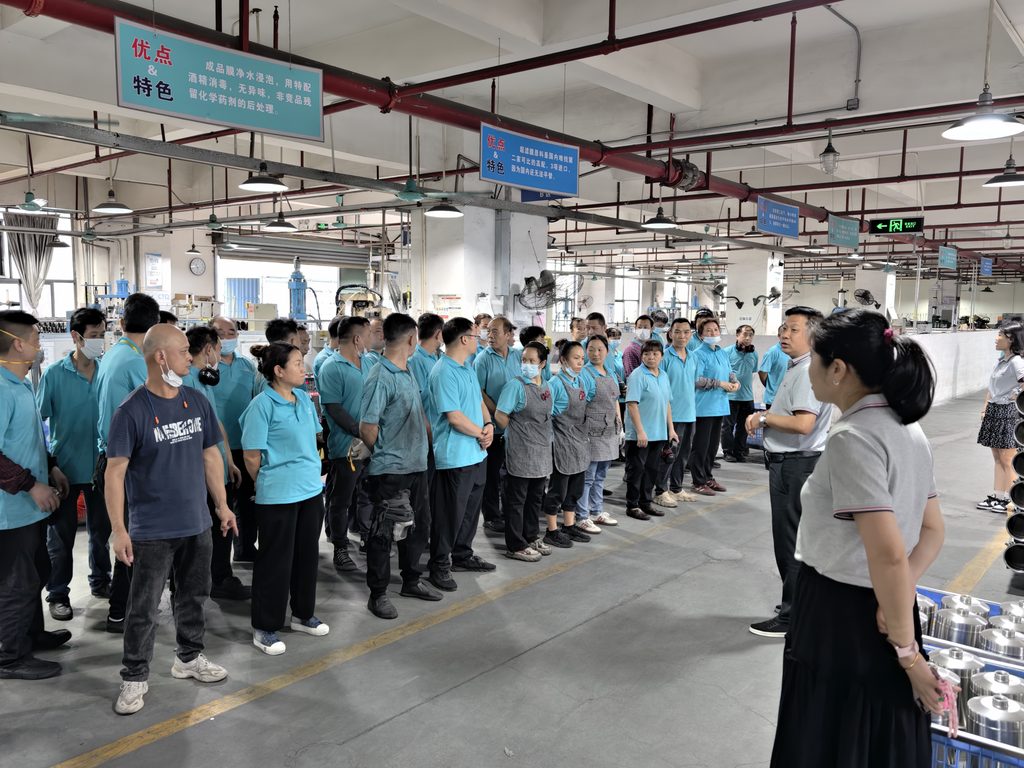
20-minute response, solution within 2 hours, and on-site arrival within 2 days.
Moreover, the customer had purchased a smart ultrafiltration water filter from ChengrongTimes.
Whether from the customer’s perspective or from the perspective of the ChengrongTimes brand, I felt that I should personally go to the site and get to the bottom of the problem.
4. On-Site Inspection: The Water Was Yellowish but Not Turbid
After arriving at the site, I first took a clean iron basin and filled half of it with purified water filtered by the smart ultrafiltration water filter.
After carefully observing the water, I found:
The water was indeed slightly yellow, but it was extremely clear and not turbid.
This point was very important.
Because clarity and colorlessness are two completely different concepts.
Clarity primarily reflects the turbidity of the water.
Colorlessness reflects the color of the water.
In other words:
- Turbidity close to 0: This indicates that there are relatively few suspended particles, sediment, colloids, and other substances causing visible cloudiness.
- Color close to 0: This indicates that there are relatively few substances in the water capable of producing color.
After being filtered by the 0.01-micron smart water filter, the customer’s water was already extremely clear. This actually indicated that the ultrafiltration system was working properly.
So the question became:
If the ultrafiltration water filter had not failed, why was the water still yellow?
The answer was right here.
5. The Real Cause Was Found: Natural Organic Matter, Not Turbidity, Caused the Color
As mentioned earlier, the customer’s water source came from a remote mountain forest with beautiful natural surroundings.
However, this pristine natural environment can also create a problem that is easily overlooked.
Dead branches, leaves, and other plant residues in the mountains continuously decompose in the natural environment, producing natural organic matter such as humic substances, fulvic acid, and tannins.
When rainwater and mountain spring water pass through this soil, these natural organic substances can easily dissolve into the water, causing the water to appear:
Light yellow, tea-colored, or yellowish-brown.
This is easy to understand.
It is similar to putting a handful of tea leaves into water.
A 0.01-micron smart water filter can filter out the tea leaves and suspended dust attached to them, but it cannot directly retain all pigments that have already dissolved in the water.
Therefore, what actually happened in this case was:
Turbid mountain spring water flowing down from the mountain → passed through the 0.01-micron smart water filter → sediment, mud, colloids, bacteria, viruses, and other suspended impurities were removed → the water became extremely clear → but plant pigments dissolved in the water remained → the final filtered water was clear but still light yellow.
Therefore, this was not a case of ultrafiltration water filter failure.
Instead, the customer had initially confused “turbidity” with “color.”
6. Why Can’t a 0.01-Micron Ultrafiltration Water Filter Solve All Color Problems?
This is the most important point for understanding this case.
An ultrafiltration water filter primarily addresses suspended matter, colloids, microorganisms, and other filtration problems in water. It does not solve every color problem caused by dissolved substances.
Simply put:
Ultrafiltration addresses turbidity, while activated carbon addresses some dissolved organic matter and color.
Therefore, it was now very clear why this customer’s water was “clear but yellow.”
The equipment was not broken.
The ultrafiltration membrane had not failed.
There was no sealing problem.
Instead:
The ultrafiltration water filter had completed the filtration task it was designed to perform, but the natural plant pigments dissolved in the water remained.
7. Once the Real Cause Was Found, the Solution Was Actually Very Simple
Although the ultrafiltration water filter could not directly solve this customer’s water-color problem, once ChengrongTimes identified the problem, we had to help the customer solve it.
ChengrongTimes has always followed one simple principle:
Once you purchase my water filter, your household water-quality problems become my responsibility.
If it is related to water, the customer’s problem is my problem.
Therefore, we needed to provide the customer with a scientific and professional water purification solution.
The solution was actually very simple:
Add an activated carbon adsorption stage.
However, ordinary activated carbon did not match ChengrongTimes’ TOP 1% quality positioning.
Therefore, this time we configured:
Activated Carbon Fiber
Activated carbon fiber is mainly used to further adsorb plant-related color in the water.
Although activated carbon fiber costs slightly more than ordinary activated carbon, this additional cost was worthwhile for this customer.
8. Why Choose Activated Carbon Fiber?
According to application data provided by ChengrongTimes:
The adsorption speed of activated carbon fiber is 10–100 times faster than that of ordinary activated carbon.
The reason is that activated carbon fiber has a larger specific surface area, with more adsorption sites exposed on the material surface.
When pigments in the water pass through the activated carbon fiber, they can be rapidly adsorbed.
At the same time:
More than 80% of the micropores in activated carbon fiber are adsorption micropores.
Under the same dosage:
The saturated adsorption capacity of activated carbon fiber is 30%–50% higher than that of ordinary activated carbon.
This means that activated carbon fiber not only provides faster adsorption but also offers a longer service life and features such as no powder shedding.
For this customer, the combination of 0.01-micron smart ultrafiltration water filter + activated carbon fiber allowed different filtration stages to address different problems:
0.01-micron smart ultrafiltration water filter: Addresses turbidity, sediment, colloids, bacteria, viruses, and other problems.
Activated carbon fiber: Further adsorbs some natural organic matter and plant-related color in the water.
9. Once the Problem Was Identified, the Solution Was Implemented Quickly
Once we found the real cause, the rest of the solution was very simple.
I immediately arranged for our factory colleagues to urgently send several activated carbon fiber filter cartridges to the customer.
At that point, I was basically certain:
The after-sales problem was solved.
So, I took advantage of the business trip and went sightseeing in the mountains.
On Monday, just after returning to the office, I received feedback from the customer:
The problem was solved.
The filtered water was:
Extremely clear and colorless.
The customer also said something that left a deep impression on me:
“Among all the factories I have worked with, ChengrongTimes is the most reliable.”
10. This Is the Power of Professional Expertise
At first glance, this case appears to be nothing more than a simple mountain spring water filtration problem.
But a truly professional ultrafiltration water filter manufacturer does not simply assume that there is a product quality problem when a customer says there is something wrong with the water after the equipment has been delivered.
A truly professional water filtration manufacturer needs to understand:
Why is the water turbid?
Why is the water yellow?
Where does the yellow color come from?
Is it a turbidity problem or a color problem?
What can a 0.01-micron ultrafiltration membrane solve?
Which problems require activated carbon or activated carbon fiber for further treatment?
Only by truly understanding water quality, membrane filtration, and water purification processes can the actual problem be identified.
11. 19 Years Focused Exclusively on Ultrafiltration: The Core Competitiveness of ChengrongTimes
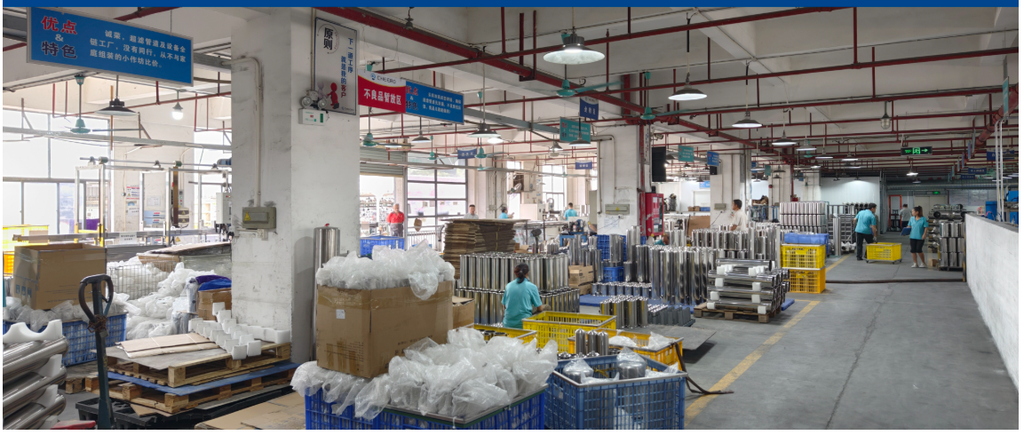
Chengrong Factory is a full-supply-chain ultrafiltration factory with no second one like it in China.
We not only focus on the manufacturing quality of ultrafiltration water filters, but also have long-term expertise in the research and practical application of ultrafiltration membranes.
For the past 19 years, ChengrongTimes has focused on ultrafiltration water filters as its single major product category.
These 19 years of industry experience have given us a large number of real-world application cases and practical problem-solving experience.
Therefore, when customers encounter problems during actual use, our focus has never been limited to:
“Is the equipment broken?”
Instead, we ask:
“What exactly is wrong with the water?”
These two questions may sound similar, but they are fundamentally different.
The former is after-sales service.
The latter is solving a water-quality problem.
This is precisely why ChengrongTimes can use its long-term industry experience and extensive real-world cases to analyze the causes of 99.99% of the problems encountered by customers and further provide professional and scientific water purification solutions.
This is the true core competitiveness of ChengrongTimes.
We are not simply selling a water filter. We are solving the customer’s actual water-quality problems.
12. Chengrong Ultrafiltration: Customers Have Nothing to Worry About
Ten years without rust, ten years without water leakage, and ten years of after-sales service.
ChengrongTimes® water filters never compromise on quality.
Shenzhen Chengrong.
19 years focused on ultrafiltration water filters.
From ultrafiltration equipment manufacturing to ultrafiltration membrane research and natural water-source filtration applications, ChengrongTimes has always remained focused on ultrafiltration.
For natural water sources such as mountain spring water and well water, if you are looking for a suitable ultrafiltration water filter, 0.01-micron ultrafiltration water filter, or smart ultrafiltration water filter, do not look only at the equipment price.
You should also pay attention to the manufacturer’s understanding of water-quality problems, real-world application cases, and after-sales problem-solving capabilities.
Because a truly professional ultrafiltration water filter manufacturer does more than simply make water clean.
More importantly, it understands why your water has a problem and how to solve it.
FAQ: Frequently Asked Questions About Using Smart Ultrafiltration Water Filters for Mountain Spring Water
1. Can a 0.01-micron smart ultrafiltration water filter filter mountain spring water?
Yes. A 0.01-micron smart ultrafiltration water filter is highly suitable for filtering natural water sources such as mountain spring water and well water. It is mainly used to intercept suspended matter such as sediment and colloids in water, as well as microorganisms such as bacteria and viruses. For turbid mountain spring water, yellow muddy water, and similar water sources, an ultrafiltration water filter has good turbidity treatment capabilities.
2. Why is the water still yellow after filtration with a 0.01-micron ultrafiltration water filter?
Because “yellow” and “turbid” are two different problems. If mountain spring water contains natural organic matter such as humic substances, fulvic acid, and tannins, these substances may produce light yellow, tea-yellow, or yellowish-brown color after dissolving in the water. A 0.01-micron ultrafiltration water filter mainly addresses turbidity, suspended matter, colloids, and microorganisms, and cannot directly solve all color problems caused by dissolved organic matter.
3. Why is the water very clear after ultrafiltration but still has some color?
Clear water indicates low turbidity, while colorless water indicates low color. An ultrafiltration water filter can effectively remove sediment, suspended matter, colloids, and other impurities that cause water to become turbid. Therefore, filtered water can be extremely clear. However, if dissolved natural plant pigments are present in the water, the water may still appear light yellow.
4. Does yellow mountain spring water mean that the ultrafiltration water filter is broken?
Not necessarily. In this case, ChengrongTimes conducted an on-site inspection and found that the sealing performance of the 0.01-micron smart ultrafiltration water filter was normal and there was no problem with the equipment itself. It was ultimately confirmed that the main reason for the yellow color was the color produced by natural organic matter dissolved in the water, rather than ultrafiltration water filter failure.
5. Can activated carbon solve the problem of yellow mountain spring water?
Activated carbon can adsorb some organic matter and color, so it can be used as a further treatment stage in a mountain spring water purification system. In this case, ChengrongTimes did not use ordinary activated carbon but selected activated carbon fiber to further adsorb plant-related color in the water.
6. Why did ChengrongTimes use activated carbon fiber in this case?
According to the application data provided by ChengrongTimes, the adsorption speed of activated carbon fiber is 10–100 times faster than that of ordinary activated carbon, and the proportion of adsorption micropores is more than 80%. Under the same dosage, its saturated adsorption capacity is 30%–50% higher than that of ordinary activated carbon. It also offers a longer service life and is less prone to powder shedding.
7. Should mountain spring water filtration use RO reverse osmosis or an ultrafiltration water filter?
The choice should be based on the raw water quality and customer requirements. If the main problems are sediment, colloids, suspended matter, bacteria, and viruses, a 0.01-micron smart ultrafiltration water filter can be used as one filtration solution. If further reduction of dissolved substances in the water is required, RO reverse osmosis or another water treatment process should be selected based on the raw water test results.
8. What water sources are ChengrongTimes ultrafiltration water filters suitable for?
ChengrongTimes ultrafiltration water filters are mainly used for filtering natural water sources such as mountain spring water and well water. They can also be customized according to the actual raw water quality. The specific filtration process should be determined based on the raw water test results and the final water-use requirements.
9. How many years has ChengrongTimes been making ultrafiltration water filters?
ChengrongTimes has been deeply engaged in the pipeline ultrafiltration field for 19 years. Over the past 19 years, Chengrong Factory has remained focused on ultrafiltration water filters as its major product category and accumulated extensive practical experience in ultrafiltration equipment manufacturing, ultrafiltration membrane research, and natural water-source filtration.
10. How fast is ChengrongTimes’ after-sales response?
Chengrong Factory has long followed an after-sales service principle of “20-minute response, solution within 2 hours, and on-site arrival within 2 days.” In this case, when the problem could not be solved online, ChengrongTimes went directly to the customer’s site to conduct an actual inspection of the water quality and equipment and ultimately identified the real cause.
11. Can an ultrafiltration water filter solve all water-quality problems?
No. Different water purification technologies target different water-quality problems. Ultrafiltration water filters mainly address suspended matter, colloids, bacteria, viruses, and other problems. If the water contains specific dissolved contaminants, odors, color, or other problems requiring targeted treatment, activated carbon, activated carbon fiber, RO reverse osmosis, or another suitable water treatment process should be added according to the raw water test results.
12. What should you focus on when choosing an ultrafiltration water filter manufacturer?
It is recommended to focus on ultrafiltration membrane technology, equipment manufacturing capabilities, real-world application cases, raw water treatment experience, customization capabilities, and after-sales response capabilities. For natural water sources such as mountain spring water and well water, it is especially important to determine whether the manufacturer truly understands practical issues such as turbidity, color, and natural organic matter in natural water sources, rather than simply comparing ultrafiltration water filter prices.