Opening Summary
An under-sink water purifier may develop an unpleasant smell after being unused for weeks or months, especially when activated carbon filtration is used to improve taste and reduce chlorine.
In this case, a ChengrongTimes customer returned home after a two-month business trip and noticed an unpleasant odor from the kitchen drinking water, while the water from the bathroom faucets remained normal. The difference was related to the different filtration principles used in the two systems. The whole-house ultrafiltration system removed physical contaminants while maintaining the original characteristics of municipal water.
This case also explains why ChengrongTimes does not recommend using activated carbon filtration as the primary treatment method for whole house water filtration applications. Different water applications require different filtration technologies.
A Real Customer Case From a Household Water Filtration Project
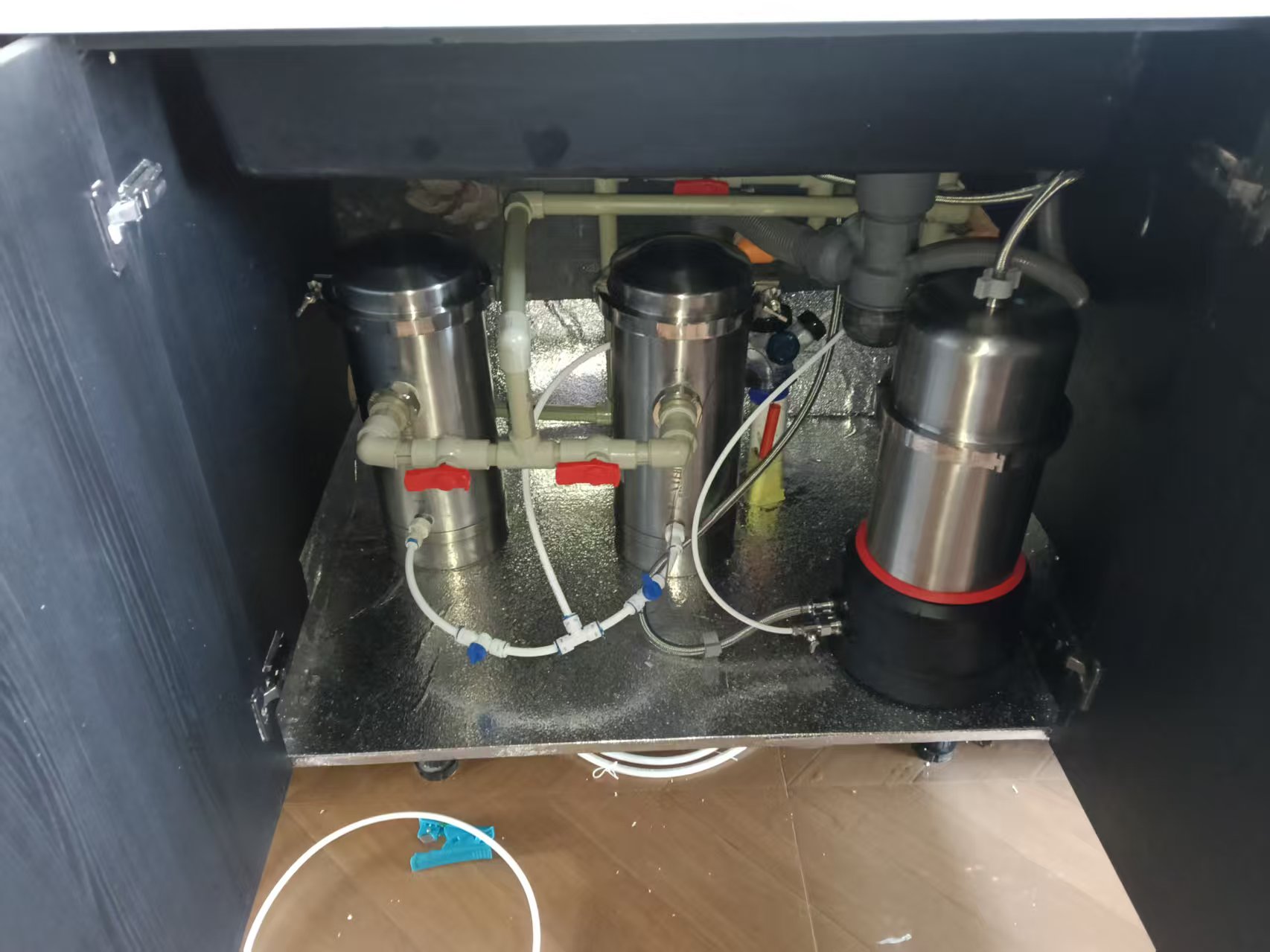
Several months ago, we completed a household water filtration project for a customer. The system included two different filtration solutions:
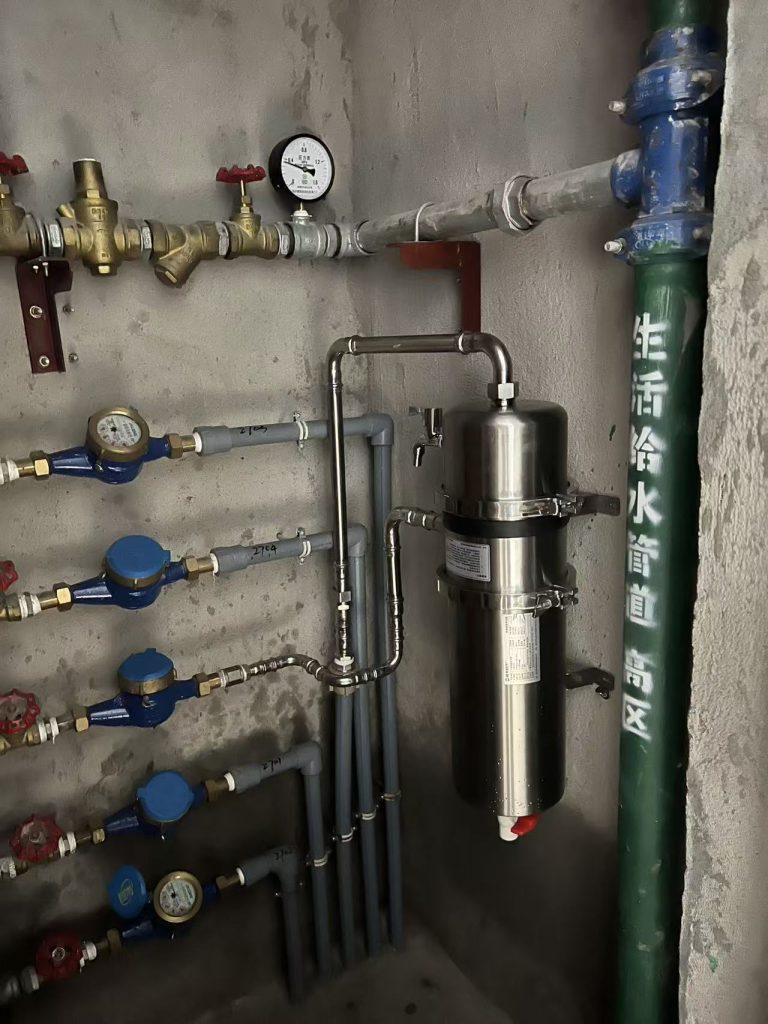
- A 0.1 μm PVDF [whole house ultrafiltration system installed at the main water inlet.
- An under-sink water purifier using 0.01 μm chlorine-removal ultrafiltration technology and designed for mineral-retaining drinking water, installed under the kitchen cabinet for drinking and cooking.
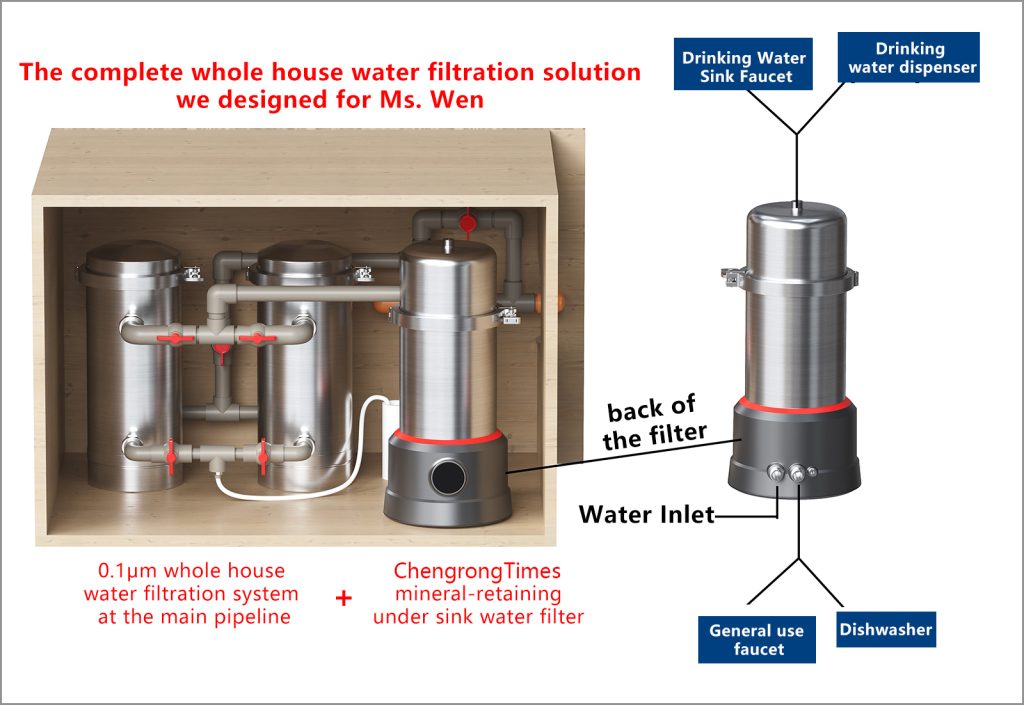
After installation, the customer was highly satisfied with the overall household water quality and the direct drinking water taste, which preserved naturally occurring minerals.
However, two months later, something unexpected happened.
After returning from a business trip, the customer opened the kitchen drinking water faucet and noticed an unpleasant odor from the water. However, when using the bathroom faucets, the water remained normal.
The customer then contacted ChengrongTimes after-sales support team and asked:
“Why does the kitchen water smell, while the bathroom water remains normal?”
After investigating the situation, we found that the issue was not caused by a product defect. Instead, we identified that the odor was related to stagnant water inside the drinking water pipeline after a long period of inactivity.
Because our under-sink drinking water purifier uses activated carbon filtration to improve taste and reduce chlorine, residual chlorine in the filtered water can be reduced to an undetectable level according to our water quality testing results.
Unlike municipal tap water, which contains residual chlorine for maintaining microbial control during distribution, the treated drinking water has much lower disinfectant protection after filtration. If the system remains unused for a long period, microorganisms would multiply in stagnant water inside the pipeline, and the metabolites produced during microbial activity can contribute to unpleasant odors.
A simple flushing process, allowing fresh water to run for approximately 5–10 minutes, restored normal water quality.
This is also why ChengrongTimes recommends different filtration technologies for different applications instead of applying the same filtration method throughout the entire home.
Why Does an Under-Sink Water Purifier Smell After Being Unused for Months?
A drinking water purifier installed under the kitchen sink that has been unused for weeks or months may develop an unpleasant odor when it is restarted.
This does not necessarily indicate a product failure.
The main reasons are usually related to:
- stagnant water remaining inside the filter cartridge and internal water pathways;
- reduced residual disinfectant levels after activated carbon filtration;
- changes in the internal environment of the filtration system during long periods without water flow, especially in warm environments where microbial activity may increase.
For kitchen drinking water systems, especially systems using activated carbon filtration, this situation deserves more attention because activated carbon is commonly used to improve water taste by reducing chlorine taste and odor, as well as certain organic compounds.
While this greatly improves drinking experience, it also means the treated drinking water contains significantly lower residual disinfectant levels. Therefore, proper flushing and maintenance are recommended after long periods of inactivity.
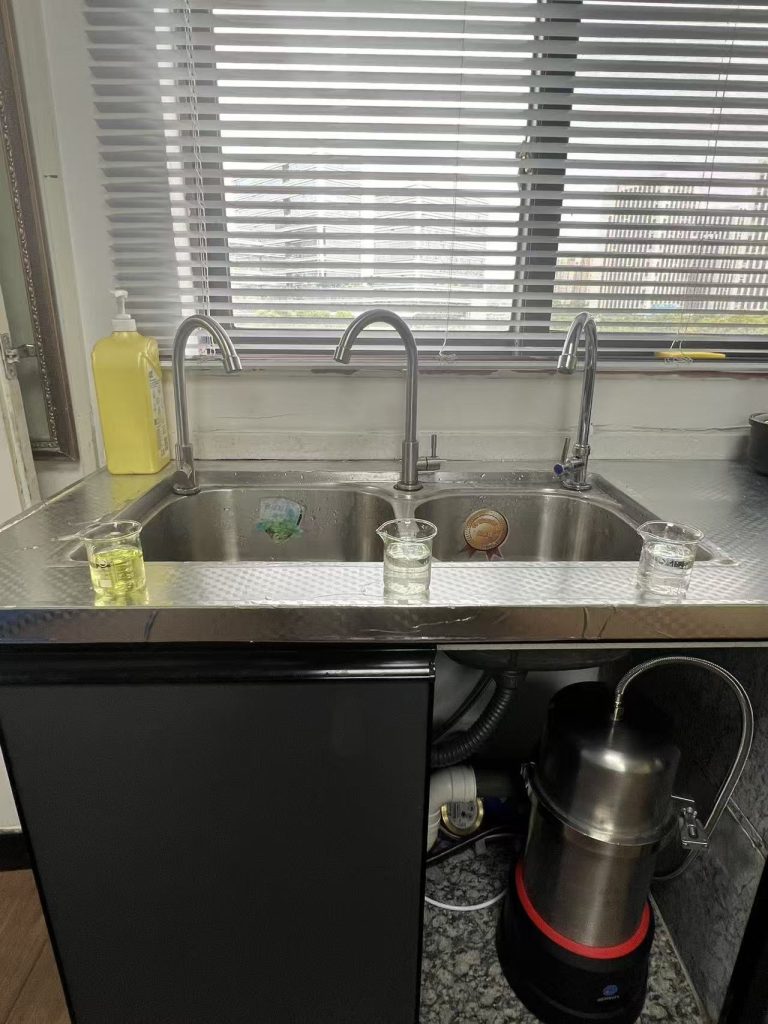
Why Did the Kitchen Under-Sink Water Purifier Smell While the Bathroom Water Remained Normal?
The difference comes from the different purposes of the two systems.
Kitchen Under-sink Drinking Water Purifier Focuses on Taste and Drinking Experience
A kitchen drinking water purifier is designed mainly for:
- drinking water;
- cooking water;
- improving drinking water taste by reducing chlorine, unpleasant odors, and color-related impurities.
Drinking water systems need to balance both filtration performance and taste. A system that provides clean water but poor taste may negatively affect user satisfaction, leading to customer complaints and increased after-sales concerns.
This is why many drinking water systems use activated carbon filtration, because activated carbon can effectively reduce:
- chlorine taste and odor;
- unpleasant odors and discoloration;
- certain organic compounds.
However, after chlorine residual is reduced, the water inside the downstream pipeline no longer has the same disinfectant residual as municipal tap water.
If the system remains unused for a long period, stagnant water inside the cartridge and pipeline may develop unpleasant odors over time and should be flushed before normal use.
Why Was the Bathroom Water Still Normal?
The whole house water filtration system works differently.
The whole house ultrafiltration system is usually installed at the main water inlet to treat water before it enters different household applications.
Unlike an under-sink drinking water purifier, its primary purpose is not for drinking which requires taste improvement. Instead, it focuses on improving overall household water quality by reducing physical contaminants that can cause turbidity and affect water-using appliances.
Compared with conventional whole house water filtration systems that mainly rely on PP sediment filters and activated carbon filters, a high-quality 0.1 μm PVDF whole house ultrafiltration filter system can effectively reduce:
- sediment;
- rust particles;
- suspended solids;
- colloids;
- other larger impurities.
By removing these unwanted physical contaminants, whole house ultrafiltration system helps improve the overall household water experience and protects downstream water-using appliances, including the cartridge of under-sink drinking water systems.
At the same time, whole house ultrafiltration filtration system does not remove dissolved minerals and generally does not remove chlorine like activated carbon filtration does.
This allows the treated water to maintain its original characteristics and part of its natural protective properties.
Whole House Ultrafiltration System vs. Kitchen Under-sink Drinking Water Purifier
| ChengrongTimes Whole House Ultrafiltration System | ChengrongTimes Under-Sink Drinking Water Purifier | |
|---|---|---|
| Primary purpose | Improve whole-house water quality and protect household water systems | Provide great-tasting drinking and cooking water |
| Installation position | Main water inlet | Kitchen faucet |
| Core technology | 0.1 μm PVDF ultrafiltration membrane | Multi-stage filtration with 10 μm and 5 μm PP sediment filters, activated carbon fiber, and a 0.01 μm chlorine-reduction ultrafiltration membrane |
| Main contaminants reduced | Sediment, rust particles, suspended solids, colloids, and larger impurities | Sediment, rust particles, colloids, microorganisms, chlorine taste and odor, unpleasant odors, and certain organic compounds |
| Mineral retention | Yes | Yes |
| Chlorine residual | Usually retained | Significantly reduced through activated carbon fiber adsorption and proprietary chlorine-reduction ultrafiltration membrane technology, achieving below-detectable chlorine residual levels under our test conditions |
| Main benefits | Cleaner whole-house water and protection of downstream appliances | Safe direct drinking water with improved taste and drinking experience |
Different Water Applications Require Different Filtration Technologies
Based on years of ultrafiltration membrane development and household whole-house ultrafiltration water filter system manufacturing, ChengrongTimes believes that:
Household water filtration is not about removing everything from water. It is about removing the right things for the right application.
A whole house ultrafiltration system focuses on protecting the entire home’s water quality by reducing physical contaminants.
A kitchen drinking water purifier focuses on improving drinking experience by reducing substances that affect taste and drinking safety.
These two systems are not competitors.
They solve different problems.
Ultrafiltration Systems Manufactured by Chengrong Factory:
Built for Long-Term Reliability and Stable Performance Worldwide10-Year Corrosion Resistance Commitment
10-Year Leak Protection Commitment
10 Years of After-Sales SupportChengrongTimes Whole House Water Filtration Systems:
Reliable Quality. Long-Term Performance.
Frequently Asked Questions
1) Does a water purifier smell after being unused for months?
Yes, it can happen. A water purifier may develop an unpleasant odor after long periods of inactivity due to stagnant water inside filters and pipelines.
2) Does ultrafiltration remove minerals from drinking water?
Ultrafiltration membranes mainly remove suspended particles, colloids, microorganisms, and larger contaminants, while dissolved minerals remain in the water.
3) Does a whole house water filtration system remove chlorine?
Most ultrafiltration systems do not remove dissolved chlorine because chlorine molecules are much smaller than the membrane pore size. This allows the treated water to maintain its original characteristics and part of its disinfectant protection.
For whole house water filtration applications, ChengrongTimes does not recommend using activated carbon as the primary method for chlorine reduction. Removing chlorine throughout the entire household water system may reduce residual disinfectant protection, and long periods of stagnant water inside pipelines may increase the risk of microbial growth and biofilm formation.
Whole house filtration should focus on removing physical contaminants such as sediment, rust, and colloids while maintaining stable water quality throughout the home.
4) Why does my kitchen water smell but my bathroom water does not?
The difference is related to the different filtration technologies used in each system. Under-sink drinking water systems often reduce chlorine to improve taste, while whole house ultrafiltration systems mainly remove physical contaminants while maintaining the characteristics of municipal water.
5) Do I need both a whole house filtration system and a kitchen water purifier?
They serve different purposes. A whole house water filtration system focuses on protecting water quality throughout the home by reducing sediment, rust, colloids, and other physical contaminants before water enters household pipelines and appliances.
By reducing these impurities, whole house filtration helps minimize sediment accumulation inside pipelines and reduces conditions that may contribute to biofilm formation.
A kitchen drinking water purifier is designed for drinking and cooking applications, focusing on providing cleaner, better-tasting water through additional filtration technologies.
For many households, combining both solutions provides more comprehensive water protection: whole house filtration protects the entire home’s water system, while the kitchen purifier provides higher-quality drinking water.
About ChengrongTimes
ChengrongTimes is a professional ultrafiltration water filtration brand developed by Chengrong Factory, a Shenzhen-based manufacturer specializing in ultrafiltration membrane technology, household water filtration systems, commercial filtration equipment, and OEM/ODM solutions.
With in-house capabilities covering membrane development, precision manufacturing, stainless steel fabrication, and complete system assembly, ChengrongTimes focuses on creating reliable filtration solutions with stable long-term performance, reduced maintenance requirements, and improved user experience.